Venus Aerospace Raises $90 Million for Rocket Engine Tests, Shifting Focus to Defense Applications
Venus Aerospace has raised a $90 million Series B round led by Mercury Fund, with backing from Lockheed Martin Ventures, MESH, PEAK6, Draper Associates, Starboard Star Venture Capital, and Green Sands Equity, the company confirmed on July 8, 2026.
The Houston propulsion startup, founded in 2020 by CEO Sassie Duggleby and CTO Andrew Duggleby, develops a Rotating Detonation Rocket Engine (RDRE) — a design that sustains a continuous supersonic detonation wave rotating through a circular combustion chamber, rather than relying on conventional deflagration (subsonic burning). The round follows a $20 million Series A in 2022, marking a fourfold increase in disclosed institutional funding.
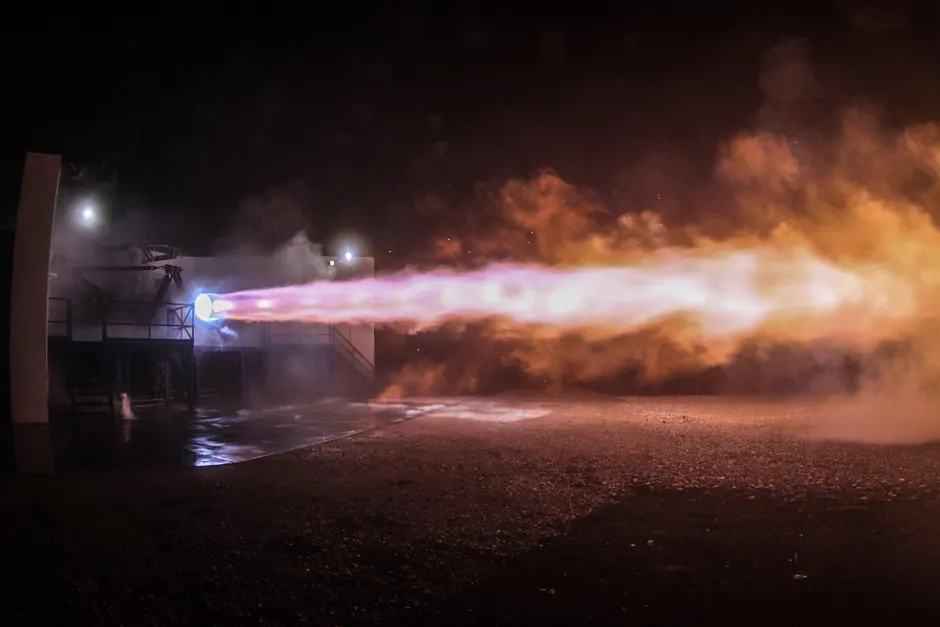
Venus has completed approximately 600 ground tests of its RDRE hardware, with the longest continuous burn reaching 32 seconds, according to the company. The Texas Space Commission has awarded a grant to build a larger test stand, which will expand testing capacity. The new capital will fund continued development work with unnamed potential customers, the company said.
The startup initially focused on hypersonic passenger aircraft but shifted its commercial emphasis toward hypersonic weapons systems and military space applications following a flight test in May 2025. That demonstration marked the first time an RDRE had powered a rocket into flight.
The theoretical appeal of detonation-driven engines lies in their efficiency potential: a detonation cycle can extract more thrust per unit of propellant than conventional rocket combustors by capturing energy from the detonation wave itself, rather than losing it to standard burning. Moving that efficiency from laboratory rigs to reliable flight hardware has been the harder challenge, which is why 600 ground tests and a 32-second burn duration are more telling indicators than the funding figure itself.
Lockheed Martin Ventures' participation deserves attention. Defense contractors' investment arms do not typically fund propulsion startups unless there is a credible pathway to integration — either as a subsystem supplier or as an acquisition target. Whether Venus becomes embedded in an existing missile or launch program, or pursues its own vehicle designs independently, remains unspecified by the company and its investors.
The propulsion funding landscape has expanded and contracted over the past five years in response to geopolitical demand for hypersonic and counter-hypersonic capabilities as much as pure technical progress. Venus's jump from a $20 million Series A to a $90 million Series B reflects that pattern. What distinguishes this round from earlier hypersonic funding is that Venus now has actual flight data — one successful RDRE-powered test flight, not just ground-test results — to demonstrate technical maturity and reduce investor risk.
The longer-term question worth considering is what becomes of the RDRE's potential beyond military applications if Venus's near-term revenue concentrates on defense customers. Historically, detonation-cycle engines that gain reliability in weapons programs often find their way into civil and space-launch applications once the combustor physics stabilizes. Lessons learned from military programs — turbopump design, materials selection — have fed commercial rocketry before. Whether Venus's founders retain the independence and intent to eventually pursue the hypersonic passenger transport vision that launched the company is an open question the Series B does not resolve.