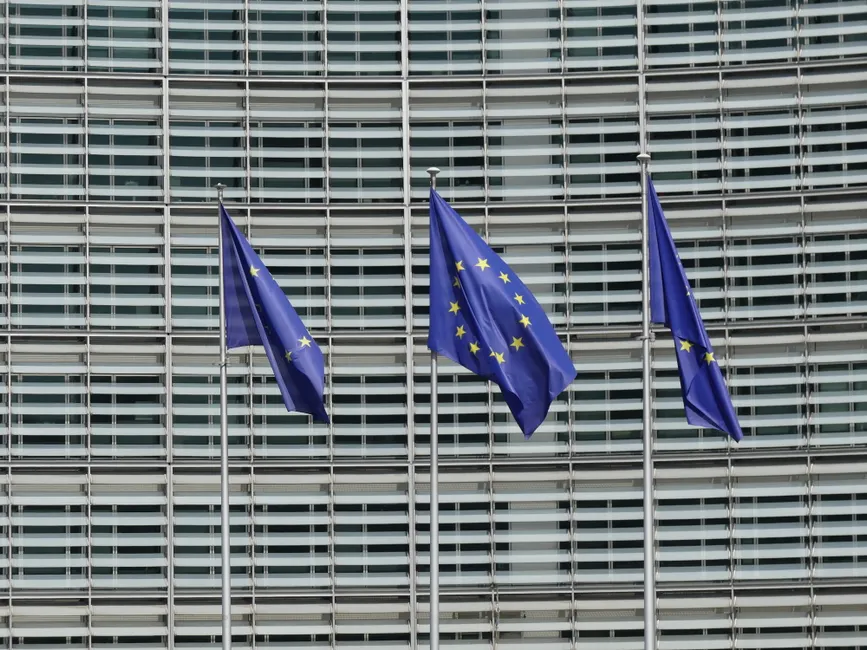
Trump Threatens EU Tariffs Over Proposed Canada Associate Membership

President Donald Trump threatened trade retaliation against the European Union after Brussels proposed Canada as its first associate member. He called the offer "laughable" and a "hostile act" and said he could impose "very serious tariffs or stop trading with Europe," in comments reported 17 September 2026. The Guardian
The threat was conditional. Trump said: "If it's a good intention, that's fine. If it's a bad intention, we'll put very heavy tariffs on [Europe]." He did not explain how Washington would judge intent.
The proposal came from European Commission President Ursula von der Leyen. In the State of the Union 2026 address document published 16 September, she said: "I would like to work with you on opening the door for Canada to be the first associate member of the EU." European Commission
The invitation came a day before Canadian Prime Minister Mark Carney was due to address the European Parliament. Von der Leyen pitched closer cooperation on tech, defence and energy, and said Brussels and Ottawa needed to pull closer as democracies face a "fracture in the international rules-based system," the laws and agreements that govern relations between states.
The cooperation plan she outlined is broad. She said the EU and Canada will work on intelligent manufacturing, create a tech alliance, link their defence industries, and make the Arctic a flagship joint project. She also listed energy, critical minerals used for batteries and electronics, batteries, AI, cyber and economic security as other fields.
That membership category does not exist. The EU has 27 members and has never had associate membership, which would be like adding a new tier of club membership. Canada and the EU already have a trade deal and many bilateral agreements.
Separately, Carney's office said Canada had formally applied to join the British-led Joint Expeditionary Force. The Joint Expeditionary Force is a rapid-response military partnership of 10 North Atlantic NATO member states (NATO is the Western military alliance), including Denmark, the Netherlands, Norway and Sweden.
The dispute follows an existing tariff fight between Washington and Ottawa. Tariffs are taxes on imported goods. The United States imposed 50% tariffs on some Canadian goods after the two sides failed to reach a trade deal. Trump has also threatened to raise tariffs on Canadian autos from 25% to 50% on January 1. Reuters
The broader context here is that three questions will shape the next phase. First is legal form. Associate membership would have to be invented, since no such status exists in EU treaties or practice. Second is industrial geography. The items named, from defence industries to critical minerals, batteries and Arctic operations, point to supply chain and procurement links rather than tariff cuts alone. Third is leverage. By linking the EU-Canada proposal to tariffs on Europe and keeping tariff pressure on Canadian autos and other goods, Washington is treating Ottawa's outreach and Brussels' outreach as one negotiating surface.
In my view, the near-term signals to watch are procedural, not rhetorical. Whether the Commission drafts a legal definition of associate membership, how Parliament receives Carney, and whether the JEF application moves forward will show if this is lasting partnership building or positioning. The tariff warnings, for now, are threats tied to stated intent, not published orders.