Newfoundland and Labrador to Vote on 50-Year Churchill Falls Framework
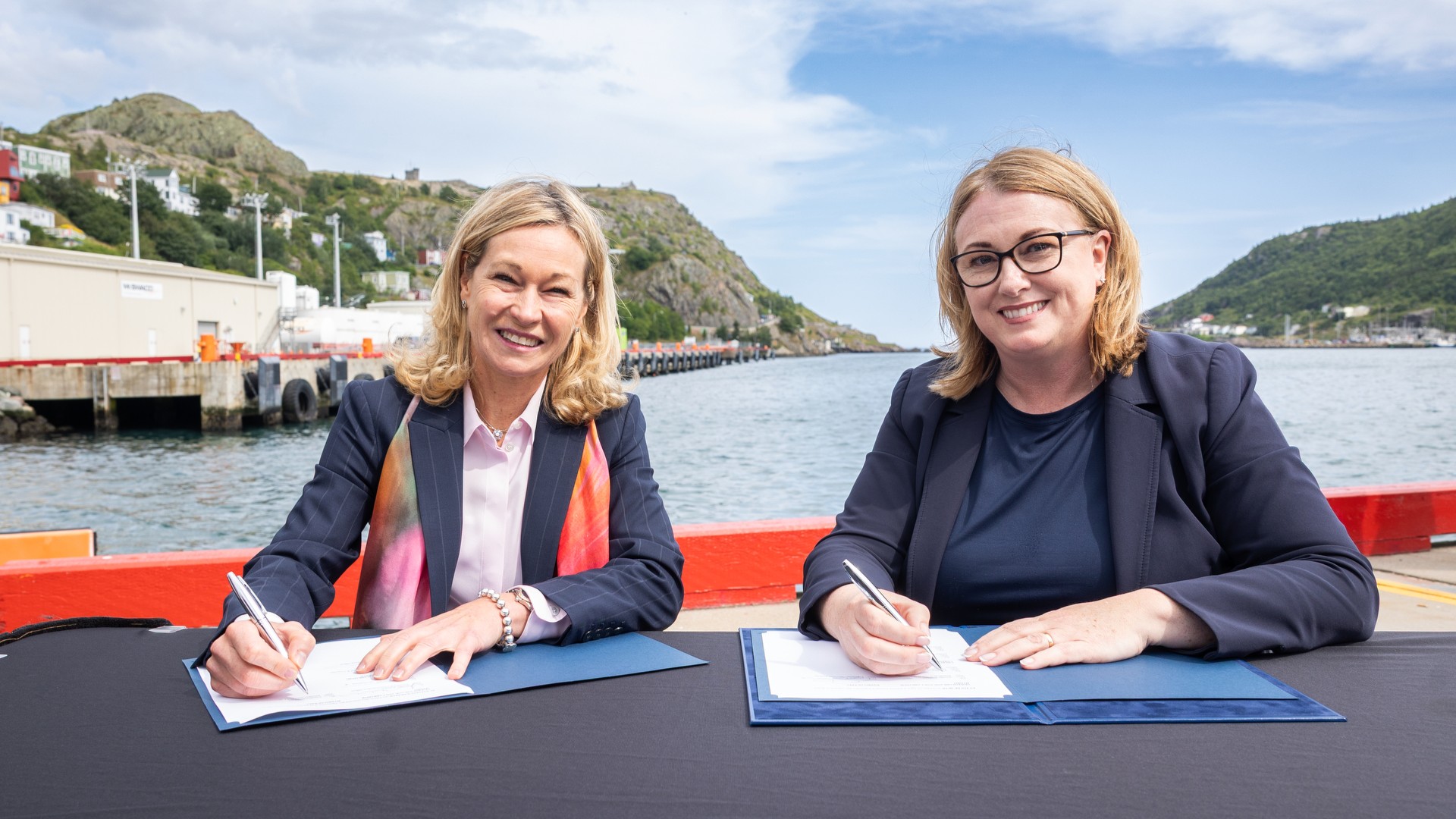
Newfoundland and Labrador legislators were expected to vote on a 50-year framework agreement to share Labrador hydroelectricity with Hydro-Québec.
Premier Tony Wakeham opened the legislature for a four-day debate on the framework agreement. The vote is on a resolution endorsing the draft deal. A resolution is a formal show of support, not a final contract. It is like approving house plans before signing a building contract. Negotiators hoped to reach final agreements by the end of the year if the resolution passes, according to The Globe and Mail.
The debate opened with a split in government ranks. Labrador member Keith Russell left the governing Progressive Conservatives to sit as an Independent at the start of the debate.
Wakeham unveiled the Churchill Falls agreement in St. John's alongside Prime Minister Mark Carney and Quebec Premier Christine Frechette. The federal government would provide about $10-billion in financing for projects in the agreement, including transmission lines and a new power plant at Gull Island.
The buildout and the money
The framework agreement includes proposals for more than $50-billion in new energy infrastructure along the Churchill River. Transmission and new generation are bundled together. Gull Island would supply most of the new power.
Prime Minister Carney described the Churchill Falls and Gull Island development as the largest clean energy investment in North American history, according to Natural Resources Canada. That description was part of the Aug. 17 unveiling, not a construction start. Legislators are being asked to endorse a framework. Procurement, regulatory approvals and final commercial close would follow.
In my view, the order is normal for energy files between governments. A political framework comes first. Final project agreements come second. Financing commitments are announced early to anchor talks. They are not yet money spent.
What replaces what
The commercial core is Churchill Falls. The 5,428-megawatt generating station on the Churchill River in Labrador is co-owned and operated by the Quebec and Newfoundland and Labrador provincial hydro utilities. A megawatt is a measure of electricity output. Under a contract expiring in 2041, Hydro-Québec buys more than 80 per cent of Churchill Falls power for 0.2 cents per kilowatt hour. A kilowatt hour is the unit customers are billed for.
The framework agreement outlines plans for Hydro-Québec and Newfoundland and Labrador Hydro to divvy up power from Churchill Falls, according to CTV News. The new Churchill Falls deal will increase the price Newfoundland and Labrador receives from Quebec for its power, according to Reuters.
Hydro, Churchill Falls, and Hydro-Québec entered into a shareholders' agreement effective June 18, 1999. In December 2024, Newfoundland and Labrador Hydro and Hydro-Québec signed an agreement in principle for the generation of hydroelectricity in Labrador. Hydro-Québec then announced the signing of a Definitive Cooperation and Implementation Agreement (DCIA) with Newfoundland and Labrador Hydro, according to Hydro-Québec. The DCIA is dated August 17, 2026.
On August 17, 2026, the Government of Newfoundland and Labrador published a release titled "Newfoundland and Labrador Reaches Historic Deal with Government of Quebec and Government of Canada to Develop Churchill Falls and Gull Island." The Government of Newfoundland and Labrador reached historic agreements with Quebec and the federal government to replace the 1969 Churchill Falls Power Contract and the December 2024 Memorandum of Understanding between Newfoundland and Labrador Hydro and Hydro-Quebec.
The Churchill River runs through traditional Innu territory called Nitassinan in south-central Labrador.
The broader context here is jurisdiction. Electricity generation sits with the provinces. Ottawa cannot impose a Churchill settlement. It can help finance transmission, lower capital risk and lend federal support to a Quebec-Newfoundland and Labrador bargain. The $10-billion financing envelope is the tool for that role. The location in Nitassinan puts land, consultation and benefit-sharing at the centre of any Gull Island decision, even as the current legislative step is limited to endorsement of the provincial framework.
In my view, the management of the vote needs careful reading. The Russell departure carries weight beyond one seat. Energy files that concentrate construction in Labrador while revenues and rate decisions flow through St. John's have long tested Labrador representation. A four-day debate compresses scrutiny of a 50-year allocation. For Quebec, the calculation is supply duration and price certainty. For St. John's, it is repricing after 2041 and funding a second plant. For Ottawa, it is a clean-electricity contribution that requires no federal ownership. The vote does not conclude any of those questions. It authorizes negotiators to conclude them by December.


