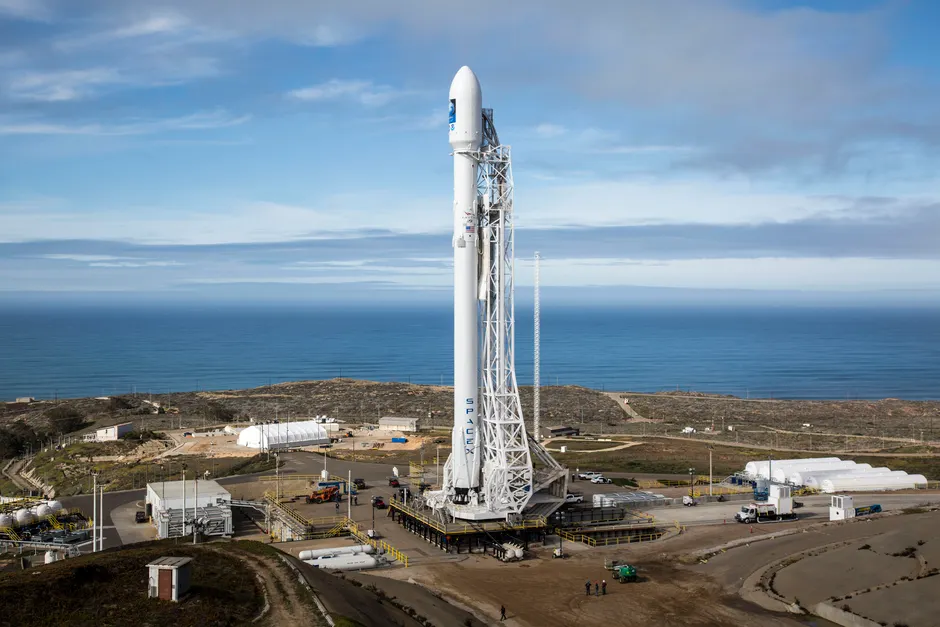
Starship Flight 14: SpaceX Targets September 28 for First Orbital Flight

SpaceX is targeting September 28 for Starship Flight 14, the first orbital flight of the vehicle. The 75-minute window opens at 8:15 a.m. Eastern Time, pending regulatory approval, according to Engadget.
That date is a short slip from September 22. On X, SpaceX described September 28 as the earliest possible date, saying it would launch as early as Monday, September 28.
All earlier Starship tests were suborbital, flying high arcs without circling Earth. Flight 14 would reach 171 miles above Earth and complete six orbits over 10 hours.
The payload is operational, not test weight. The upper stage would insert 26 Starlink V3 satellites into the Starlink constellation for customer service, the first V3 spacecraft to join the network for service. Each V3 supports 1 Tbps of downlink, or data from space to Earth, 10 times more than V2. Uplink, or data from Earth to space, is 160 Gbps per spacecraft, 22 times more than V2.
Recovery plans are conservative for an orbital debut. SpaceX will not attempt to catch the Super Heavy booster with the tower arms on this flight. The booster would splash down in the Gulf of Mexico a few minutes after launch. The upper stage would splash down in the Pacific Ocean near Chile after completing its objectives.
The plan builds on Flight 11, which deployed eight Starlink simulators and completed a third in-space relight of a Raptor engine. SpaceX keeps details on its Starship Flight 14 launch page.
The broader context here is a shift from test demonstrations to orbital utility. Suborbital arcs validate ascent, staging, reentry heating and controlled water landings. They do not validate multi-hour coasting, repeated position and velocity updates across orbits, or a large batch deployment at altitude. A 10-hour, six-orbit mission with 26 working satellites exercises power, thermal control, orientation and communications over durations short hops cannot match.
In my view, the payload choice is the signal. Simulators proved the dispenser works. Flying 26 V3 spacecraft that then enter service ties Starship directly to Starlink capacity growth. The 10-times downlink and 22-times uplink gains per satellite only matter if launch rate and mass per launch can deliver those spacecraft in volume. SpaceX states that starting with Flight 14, Starship will begin flying orbital missions enabling delivery of Starlink V3 satellites and other payloads to space.
Worth flagging for readers watching reuse, skipping the tower catch fits the focus on orbital objectives. Booster recovery is deferred in favor of upper-stage endurance and deployment accuracy. Splashdowns in the Gulf and Pacific keep both stages expendable for now while data is collected on the longer profile.
Looking past the test itself, if the September 28 window holds and approval arrives, Starship shifts from showing it can fly to showing it can work on orbit. That step is what makes high-throughput constellations, payloads flown together on one launch, and sustained orbital operations practical.