Petivity's $150 Smart Feeder Uses Face Recognition for Each Cat
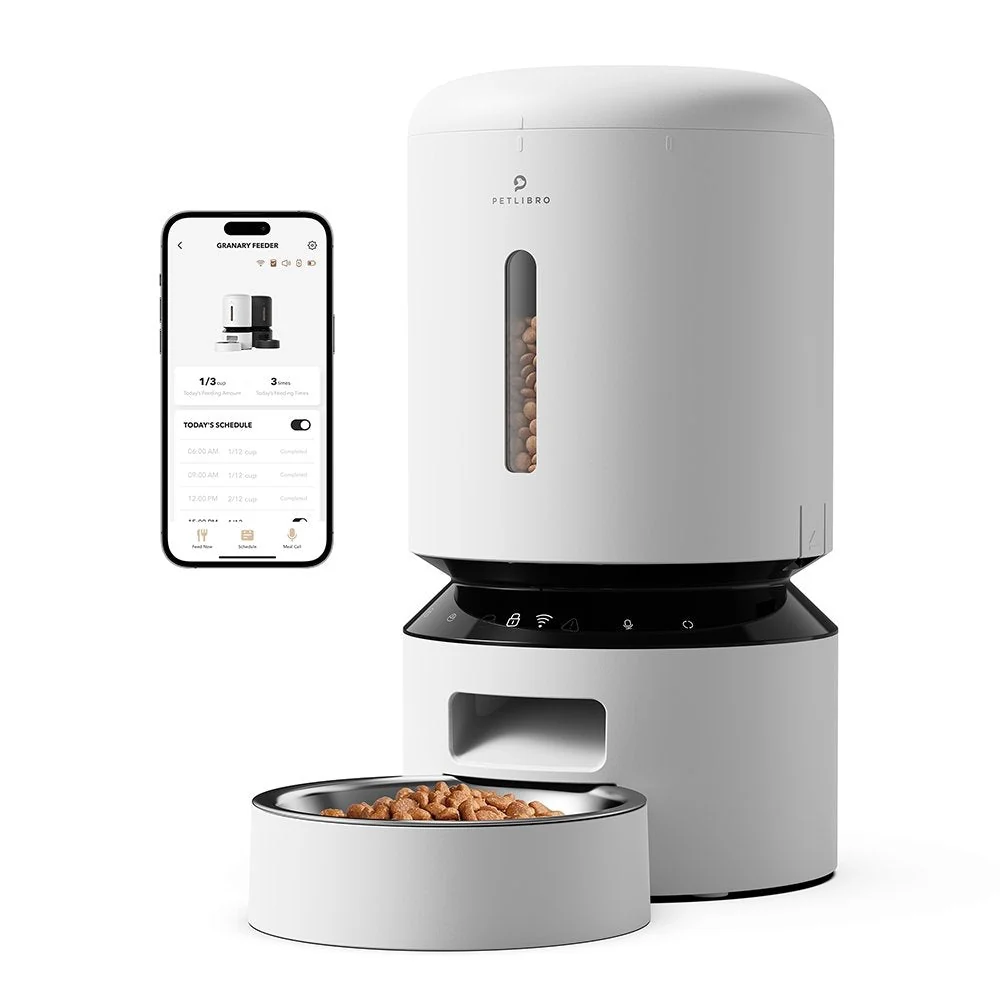
Petivity, which is owned by Purina, has released the Petivity Smart Feeder for Cats, a $150 automatic feeder built for cats that uses a camera and facial recognition to track when and how much each animal eats. Engadget
The device is designed for multi-cat households. It can learn the feeding behavior of up to five cats and assign each feeding session to the right individual. Identification uses facial recognition alone, with no collar tag or microchip required. That collarless design matters for cats, which often reject wearables or lose them.
Petivity says the feeder AI was trained on 21,000 feeding sessions, 1,400 hours of video and more than 15,000 pictures of cats. That volume is large for this kind of task. Telling similar-looking animals apart at close range, in variable kitchen lighting, with the bowl partly blocking the view is a difficult vision problem, where software must interpret images. More training data helps, though it does not guarantee perfect accuracy.
Functionally, the feeder tracks portion sizes, eating frequency and feeding patterns, all visible in an app. Owners can dispense kibble remotely through the app and set custom feeding schedules. The unit also supports video check-ins on cats and sends alerts when kibble runs low. It handles kibble only, not wet food. That narrows coverage, since wet food is common in feline diets for hydration.
Pricing is straightforward. The feeder costs $150 and is available for purchase. No subscription is required to use the AI tracking tools. Product pages on Shop Purina list the same feeder as developed by Purina's experts. Shop Purina
The broader context here is Petivity's existing sensor portfolio. The company already sells the Smart Litter Box Monitor, which uses AI to track and distinguish between multiple cats and to log weight, urination and defecation events per visit. The monitor slides under the litter box and is designed to work with most boxes and litters. Petivity also lists a $129.99 litter-box device for phone-based tracking of weight and habits, a $39.99 Smart GPS plus Activity Tracker for Dogs with a $9.99 per month plan, 30-day rechargeable battery and waterproof housing for dogs over 10 pounds, and at-home tests for kidney health, oral health and gut health.
In my view, the key technical choice is pairing intake tracking with identity without putting anything on the animal. RFID collars, which use short-range radio tags, and microchip readers solve identity cleanly but add friction. Collars slip. Chip readers need precise antenna alignment. Face-based ID removes hardware from the cat and shifts the complexity into the vision model. Households with two or three tabbies that look alike to humans will be the real test.
Worth flagging for buyers is the combination of no subscription and kibble-only operation. No paywall for tracking lowers long-term cost and simplifies adoption. But the app charts will reflect dry-food intake, not total caloric intake, unless owners account for wet food elsewhere. The most useful setup may therefore pair the feeder with the litter box monitor, linking intake on one end with weight and output on the other to catch changes earlier than either signal alone.