Google's $899 Googlebook Bets Your Next Laptop Works Like Your Phone
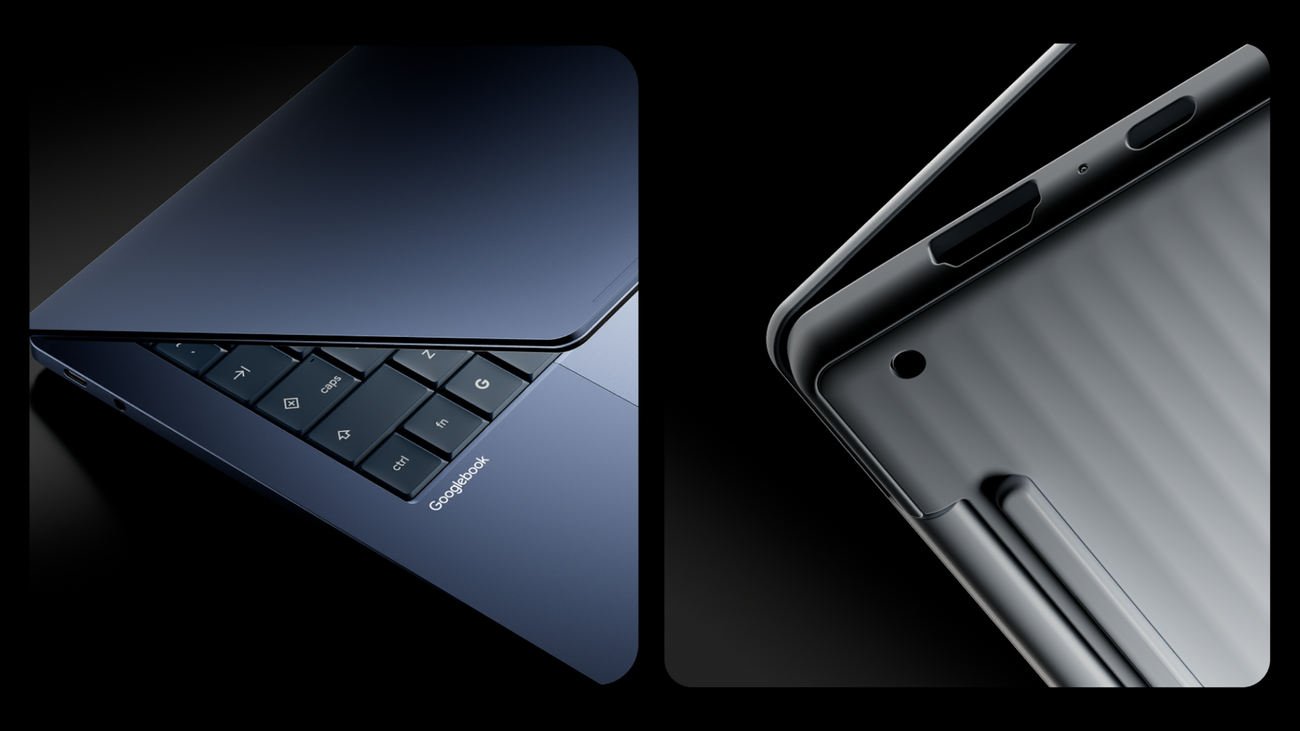
Google has opened pre-orders for its $899 AI-focused Googlebook laptop, which reaches retail on October 4th. The announcement formalizes the Googlebook line first shown in May 2026 and positions it as a step up from traditional Chromebooks. TechCrunch The Verge
The pitch is phone continuity. Google calls Googlebook "the laptop your Android phone has been waiting for." Google
OS and hardware
Googlebook merges Android and ChromeOS experiences in the United States. Reuters The devices run on Android OS with a desktop version of the Chrome browser and other ChromeOS elements, rather than ChromeOS itself. TechCrunch
The broader context here is why that software choice matters. It consolidates the app target around Android, meaning developers target one phone-based platform, while keeping desktop Chrome behavior for web workflows.
Google describes the laptops as designed for Gemini Intelligence with all-day battery, thin and light designs, and seamless Android integration.
The launch hardware is not a single reference device. Googlebook laptops are built with Acer, ASUS, Dell, HP, and Lenovo. Models carry starting prices ranging from $899 to $1,299. Store listings identify devices from Acer, XPS, and Lenovo in the initial comparison set.
The Lenovo Googlebook configuration listed by the Google Store comes with 16GB RAM and 512GB storage, and features Titan-C security. Google Store Google says premium materials and striking design set Googlebook apart. Google
The $899 Googlebook includes 12 months of Google AI Pro with 5TB of cloud storage and Gemini Advanced tools. That bundles model access and storage into the first year of ownership.
In my view, that bundle follows a familiar pattern for prosumer and knowledge-worker laptops, where services are included to ease the cost of the first year.
Gemini feature stack
Googlebook features Gemini Spark and Gemini Live. It also ships three system-level AI surfaces: Magic Cursor, Rambler, and vibe-coded widgets. TechCrunch
Magic Cursor is an AI-powered cursor that serves as a conduit to Gemini. It can highlight webpage content for Gemini, check an email hovered over for suspicious content, and select images for Gemini to visualize together.
The broader context here is how that changes the pointer. It becomes an always-available way to invoke Gemini, closer to a command palette, a keyboard launcher for commands, than to a sidebar assistant.
Rambler is AI-enhanced dictation that cleans up rambling brain dumps into readable text. Vibe-coded widgets allow user-generated, natural-language-created interface elements on the desktop. Neither capability is detailed at the API level, the developer interface level, in the launch materials.
Worth flagging for developers is what that gap leaves open. It is not yet clear how much state these tools can access and how they handle permissions across Android apps and Chrome tabs.
The broader context here is the shift from assistant-in-a-tab to OS-level orchestration. A cursor that can see hover state, selection, and images, paired with persistent Gemini Live availability, implies tighter coupling between input events, screen context, and model context. For developers, the relevant questions will be intent routing, grounding scope, meaning what data the model is allowed to use, and how third-party Android apps expose actions and data without weakening security boundaries.
In my view, the most consequential technical bet is not any single feature. It is running this experience on Android with desktop Chrome. That reduces Google's maintenance of two client OS runtimes in the U.S. consumer laptop segment while giving Gemini a single identity, notification, file, and share substrate borrowed from mobile. The tradeoff will be compatibility edge cases around windowing, peripheral handling, and enterprise policy where ChromeOS had established controls.
Where Chromebooks fit
Google has said there are around 50 million Chromebooks in schools used by students and educators. Google said in May 2026 that current Chromebooks would continue to be supported, with many eligible to transition to the new Googlebook experience in the future.
Worth flagging for fleet buyers is what that support path implies. Googlebook is positioned as a step up from traditional Chromebooks, not as an immediate replacement for managed education deployments. Support continuity plus a future transition path points to two tracks in the near term: Chromebooks for cost-sensitive, centrally managed fleets, and Googlebooks for Gemini-centric personal and professional use.
Worth flagging for buyers and IT evaluators is also what remains unspecified in the verified launch details. Battery life is described only as all-day. Processor, NPU throughput, a measure of AI chip speed, memory bandwidth, and on-device versus cloud inference splits, meaning whether AI work runs on the laptop or in data centers, are not stated in the materials covered here. Zero-trust enrollment, update cadence, and admin controls for the new Android-based desktop stack are likewise not detailed. Those gaps matter more than industrial design for total cost of ownership.
Looking at what this enables if the execution holds, the upside is clear. A laptop that inherits Android's app catalog, identity, and accessory ecosystem, while keeping desktop-grade browsing and adding system-wide Gemini entry points, could reduce friction for users already centered on Android phones. My own household long ago stopped distinguishing between phone tasks and laptop tasks. The kids simply expected continuity. Google is now making that expectation an explicit product requirement.
In my view, that optimism should be tempered by adoption reality. An $899 starting price asks buyers to purchase new hardware for an AI workflow rather than receive it as a software update. Bundled AI Pro and storage soften the first year. Sustained value will depend on whether Magic Cursor, Rambler, and vibe-coded widgets become daily utilities or demonstrations. Developers and early professional users will decide that quickly once hardware ships on October 4th.


