Typhoon Dujuan in Japan: Deaths, Evacuations and Power Cuts Explained

Typhoon Dujuan killed at least four people in Japan and injured 22 others, leaving tens of thousands of homes near Tokyo without power. The figures were reported on Sept. 22 as the storm moved across the country's Pacific side with heavy rain and high winds. The Guardian
More than 1.9 million people across six prefectures were urged to evacuate as Dujuan battered the country. The call coincided with a forecast of record rainfall for Tokyo, which placed the capital region at the center of the response. BBC
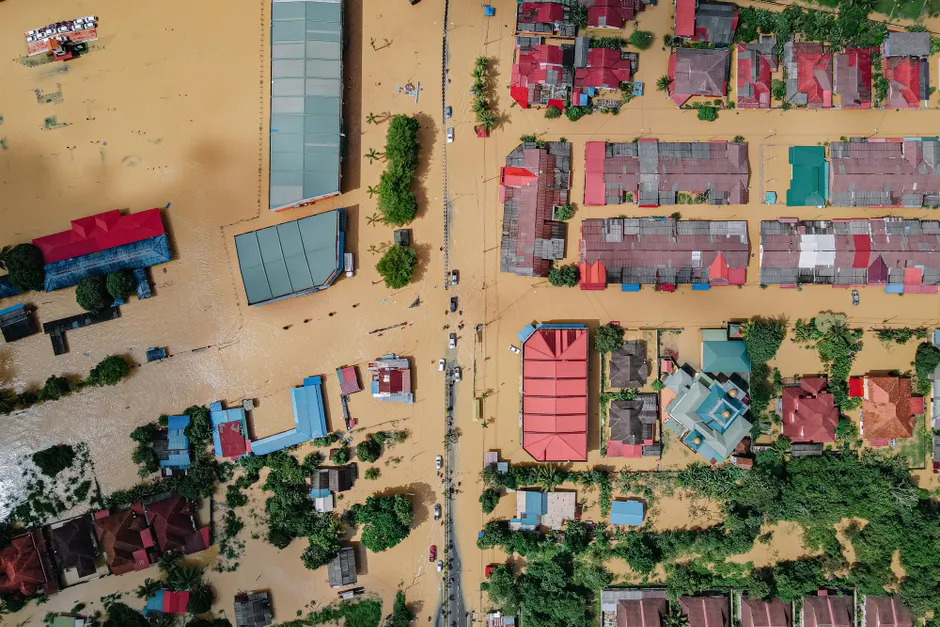
On Sept. 21, the typhoon was approaching Japan's Pacific coast with torrential rain and violent winds. Authorities warned of flooding and landslides, with national and local systems issuing overlapping alerts for river flooding and slope failure, when soaked hillsides give way. Reuters
Flood and landslide warnings remained the central hazard message through Sept. 21. Japanese authorities issued emergency landslide warnings in affected areas, a designation reserved for imminent risk to life and property. Tens of thousands of households near Tokyo lost supply during the storm's passage. USA Today
Earlier tracking shows a compact system gaining organization, like an engine gathering strength over warm water. On Sept. 17 at 06:00 UTC, the Japan Meteorological Agency listed DUJUAN as a large tropical storm — an earlier, less intense stage of a typhoon — with 996 hPa central pressure, where lower pressure means a stronger storm, and winds of 20 m/s (40 kt). Japan Meteorological Agency
The broader context here is the sequencing from offshore storm to mass evacuation. A four-day interval between that Sept. 17 classification and coastal impact provided warning time. The scale of the order for nearly two million people suggests authorities chose to act early across multiple prefectures rather than wait for precise landfall guidance.
Looking at what this means for emergency management, the numbers to watch are not only casualties but displacement and grid recovery. Evacuation on this scale tests shelter capacity, transport continuity and public communication, and concurrent power loss near Tokyo adds to that strain. Casualty counts often shift in the first 48 hours as access is restored and damage is surveyed, and infrastructure outages can lag behind the weather clearing.