Meta Wants Glasses to Replace the Phone, but Trust Is the Hurdle
Mark Zuckerberg said in a private WhatsApp exchange that he would not make child safety his personal main focus because he was more focused on other areas like building the metaverse.
The exchange was with a person who has not been identified, according to exhibits later released as part of lawsuits. It resurfaced in a feature published by The Verge on September 22, 2026, titled "Can you forget how you feel about Meta?" The piece centers on Zuckerberg, CEO of Meta, and on products under him spanning AI, smart glasses and social media.
In 2021, Zuckerberg posted a rebuttal on Facebook to whistleblower allegations that Facebook was harming children. The Verge feature returns to that rebuttal and pairs it with the private messaging, in which the internal priority was the metaverse effort rather than child safety as a personal focus for Zuckerberg. Facebook later changed its company name to Meta to reflect its metaverse priority.
Meta released a personal AI agent dubbed Muse in early September. An agent here means software that can act on your behalf across apps. The company scheduled Meta Connect 2026 as a two-day livestream event for September 23-24, with a stated plan to showcase breakthroughs in AI technologies, AI glasses and VR, according to Meta.
Connect is now a yearly cadence for this stack, the combined hardware and software. Meta published a Connect 2025 Day One keynote recap titled The Evolution of AI Glasses, Metaverse Momentum, & More. The 2026 edition arrives with more hardware in market and more AI surface area, meaning more places where developers are asked to build, to explain to developers.
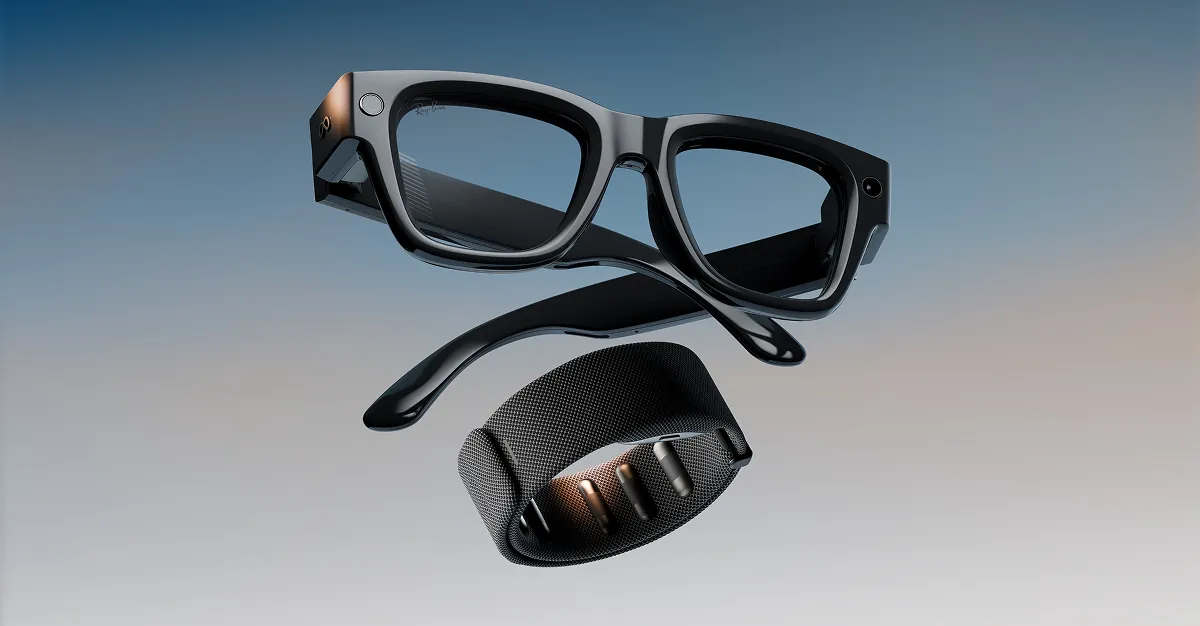
The current glasses lineup is built around the Meta Ray-Ban Display and a Neural Band, a wristband controller. Meta AI built into the glasses provides real-time answers, visual information, translations and guided navigation, according to Meta. Meta states its AI glasses work with WhatsApp, Facebook and Instagram.
The broader context for developers here is that integration point. Glasses as a client for three major messaging and social graphs, essentially maps of who connects to whom, is a different proposition from glasses as a standalone gadget. Identity, contacts, media capture and assistant context all flow through apps teams already operate against.
Meta announced a new range of Meta Glasses starting at $299, while the Ray-Ban Display glasses were priced at $800, according to Reuters. Separately, Meta plans to release camera-free smart glasses internally code-named Luna in fall 2026, according to Reuters.
From an engineering standpoint, a camera-free version is a telling choice. It removes the most sensitive sensor from the bill of materials, the parts list that sets cost, and from the social contract of wearing a face computer in public. It also forces hard decisions about input, output and on-device workload, or computing done on the glasses themselves. Audio plus wrist-based input plus a display has to carry use cases that a camera would otherwise handle with a single frame.
EssilorLuxottica is the maker of Ray-Ban. Shares of EssilorLuxottica hit an all-time high, adding nearly $20 billion in market value amid investor enthusiasm over Meta AI glasses.
The broader context here is a collision between platform ambition and institutional trust. Meta wants glasses to become a primary compute surface, with Muse as the agent layer and WhatsApp, Facebook and Instagram as distribution. Persistent identity plus multimodal input, meaning voice, vision and touch combined, plus a personal agent is exactly how a post-phone device would be expected to work.
In my view, the friction is not technical. It is memory. Enterprise buyers, regulators and parents remember the 2021 whistleblower period and the internal prioritization of the metaverse over child safety as a personal leadership focus. I have watched my own two children grow up through successive defaults around sharing, location and algorithmic recommendation, and defaults set at platform scale tend to outlast any single product cycle. Developers building on top of this stack inherit that history in procurement reviews, permission prompts and user hesitation.
For builders heading into Connect, two questions stand out. First, what Muse can actually do across Meta surfaces with stable APIs, standard connections for outside developers, plus permissions and auditability, or clear logs of what the agent did. An agent demo is easy. An agent platform requires scoping, revocation, logging and clear failure modes. Second, how Meta segments capabilities across camera-equipped, display-equipped and camera-free hardware without fragmenting the developer target beyond recognition.
Worth flagging in that light: the Luna plan and the $299 entry point suggest Meta understands that social acceptability and price are system constraints, not marketing details. A lower-cost tier widens the install base for audio-first agents. A camera-free tier tests whether users want translation, navigation and messaging on the face even without capture. If either tier finds traction, the addressable surface for assistants grows quickly.
Over the long arc, the optimistic case is straightforward. Lightweight, hands-free access to real-time answers, translation and navigation is genuinely useful. It reduces phone pull-outs. It helps people with low vision, people working with their hands full, and people navigating unfamiliar places. Technology of that kind has, on balance, expanded what ordinary people can do, and glasses are a plausible next step after the smartphone and the wireless earbud.
In practical terms, that outcome depends on execution that respects constraints. Clear sensor indicators, predictable data handling, and serious tooling for parents and IT admins will matter as much as model quality or display brightness. Connect will show how far the hardware and models have come. The harder test is whether Meta can ship a developer platform and a trust model at the same pace.


