Zuckerberg's 6,500-Word Manifesto Maps Meta's Path to 'Personal Superintelligence'

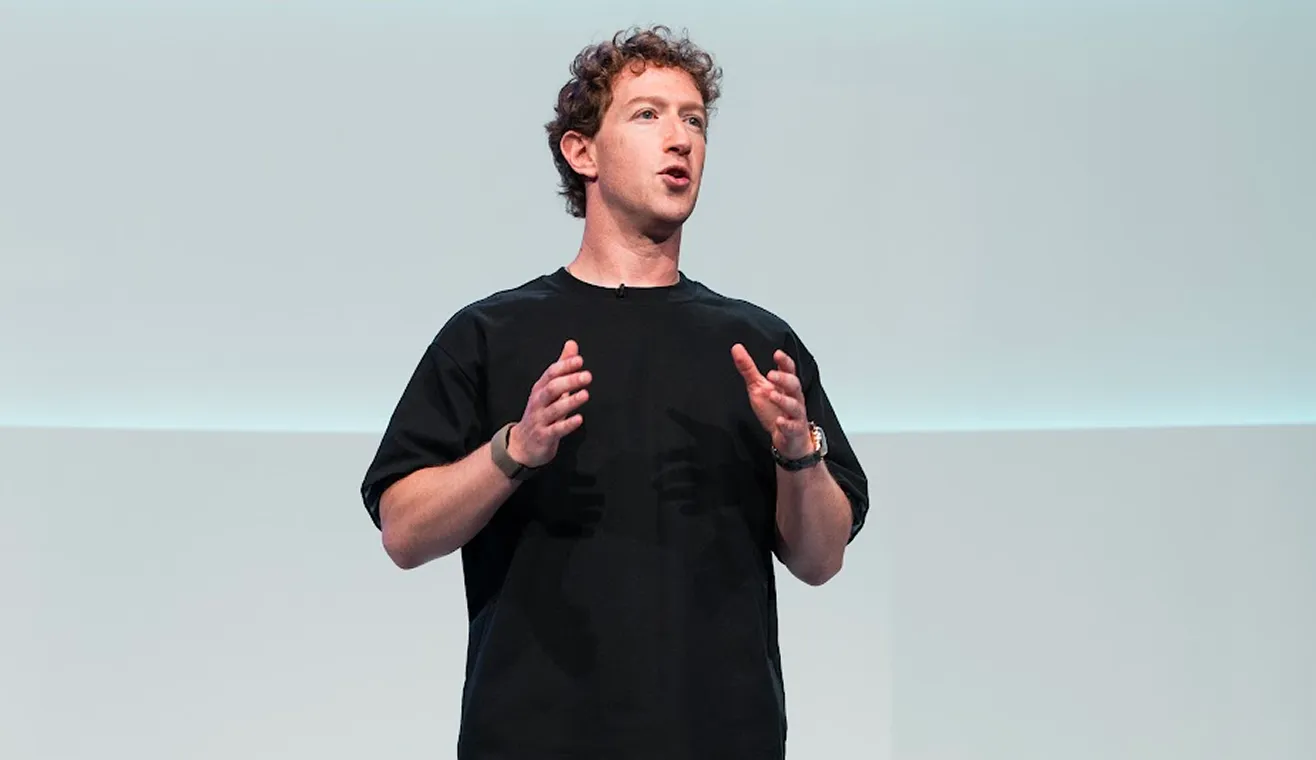
Mark Zuckerberg published a 6,500-plus-word manifesto titled 'The Future is for Everyone: The Path to a Positive AI Future' on August 10, 2026, laying out Meta's philosophy on AI development, infrastructure, and regulation The Verge. The essay, released alongside a video posted to his Facebook account, builds on themes from a shorter public letter the previous year and previews how Meta plans to position itself around superintelligent AI — a term for AI systems that exceed human capabilities across a broad range of tasks The Verge.
At the core of the manifesto is Zuckerberg's argument that delivering 'personal superintelligence to billions of people and small businesses' will enable widespread entrepreneurship. He wants to offer this technology 'for free or as affordably as possible' through the release of more open source AI models — models whose code and weights (the learned parameters that define a model's behavior) are publicly available for anyone to use and modify The Verge. Zuckerberg frames US leadership in the open source AI ecosystem as a geopolitical necessity, noting that competing foreign models hold advantages because they face fewer restrictions on what training data they can use The Verge.
On the policy front, Zuckerberg argues the US needs to rethink its approach to AI distillation — the process of training a smaller, cheaper model by having it learn from a larger, more capable one — and broader data use. He does not believe restricting access to foreign open source models is an effective solution The Verge.
The manifesto also lays out Meta's physical infrastructure commitments. The essay discusses AI infrastructure at enormous scale, including multi-gigawatt supercomputers such as the 1 GW 'Prometheus' Meta Newsroom. For context, a single gigawatt is roughly the output of a large nuclear reactor. Alongside these buildouts, Meta pledged to construct energy-generating infrastructure wherever it invests in AI infrastructure, potentially returning low-cost energy to local communities. Zuckerberg wrote that 'Sustainable infrastructure development means that communities must benefit significantly from each project' The Verge. The company also committed to 'restore more water than we use in the watersheds where we operate by 2030' The Verge.
To support communities near its data centers, Meta is launching a 'Future Is For Everyone Fund' The Verge. Zuckerberg also announced America's Workforce Academy, created with academic and workforce partners to provide free training for skilled tradespeople Facebook. In the essay, Zuckerberg said Meta is providing this free training alongside 'guaranteed high-paying jobs' for these tradespeople in areas where the company is building data centers The Verge.
The infrastructure and community commitments serve as a direct response to the resource-intensive realities of training and deploying frontier models — the most advanced AI systems, which require vast amounts of computing power, electricity, and water for cooling. Tying gigawatt-scale data center development to local energy generation and workforce training is a notable approach to community relations for hyperscale infrastructure operators like Meta. By addressing water restoration, power generation, and labor pipelines simultaneously, Meta is attempting to reframe the local narrative around AI buildouts from one of pure resource consumption to one of economic contribution.
Zuckerberg's push for open source models against the backdrop of international competition also raises immediate technical and regulatory questions. His argument against restricting foreign open source models and for rethinking data use and distillation policies targets ongoing debates among US policymakers and labs regarding how to handle model weights and training data provenance — the documented origin and licensing status of the data used to train a model.
Looking at what this means for the broader AI landscape, Meta is positioning open source availability as the default mechanism for global AI distribution. The pledge to make personal superintelligence affordable or free, combined with the infrastructure commitments, outlines a vertically integrated strategy. The company intends to control the compute, the energy, the workforce, and the model distribution. This is a comprehensive roadmap for how a hyperscaler plans to operationalize superintelligence at a global scale.
The framing of these initiatives under the umbrella of universal access and local benefit is a clear effort to align Meta's commercial and infrastructure expansion with broader public good arguments. Delivering on multi-gigawatt supercomputers and local energy grids requires navigating significant engineering, regulatory, and logistical hurdles. The path to 'personal superintelligence' runs directly through local municipal utility boards and skilled labor markets.