Cheshire's First Wasp Spider: A Northern Step in a Century-Long Expansion
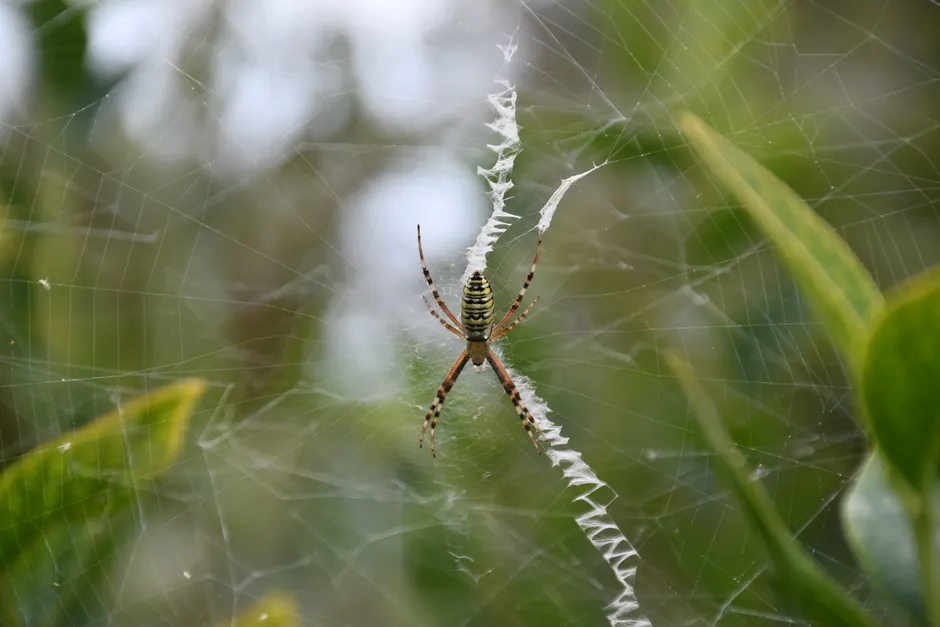
A fully grown female wasp spider (Argiope bruennichi) has been recorded in Cheshire for the first time. Conservationists from Chester Zoo found it in a rewilded field on the zoo estate. An expert from the British Arachnological Society confirmed the record as the first for the county The Guardian.
The discovery came during a routine 'bioblitz', a short intensive wildlife survey, across 80 hectares of land set aside for nature. Chester Zoo staff nicknamed the spider 'Wendy'. Scott Wilson is head of field programmes at Chester Zoo. Wendy is female.
Argiope bruennichi is native to mainland Europe, north Africa and Asia. It was first recorded in the UK in the 1920s. It is described as a 'climate refugee' extending its range north as the planet heats. To date there have been only a handful of sightings north of the Midlands.
The species has also been moving west into Worcestershire, Herefordshire and Warwickshire. It arrived in England from continental Europe and was first spotted in Worcestershire in 2025 GB News.
Wasp spiders carry distinctive yellow, black and white stripes. Females can grow to about 2cm in body length, making the species one of the largest spiders found in the UK. Males reach only about a quarter of the length of females. Males are far smaller. Wasp spiders cannot fly. They are not dangerous to humans. Studies have found up to 80% of males die after their first mating attempt.
The broader context here is how range-edge records work as distributional data. A first county record is a point observation, verified by taxonomic expertise, not in itself evidence of a breeding population. For Argiope bruennichi, the interest lies in direction. Northward extension and westward infill, logged through successive county firsts, let arachnologists map pace and pattern of expansion rather than infer it from climate models alone.
Looking at what this means for monitoring, the circumstances of the Cheshire find matter as much as the location. A systematic bioblitz on land managed for nature increases detection of a showy but patchily spread species. Rewilded grassland and field margins provide structure for orb webs, the circular traps, while regular survey effort creates a baseline to assess persistence, recurrence and eventual breeding. In my view, the next questions for recorders are narrow and practical: whether Wendy remains solitary, whether egg sacs or juveniles appear in subsequent seasons, and whether nearby sites yield parallel records.
In the longer view, for specialists tracking UK arachnids, Cheshire adds a northern data point to a long-running expansion that began a century ago in the south. It does not rewrite the species account. It refines the map.


