Palestinian Americans Press Congress to Block $2.8B Bomb Sale to Israel
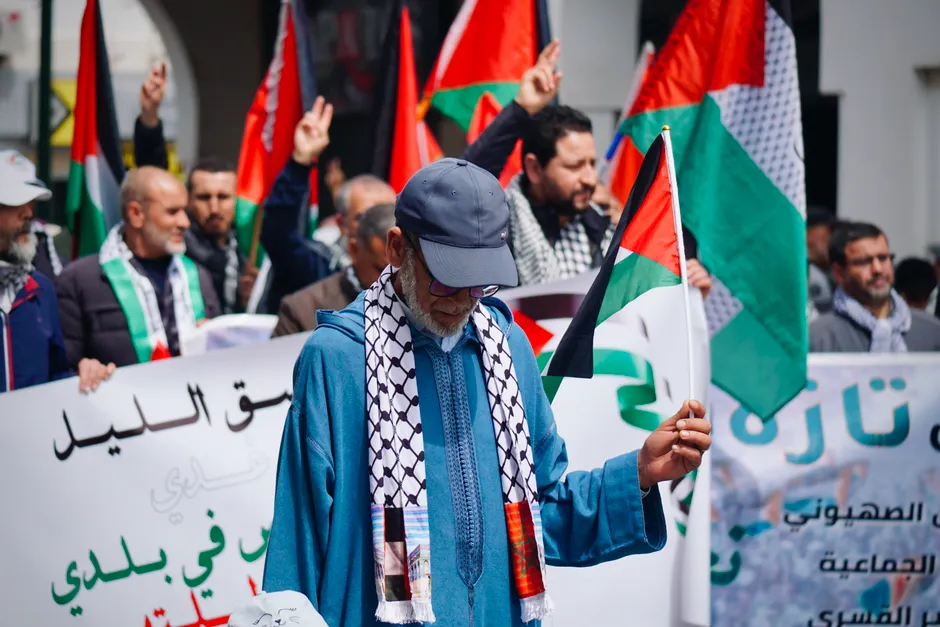
More than 300 Palestinian-American constituents spread across the U.S. Capitol on September 22, 2026, meeting with the offices of more than 100 House and Senate lawmakers to oppose a $2.8 billion U.S. bomb transfer to Israel. Al Jazeera
The advocacy day was organized by Americans for Justice in Palestine Action (AJP Action). Participants came from 26 states. The turnout made it one of the larger constituency-based Palestine advocacy efforts on Capitol Hill this Congress.
Organizers timed the day to the Trump administration's approval of a $2.8 billion military package centered on 2,000-pound MK-84 bombs. As reported, the package includes 20,000 MK-84 munitions and 20,000 BLU-117 bombs, both air-dropped weapons with wide blast effects. Al Jazeera
Clearance in Congress has not moved smoothly. House Foreign Affairs Committee ranking member Gregory Meeks, the top Democrat on the panel, used his position to slow approval of the transfer. Under the informal review process for major arms sales, a chairman or ranking member can pause formal notification to press the administration for more information or negotiation.
AJP Action Executive Director Osama Abu Irshaid led the delegation effort. Organizers described the meetings as constituent lobbying, not protest. Participants cited ties to their home districts and requested sit-downs with their own representatives and senators.
Jenna Escheik, 19, met with Virginia lawmakers and staffers including Democratic Senator Tim Kaine and Republican Representative Rob Wittman. Yaseen Shaikh, 22, traveled with a Cleveland, Ohio delegation to meet with the offices of Republican Senators Jon Husted and Bernie Moreno. The meetings crossed party lines by design.
The planned sale has drawn criticism over mass targeting of civilians in the region. Al Jazeera Reuters first reported on September 15 that President Donald Trump's administration was planning the $2.8 billion munitions sale to Israel. Reuters
As of January 2026, Israel was preparing for talks with the Trump administration on a new 10-year security deal to extend U.S. military support. Reuters
The broader context here is about leverage inside Congress and within both parties. Direct constituent meetings rarely stop an approved transfer on their own. They can reinforce a hold by a senior committee member, expand the list of offices willing to ask questions, and create a record of opposition that administration briefers must address.
Looking at what this means for U.S. arms policy, the MK-84 itself is central. The 2,000-pound general-purpose bomb has become a focus of legal and political debate over proportionality, meaning whether civilian harm is excessive compared to military advantage, collateral effects in dense urban areas, and end-use rules under U.S. law. Opponents focus on the bomb type rather than the dollar figure alone. Supporters frame such transfers as preserving Israel's qualitative edge, its military advantage in the region, and replenishing stockpiles.
In my view, the next signs to watch are narrow. Whether Meeks maintains his delay, whether other committee leaders join him, and whether the administration moves to formal notification despite objections will show if September 22 was a pressure event or a turning point. The parallel 10-year memorandum track will also shape how both sides handle this dispute, since a fight over one package can set precedent for the larger commitment to follow.