The House Vote on Israel Aid: A Democratic Party in Open Fracture
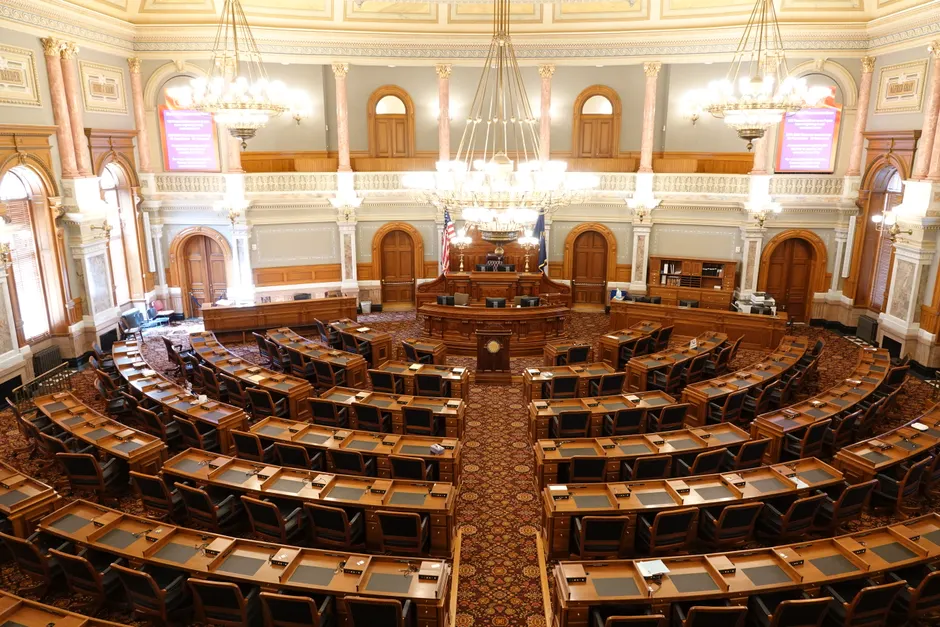
On July 15, 2026, the House of Representatives defeated an amendment that would have eliminated $3.3 billion in security assistance to Israel. The vote was 314-104 against the measure. But the headline wasn't the margin — it was who crossed which lines.
The amendment was introduced by Republican Representative Thomas Massie of Kentucky as part of bill HR 7148. It failed in Roll Call 43, conducted as a recorded vote (House Clerk).
Every Republican except Massie himself voted to keep the funding flowing, defending what has long been treated as an untouchable commitment: unrestricted military assistance to Israel. That near-unanimous GOP stance made the split among Democrats all the more striking. House Minority Leader Hakeem Jeffries had urged his caucus to reject the amendment, calling it "overly broad" in a letter sent July 14, the day before the floor vote (Politico).
Despite that, 103 Democrats — nearly half the caucus — voted in favor. Among them was House Minority Whip Katherine Clark, whose job is to count votes and enforce party discipline. Her decision to defy Jeffries placed the minority leader and his chief enforcer on opposite sides of one of the most sensitive foreign policy questions Congress has faced this session. The Hill reported that Democratic leaders were openly split (The Hill).
Former Speaker Nancy Pelosi also voted yes, but with a caveat. She called the amendment "ill-conceived" while saying she supported it "for the message that it sends" (The Guardian). Her phrasing — backing a measure while disclaiming its substance — captured the awkward position many Democrats found themselves in: caught between progressive pressure to signal dissatisfaction with current Israeli government policy and institutional caution about actually cutting security assistance.
The broader context here is worth understanding. Republican leaders had made Massie's amendment eligible for floor consideration — a procedural choice widely interpreted as an effort to force Democrats into politically uncomfortable votes ahead of the midterm elections (The Guardian). The strategy relied on a simple calculation: Democrats voting yes could be attacked as anti-Israel; those voting no risked alienating a progressive base increasingly hostile to unconditional military aid. Republican unity ensured the amendment would fail while maximizing Democratic exposure.
Massie himself was a politically spent force in this fight. He lost his re-election bid after pro-Israel lobby groups supported his rival (The Guardian). His amendment drew almost no Republican co-sponsors, a sign of how thoroughly his own party had isolated him on the issue, even as his proposal gave Democrats the vehicle for a protest vote.
In my view, the most revealing number from this vote may not be 104 — the number who voted to cut the aid — but 314, the number who voted to keep it. Politico called the Democratic defection a "seismic shift" in the party's stance on Israel (Politico). Whether that label holds up will depend on whether future spending bills see similar levels of Democratic defection or whether this was a one-off protest amplified by midterm politics.
Public opinion adds weight to that question. An Institute for Global Affairs poll found that only 16% of US adults think unrestricted aid to Israel should continue, with that figure dropping to 9% among adults under 30 from both parties (The Guardian). The gap between that sentiment and the 314 members who voted to preserve the funding is considerable, and gaps of that kind tend to widen over time rather than close.
The foreign policy backdrop adds another dimension. Vice President JD Vance spent hours on Joe Rogan's podcast accusing unnamed figures "within Israel's system" of working to undermine his diplomacy with Iran (The Guardian). That accusation, from a vice president actively engaged in nuclear negotiations with Tehran, places the Israel aid question within a larger administration posture that views Israeli influence in Washington with active suspicion. Democratic members voting to cut aid are operating in the same political atmosphere, even if their motivations differ from Vance's.
The 314-104 margin means the amendment was never close to passage. The political significance lies almost entirely in the Democratic breakdown: a minority leader unable to hold his caucus, a whip voting against her own leader, a former speaker casting a protest vote with a disclaimer, and nearly half the party willing to go on record against $3.3 billion in security assistance that has long been treated as untouchable. The next appropriations cycle will reveal whether this was a pressure valve or a new baseline.


