Pakistan's Limited Drone Deal With a Trump-Linked Firm, Explained

On September 16, Pakistan's military chief Field Marshal Asim Munir received a delegation from Powerus at military headquarters in Rawalpindi.
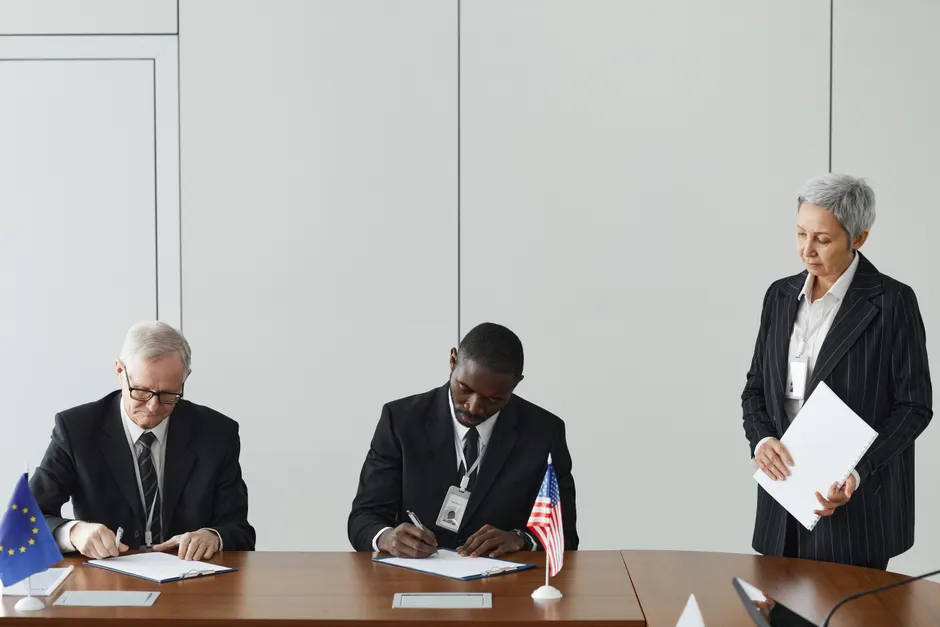
The meeting formalized two linked steps. Powerus signed a memorandum of understanding with the Pakistan Army, a written statement of intent that is not a final contract, and said Pakistan's Ministry of Defence had placed a "limited procurement order" for unmanned aerial systems, or drones Al Jazeera. The memorandum included an initial drone-related order, according to earlier reporting of the announcement Reuters.
No value or specific systems were disclosed. Powerus said its memorandum with Pakistan is not a definitive agreement, creates no purchase obligation, and is subject to U.S. laws and government approvals.
Powerus was founded in 2025 and is based in Florida. One cofounder is Brett Velicovich. Another cofounder is an Israeli military veteran. Pakistan does not recognise Israel.
Donald Trump Jr. and Eric Trump are investors in Powerus through a vehicle called American Ventures. American Ventures is expected to hold a 9.9 percent beneficial stake, or ownership share, in the combined company after Powerus merges with Aureus Greenway Holdings. That merger, with the Nasdaq-listed company traded on the U.S. Nasdaq stock exchange, is expected to close in the final quarter of 2026.
The Pakistan memorandum is only half of Powerus's South Asia footprint. The company partnered with India's Paras Defence Firstpost. It gave an Indian defence manufacturer the exclusive right to make and sell its drone interceptor technology in India. Interceptors are systems built to find and stop hostile drones.
The two tracks work differently. One involves direct supply discussions with the Pakistan Army under U.S. export controls, the rules that govern what military technology can be sold abroad. The other involves licensed production of interceptor technology inside India. Neither track has produced public detail on volumes, timelines or delivery schedules.
The broader context here is about access and permission. For practitioners, an MOU plus a limited order is a familiar sequencing device. It establishes a counterpart relationship, tests bureaucratic and export-licensing pathways, and leaves scale for later. The explicit caveat on U.S. laws and approvals is the operative clause. It will determine whether any initial order converts into sustained procurement.
Looking at what this means for diplomacy, the dual presence in India and Pakistan invites careful management. Defence firms routinely sell to rival states. The complication here is concentration around a single technology set, counter-UAS interception, and around a firm whose investor base and founding team carry their own political signals in Islamabad and New Delhi. How Pakistan, India and Washington each price that overlap will shape whether these early documents become programs.