PitPro Puts Its Tire-Changing Robot to Work in Calgary
PitPro Automation has installed its first automatic tire-changing system at a Kal Tire shop in Calgary, Alberta.
The deployment, reported Sept. 23, puts the San Francisco startup's hardware into live commercial use for the first time. Founder and CEO Jeremy Conrad confirmed the location to TechCrunch, which places the system in a working retail service bay rather than a test facility.
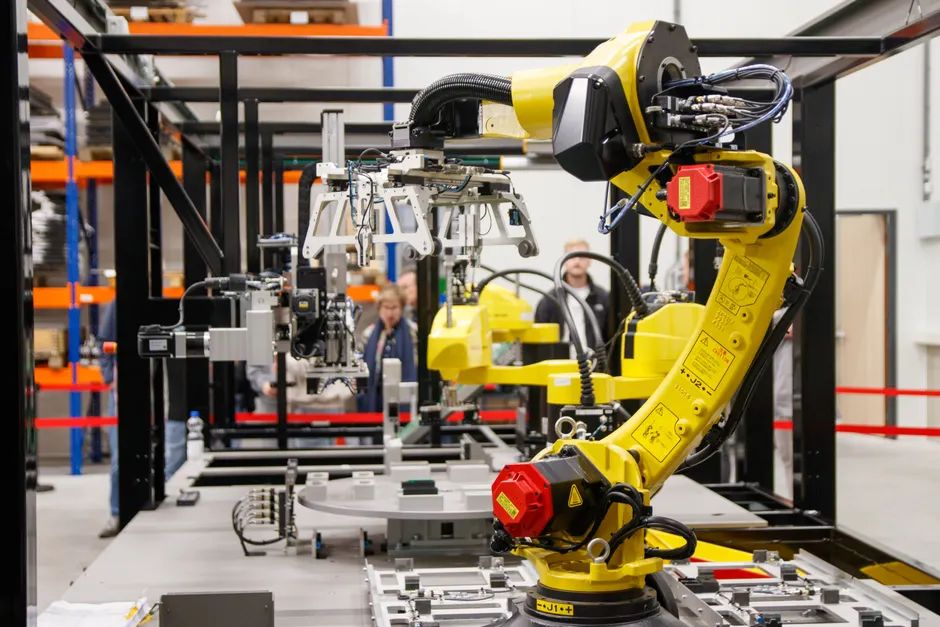
The system centers on two oven-sized robots. Using sensors and a robotic arm to find and loosen lug nuts, the bolts that hold a wheel in place, it completes a full four-tire swap in under 15 minutes. That time covers a complete set, not a single wheel.
It is designed for Class 3 and below single-axle vehicles, in practice regular cars and lighter work trucks and vans, according to company material cited by Automotive News. That is the segment with the highest tire change volume and the most standard vehicle shapes. PitPro first described the platform publicly as a fully automated tire-changing system for fleet vehicles in a Business Wire press release titled "PitPro Unveils Fully Automated Tire Changing System for Fleet Vehicles".
For fleet operators, the company points to less downtime and lower direct cost. PitPro claims the system cuts fleet downtime by up to 90%, as reported by Tire Review, and saves operators $100 to $300 per service, as stated in its June 2025 announcement. Its site at pitproauto.com lists full tire changes and rotations in less than 15 minutes, matching the Calgary figure.
The broader context here is shop throughput, not only labor substitution. A tire bay runs as a fixed sequence of lift, loosen, remove, mount, tighten to spec, and verify. Automating lug-nut location and removal tackles the step that varies most. Ride height, wheel condition, aftermarket wheels and corroded hardware all create edge cases. The throughput gain holds only if the cell handles that variety without a technician stepping in.
In my view, Calgary is a practical first site. A cold-weather market brings dense seasonal changeover demand. A national chain location brings steady volume and trained staff to observe failure modes. The items to track are intervention rate, the average time between assists, recalibration load across wheel types, and how torque verification, or proof wheels were tightened correctly, is logged for liability.
Worth flagging is the fleet angle. Fleets measure cost in vehicle-hours unavailable, not only invoice cost. If a sub-15-minute automated cycle holds up across Class 3 and below single-axle vehicles, scheduling becomes more predictable. Bays can run back-to-back services with less idle time between jobs. Single-install performance does not settle fleet-scale economics, but it creates the operating data to test it.
Stepping back, the longer pattern favors this kind of task-level automation. Tire work is physically demanding, repetitive and sensitive to procedural error. Systems that take on the heavy, constrained handling while leaving inspection and exception handling to technicians tend to find durable use. PitPro now has a live installation where that division of labor can be measured.