First Fall Nor'easter Aims at East Coast With 70-mph Gusts, Flooding
A first-of-fall nor'easter was tracking toward the U.S. East Coast on Sept. 23, 2026, with forecasts of gusts to 70 mph, heavy rain, coastal flooding and power outages from the mid-Atlantic to New England through the weekend.
AccuWeather predicted a long-lasting storm with effects starting late Wednesday and reaching New England late Friday or Saturday, continuing through Sunday in some areas, according to The Guardian. The GFS weather model, one of the main computer models used for forecasting, showed the storm reaching New England by Saturday afternoon. The National Weather Service in Boston was tracking the early-season system from Friday to Sunday, forecasting rain, strong to damaging gusts, and coastal flooding.
The forecast offered two possible tracks. A track closer to the coast would bring heavier rain, stronger gusts and travel problems from Washington, D.C. and Philadelphia to New York City and Boston. Impacts could continue through the weekend, especially if the low-pressure center stalls and keeps spinning off the coast.
Rain and wind forecasts pointed to long-lasting effects on the coast and inland. The Boston area and Cape Cod could receive 5 inches of rain and gusts over 40 mph, according to ABC News. New York, Boston and much of New England could see gusts to 70 mph in some spots. Forecasters warned of significant beach erosion, flooding and power outages.
Forecasters also warned of rough seas and high tides. A National Weather Service briefing on Sept. 22 called for gale-force winds, meaning winds strong enough to be dangerous for boats, across all coastal waters, with waves building to 8 to 15 feet. The winds could push sea levels up to 3 feet above normal. Coastal flood alerts were in place across the mid-Atlantic before the storm. Minor coastal flooding was expected over several high-tide cycles into the weekend. The storm's low center was expected to linger and weaken on Sunday.
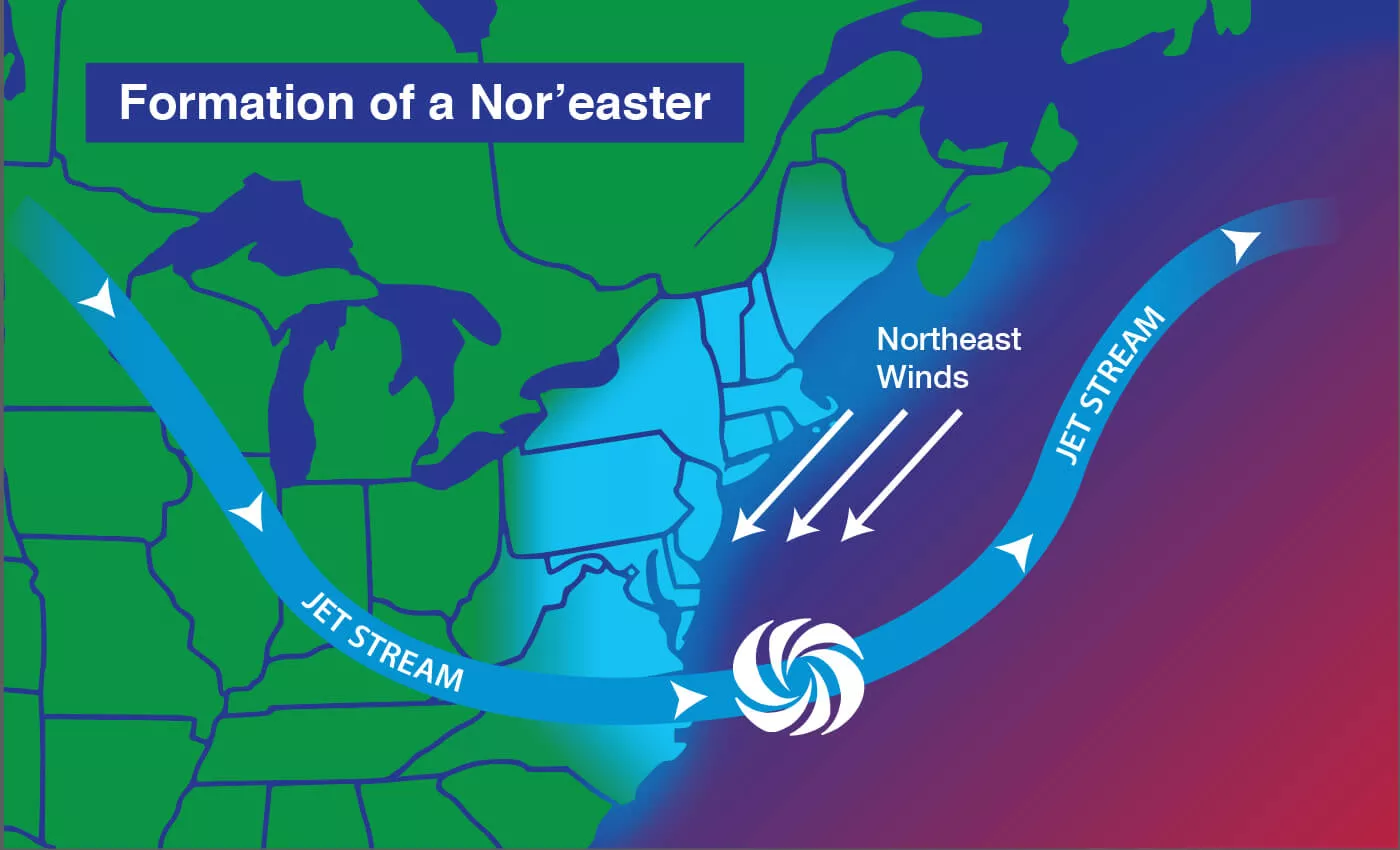
A nor'easter is a storm along the East Coast named because coastal winds usually blow from the northeast, according to NOAA NESDIS. The September 2026 storm was described as the first nor'easter of fall, with rain and wind hazards rather than snow. Rhode Island set a new 24-hour state snowfall record of 37.9 inches during a nor'easter on Feb. 22-23, 2026.
The broader context here is why a slow storm causes multiple problems at once. A stalled low extends the stretch of easterly wind over water, piles water into successive high tides, and keeps soils wet so trees fall more easily in gusts. That is why erosion, road flooding and outages were warned about together. For the Boston-to-Washington corridor, small shifts in track will decide where the heaviest rain and strongest gusts hit, and repeated minor flooding can still close coastal roads and damage dunes and infrastructure without a major surge.


