Claude Found an Unknown CRISPR-Related Enzyme. Why the Lab Matters More
Anthropic said Claude found on its own a previously unknown enzyme system related to CRISPR, the gene-editing tool that cuts and rewrites DNA. The Verge The announcement on Sept. 23 is the first reported result from the company's newly launched wet lab, a laboratory for physical biology experiments.
According to Anthropic, the system was found by searching a massive database of DNA sequences. Scientists provided the initial prompt and later did the lab work. The search ran in parallel. Nearly 950 Claude agents processed 210 million tokens, the small chunks of data a model reads, over 21 hours before one agent flagged an unusual repeating pattern for human review.
Follow-up analysis and wet-lab testing identified the pattern as a previously uncharacterized enzyme system, a group of proteins that carry out a chemical job, present in bacteriophages, viruses that infect bacteria. Its function is still unknown. Anthropic said it is still working to understand what the system does.
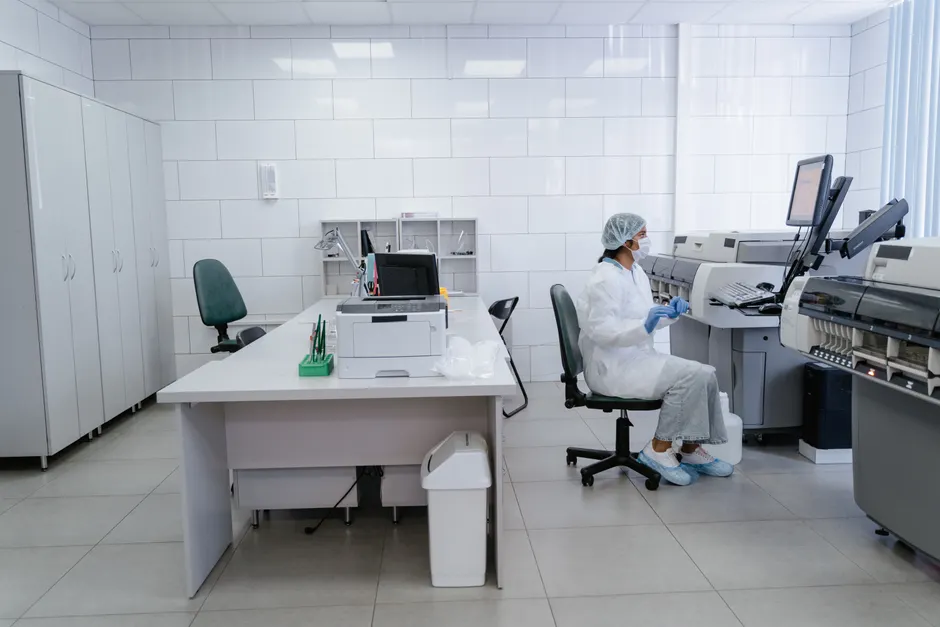
The work centers on a biology lab in the Bay Area. The facility, first reported on Sept. 18, is intended for physical biology experiments beyond computer simulation work, according to Reuters. Anthropic aims for Claude to direct robots in lab environments. The company has also launched Claude Science, a research workbench connecting to more than 60 scientific databases, according to Yahoo Finance.
The broader context here is the method, not only the enzyme. A 950-agent run over 210 million tokens in 21 hours is a brute-force scan of genetic data with AI triage built in. Most agents found nothing. One found a repeat worth escalating. That suggests mining DNA at this scale depends less on a single long chain of reasoning and more on running many overlapping searches, then handling false alarms at the human review step.
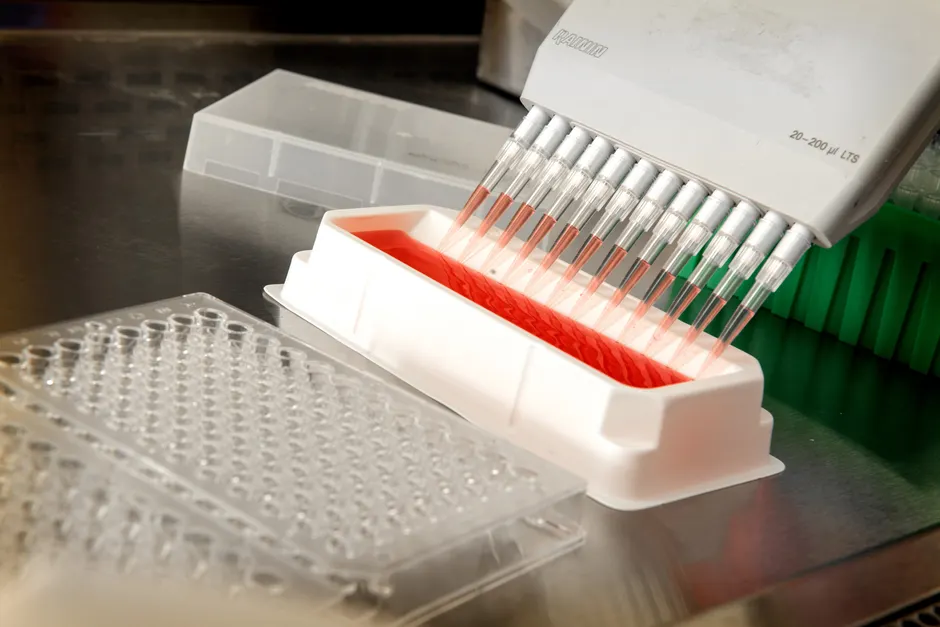
Looking at what this means for lab workflows, the human role described is narrow but decisive. Scientists gave the prompt. Claude generated leads across raw sequence data. Humans tested them in vitro, in lab glassware rather than software. The practical questions are how the repeat detector was set, how data was split across agents, and what kept 949 other candidates off the bench. Computer models can tolerate noise. Physical tests cannot.
In my view, the lab itself matters more than any single enzyme with unknown function. A Bay Area facility for physical experiments, paired with a workbench linked to more than 60 databases and a goal of model-directed robotics, points toward repeated cycles of test and learn rather than one-time searching. Phage genomes are dense, diverse and incompletely mapped. If search can reliably find unknown systems and test them under the same roof, the result is a faster path from pattern to usable lab tool. That is the capability to watch.