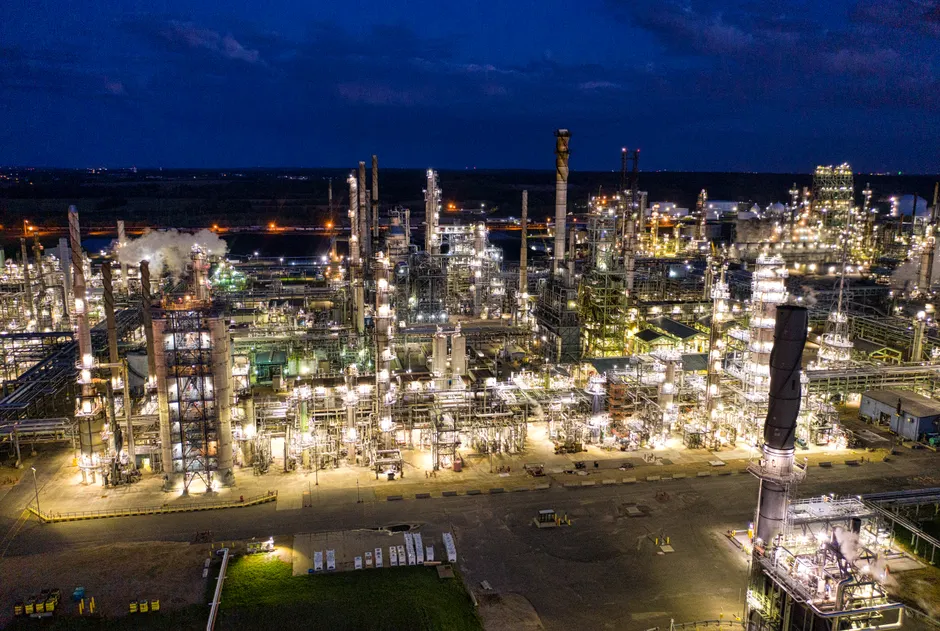
The $190 Billion Claim: What Democrats Say Big Oil Got After Backing Trump

Senate Democrats say the U.S. fossil fuel industry secured $190bn in tax breaks and subsidies over the next decade after backing Donald Trump's re-election bid.
The figure comes from Senator Sheldon Whitehouse, ranking member of the Senate Environment and Public Works Committee, and Senate Democratic leader Chuck Schumer in a report detailed on 24 September 2026. The report is titled 'Turning Power into Trump Family Profits' The Guardian.
According to the report, the exchange traces to an April 2024 fundraiser at Mar-a-Lago, Florida. There, Trump reportedly asked industry executives for $1bn in campaign contributions in exchange for tax breaks and deregulation. That meeting has been widely reported as a statement of transactional intent. The report treats it as the starting point for the campaign money and policy moves that followed.
On the money, the report states that "Big oil delivered in the hundreds of millions" in campaign support. It estimates a $201m industry investment in Trump's re-election campaign plus $19m contributed by industry executives to his inaugural fund. It describes those campaign and inaugural contributions as "the largest political investment the industry has ever made."
The $190bn estimate combines existing tax breaks and subsidies over the next 10 years with new benefits from the One Big Beautiful Bill Act. A tax break lowers a tax bill, while a subsidy is other financial support. The calculation draws on analysis prepared by Senator Bernie Sanders for legislation proposed with Congresswoman Ilhan Omar. The report does not present the $190bn as a single appropriation. It presents it as a 10-year fiscal cost of retained and added preferences, like a discount left in place for a decade.
The policy return described in the report extends beyond tax provisions. It says Trump appointed 26 senior officials who had previously worked for fossil fuel, chemical or other polluting industries across agencies including the EPA and the energy and interior departments. It accuses the administration of abusing the Clean Air Act, the main air-pollution law, to exempt more than 180 polluting facilities from pollution controls. It says the domestic spending bill signed last July created a $1bn direct subsidy fund for fossil fuels using Defense Production Act authority, a law that lets Washington fund supplies deemed important for national security.
Two longer-horizon costs complete the accounting. The report says the domestic spending bill provides a permanent 20% business income deduction for oil and gas companies estimated to cost the government $737bn overall. It states separately that fossil-fuel-backed policies will force Americans to spend at least $580bn in added fuel costs over the next three decades. Those numbers cover different payers and timeframes. One is lost federal revenue. The other is household expenditure.
The broader context here is how to read a partisan fiscal estimate in an energy-policy fight. Senate Democratic reports carry investigative capacity but not neutral scoring. Tax baselines, assumptions about business behavior and the treatment of permanent versus temporary provisions can move a 10-year total by tens of billions. So does the line between a direct subsidy, a generally available business deduction applied to oil and gas, and directed spending under defense authorities.
Looking at what this means for oversight, the test will be documentation and durability. Donation totals can be checked against Federal Election Commission filings and inaugural committee disclosures. Personnel histories can be checked against ethics and employment records. Regulatory exemptions and Defense Production Act disbursements leave administrative trails. Tax provisions live or die in statute and Treasury guidance. Future Congresses can repeal them. Courts can narrow them. Agencies can slow implementation. The report frames a quid pro quo. Proof of that linkage, as opposed to alignment of interests, would require more than temporal sequence.