ElevenLabs Hits $600M in Recurring Revenue as Enterprise Customers Take Over
ElevenLabs now brings in $600 million in annual recurring revenue, the yearly total from ongoing subscriptions, at a reported $22 billion valuation.
Co-founder and CEO Mati Staniszewski shared the revenue figure in an interview published Sept. 24, 2026, when the company was four years old. The $22 billion figure is reported, not confirmed as a completed new funding round. TechCrunch
The company reached unicorn status, meaning a valuation above $1 billion, with an $80 million round in January 2024. It then raised a $180 million Series C, a later-stage startup round, at a $3.3 billion valuation, triple the level a year earlier. Total funding reached $281 million after that Series C. TechCrunch Staniszewski said at the time the money would go to product development, expanding infrastructure and team, and AI research.
Activity on the secondary market, where existing shares change hands, moved faster. ElevenLabs ran a $100 million employee tender offer, a process that lets staff sell some shares, at a $6.6 billion valuation, led by existing investors Sequoia and ICONIQ. It later passed $500 million in ARR, adding BlackRock, NVIDIA, Jamie Foxx and Eva Longoria as new investors. Ethan Tandowsky joined as chief financial officer on Sept. 8, 2026.
The $22 billion figure first appeared in July. Bloomberg News reported on July 2, 2026 that ElevenLabs was in talks for a tender offer and employee stock sale at a $22 billion valuation. Reuters on July 2 cited Bloomberg News for its report of an employee stock sale at about $22 billion. The proposed deal was expected by September 2026 and would be about double the valuation after a February funding round. Bloomberg
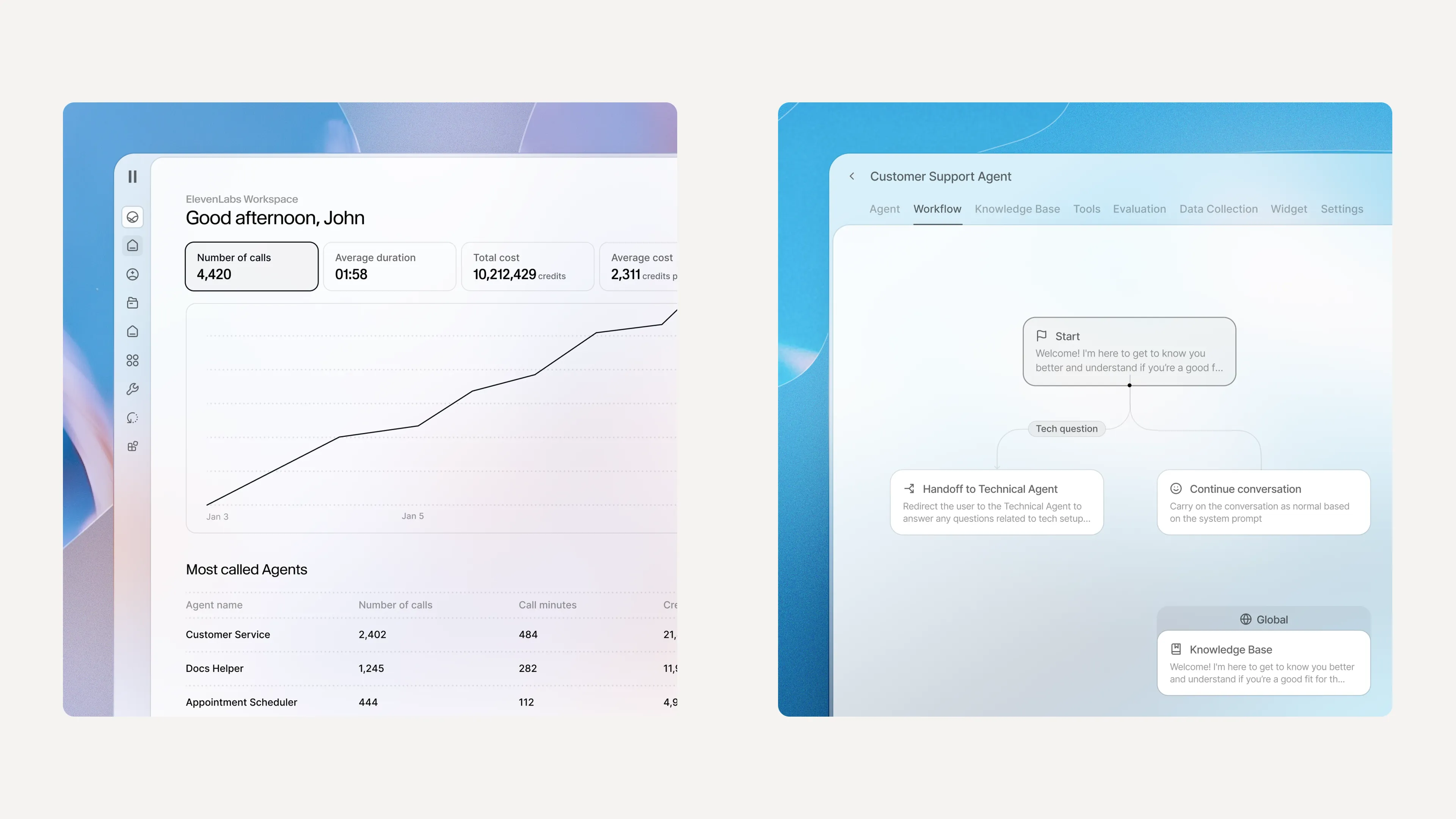
More than 55% of revenue now comes from classic enterprise customers, meaning large established businesses. Klarna uses ElevenLabs for first-line phone support for 35 million U.S. customers. Deutsche Telekom, Cisco and Adobe also use the technology. The company still sells its platform to creators for audiobooks, dubbing and music.
Those two uses have different technical needs. Creator work for audiobooks, dubbing and music is largely asynchronous and batch-oriented, so audio can be generated ahead of time. First-line phone support is synchronous and sensitive to delay, what engineers call inference latency, and must connect to telephony, authentication, call recording and escalation paths. Serving both from one voice system involves live model operations, uptime guarantees and enterprise controls for security and access.
Decagon trained its voice product on ElevenLabs and now competes with ElevenLabs. Staniszewski said businesses should tell customers when they are talking to an AI. That matters on phone calls where a synthetic voice can be hard to distinguish from a human agent, and large buyers often require clear disclosure, call logs and audit trails.
The broader context here is the familiar pull between selling a basic tool and owning the full job. Voice synthesis began as a developer API, a building block other software could call. Phone support brings compliance rules and integration with existing call systems, which pushes vendors to manage the whole workflow. The trade-off is conflict with customers building their own agents, against longer-term stickiness. Once a voice agent handles first-line calls for tens of millions of people, switching involves prompts, tests, integrations and operational trust, not only model quality.
In my view, the number to watch is not the headline valuation multiple but the enterprise share of ARR. At more than 55% classic enterprise and $600 million in total ARR, ElevenLabs is pricing less on creator seats or small-scale testing and more on avoided call-center cost, containment rate, the share of calls finished without a human, and uptime. That base can support steady growth as phone automation spreads, but it also brings tighter delay limits, contractual edge cases and disclosure built into the product.
Worth flagging for builders, training on top of another voice provider to start fast and then competing with that provider will likely become standard. Open API access helps adoption. It also lets a downstream team learn interaction patterns, failure modes and buyer needs before building its own voice layer. Voice models, orchestration, phone connections and tooling are separating into distinct layers. Teams should settle data use, portability and competition terms early, which will make it easier to keep improving service as voice tools mature.