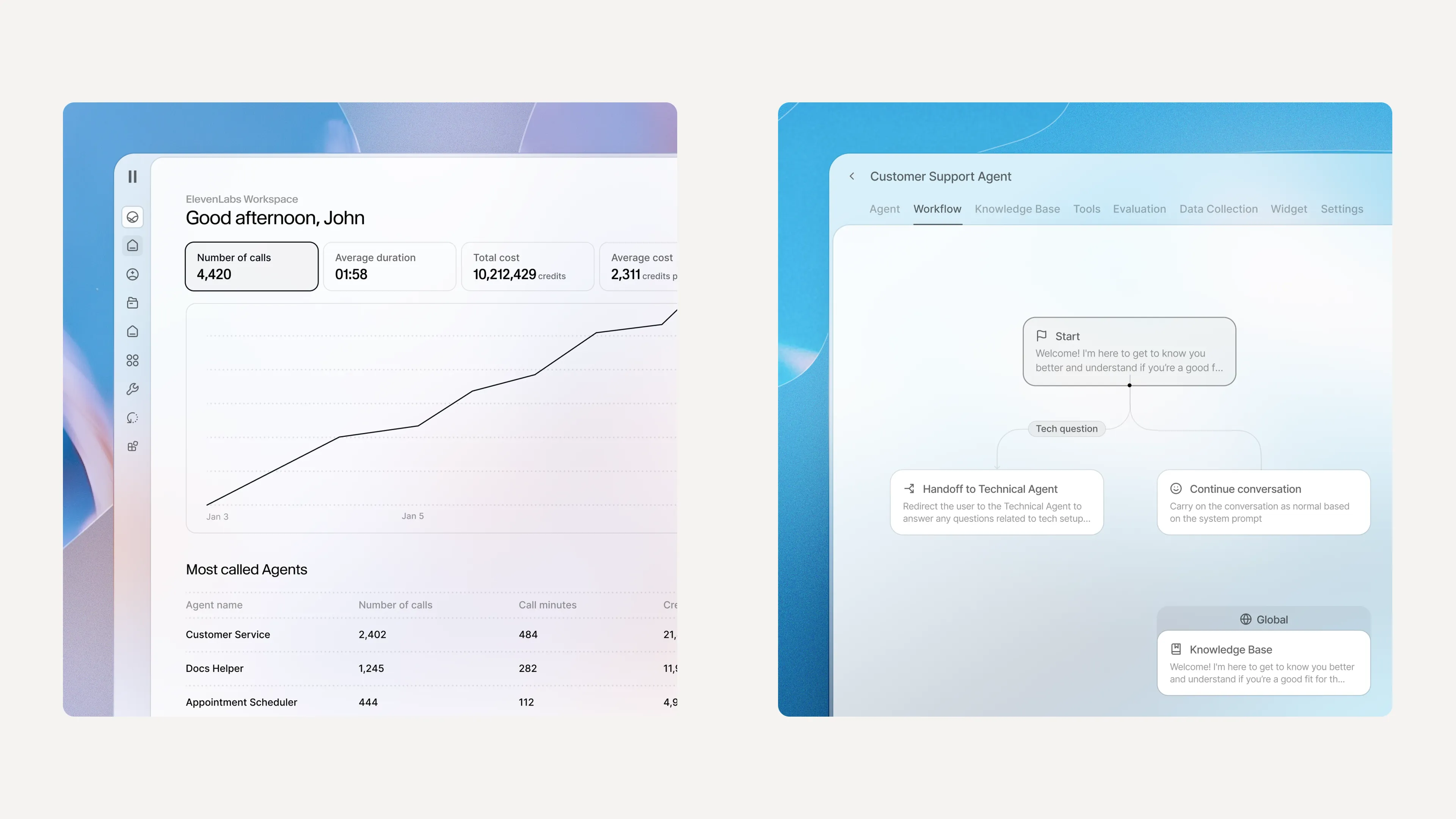
ElevenLabs Hits $22 Billion as AI Voice Agents Take Off
ElevenLabs has completed a $300 million employee tender offer at a $22 billion valuation, doubling its valuation since February.
The company announced the transaction on September 30, 2026. The offer let employees sell a portion of vested equity, shares they had earned, to investors Reuters. It was co-led by Wellington and T. Rowe Price, and was the second secondary transaction, a private sale of existing shares, authorized by the company TechCrunch.
That pricing doubles the $11 billion valuation set when ElevenLabs raised $500 million in February. That primary round followed a $100 million employee tender at a $6.6 billion valuation in September 2025. The company has repriced twice in twelve months without a public listing.
The path to this close was public. ElevenLabs was reported to be in talks for a tender at a $22 billion valuation in early July, with completion expected by September. The September 30 announcement matches that structure and timeline.
ElevenLabs was founded in 2022 and is based in New York and London. It is known for generating lifelike human voices and sound effects. Its current text-to-speech lineup, software that turns written text into spoken audio, centers on Eleven v4 and Eleven v4 Turbo. The company says they offer more emotional nuance, faster response times and stronger voice cloning, the copying of a specific voice. Both models are available across ElevenAgents, ElevenCreative and the API, the developer interface for building directly on the models.
Demand for AI voice agents, systems that can hold a live spoken conversation, drove the valuation increase, according to the September 30 announcement. The company did not disclose current revenue with this tender. At the time of the $6.6 billion tender announcement, it had passed $200 million in ARR, annualized subscription revenue, and expected to top $300 million in ARR by year-end. Voice creators had earned $22 million on the platform as of that same disclosure.
The broader context here helps explain what a tender does and does not show. A $300 million tender is not a fundraise. No new capital enters the balance sheet. It transfers existing shares from employees to late-stage investors. For teams evaluating vendors, that signal differs from a primary round. It points to retention pressure and demand for insider liquidity, plus outside willingness to buy at a higher mark without waiting for an IPO.
In my view, the structure is as telling as the headline number. Two employee tenders in a year, stepping from $6.6 billion to $22 billion, point to a company managing growth and hiring leverage while staying private. Secondary liquidity reduces pressure for an early public exit. It also leaves price-setting to a small set of crossover investors. Wellington and T. Rowe Price co-leading fits that pattern. Employees get partial liquidity. The company keeps its optionality.
Looking at product direction, live deployment will decide. Text-to-speech for narration tolerates buffering. Voice agents do not. They need low-latency synthesis, steady prosody under interruption, and cloning that holds across turns and speakers. Eleven v4 and v4 Turbo aim at that problem, with access split across an agent framework, a creative surface and raw API access for developers tuning prompts, voices and tool calls. The long arc stays constructive. Real-time, expressive synthetic speech enables uses that typed interfaces never reached. Whether ElevenLabs holds its momentum will depend on reliability, cost per minute and integration effort in production agent loops.