A War Hero's Legal Trouble Tests Australia's War Memorial

A War Hero's Legal Trouble Tests Australia's War Memorial
Ben Roberts-Smith, Australia's most decorated soldier, lost a high-profile defamation case in 2023 and was legally found to have committed war crimes in Afghanistan. In June 2026, a court changed his bail conditions to let him attend the opening of the Australian War Memorial's new main entrance — even though the event had already happened on February 3, 2025.
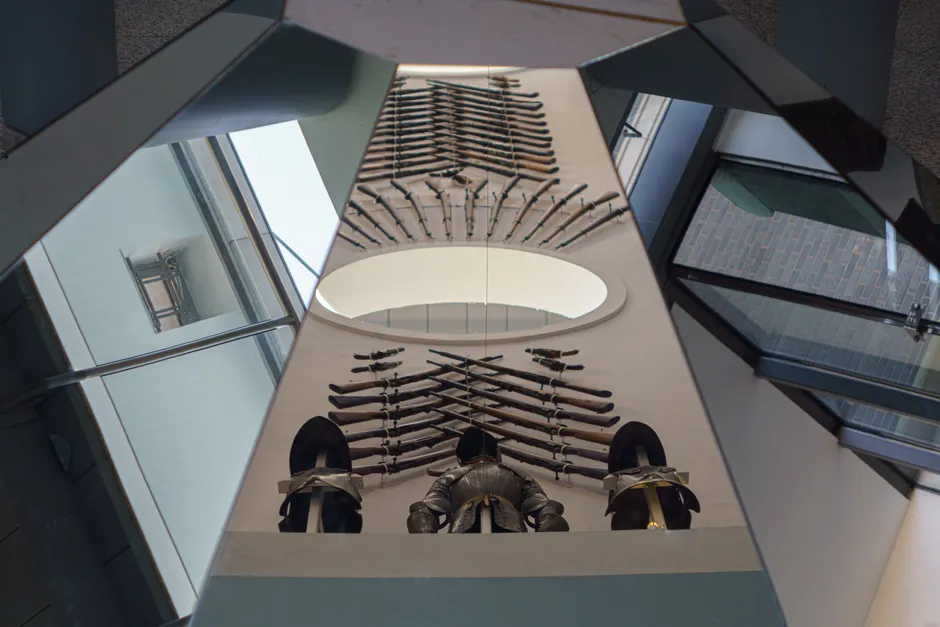
The court's decision to adjust his bail suggests criminal proceedings are ongoing separately from the civil case he lost. Prime Minister Anthony Albanese opened the new entrance as part of a multi-year, $500 million overhaul of the War Memorial's Treloar Crescent precinct in Canberra. The project also includes a Geothermal Central Energy Plant, both finished in the 2024–25 financial year according to the AWM's Year in Review 2023–2024.
Roberts-Smith received the Victoria Cross — Australia's highest military honour — for his actions during the Afghan War. That medal sits in the War Memorial's collection, which normally keeps such recipients at the center of the institution's mission: remembering Australia's service. His civil case, filed by Roberts-Smith against Nine Entertainment and journalists Nick McKenzie and Chris Masters, concluded in June 2023 when Federal Court Justice Anthony Besanko found on the balance of probabilities that Roberts-Smith had committed war crimes in Afghanistan, including the murder of unarmed prisoners. That civil verdict does not equal a criminal conviction, but it carries real weight in how Australians understand his record.
The bail variation itself — allowing him to attend a public state event — carries symbolic meaning. A Victoria Cross recipient normally moves freely through the nation's commemorative spaces. A court needing to grant permission for such attendance signals that his legal situation has tightened considerably.
The tension here runs deeper than any single case. Australia's War Memorial exists to honor service, yet it now must navigate a figure whose service record is officially contested in law. The Memorial's position has been to keep Roberts-Smith's VC listed while criminal proceedings continue — respecting the legal principle that people are innocent until proved guilty in criminal court — but that stance leaves many uncomfortable on different sides.
What matters most for understanding this story: a civil court and a criminal court are different venues with different standards of proof. A civil case asks what is more likely true than not. Criminal proceedings require proof beyond reasonable doubt. The bail variation signals that Roberts-Smith faces criminal charges stemming from conduct in Afghanistan, and that a judge considers restrictions on his movement necessary. These are live legal battles, not settled history.
The Geothermal Central Energy Plant deserves a note. Installing a ground-source geothermal heating system in a heritage precinct this size is technically intricate work. If it works as planned, it will cut the War Memorial's carbon footprint and operating costs significantly over decades. That practical achievement has been overshadowed by the political and legal turbulence around the broader redevelopment and the figures caught up in it.
For those following Roberts-Smith's legal path, the bail variation is a procedural marker: it confirms his liberty remains conditionally restricted as of mid-2026, and the courts are still actively managing those restrictions.