Ember Mug 3: $150 Self-Heating Mug Adds Dishwasher Safety
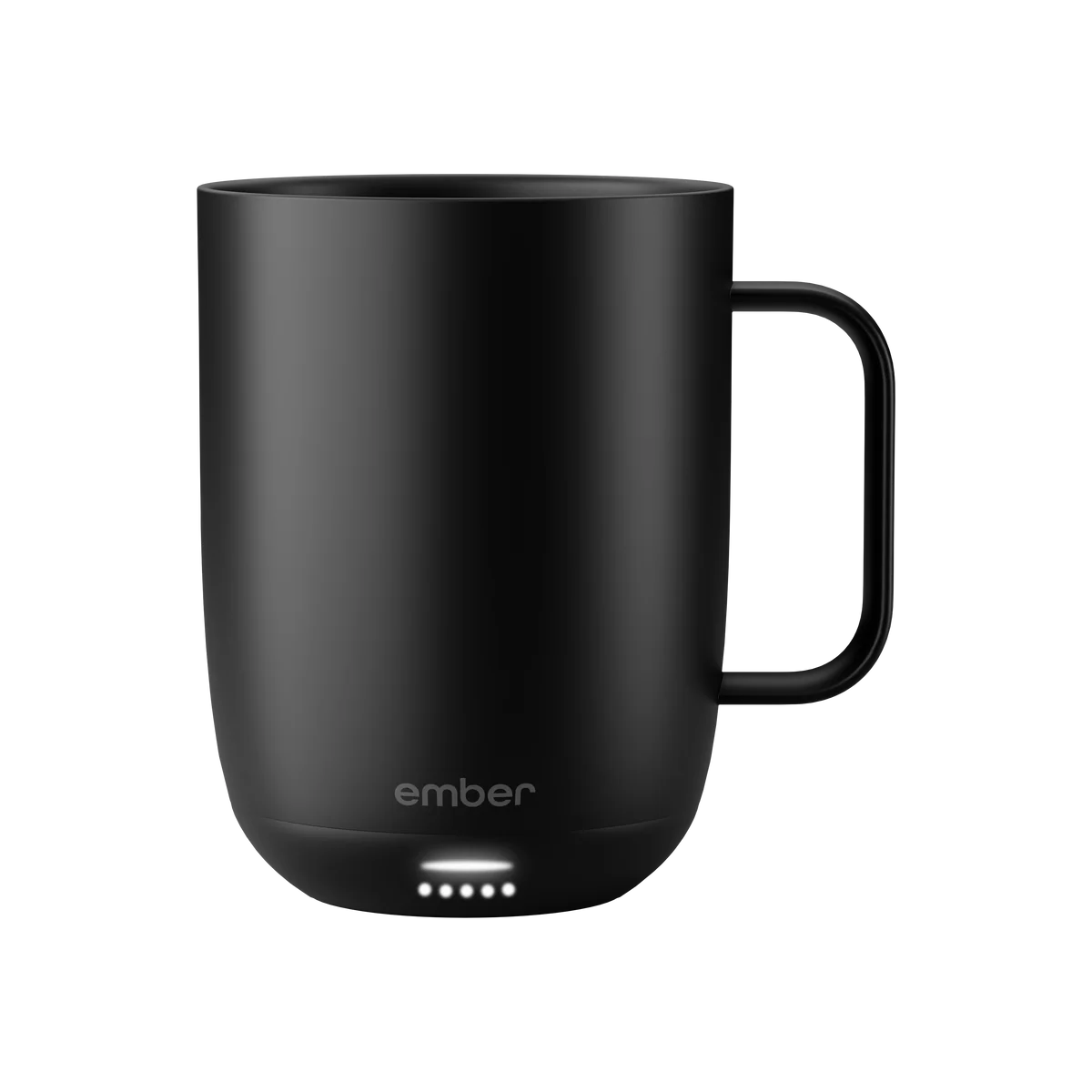
Ember's third-generation self-heating mug, the Ember Mug 3, costs $150, holds 14 ounces, and keeps drinks at up to 145 degrees Fahrenheit. It can go on the top rack of a dishwasher and ships with a coaster that works as its charging pad. Engadget
Temperature is set with a button on the mug, with an LED display showing the setting, and adjusted in smaller steps in the Ember app. A built-in heater and sensors hold that temperature even when the mug is off its coaster. Ember says keeping the Mug 3 on its coaster allows all-day use.
The Mug 3 charges through two spring-loaded metal pins, called pogo pins, on the coaster, rather than Qi, the wireless charging standard used by many phones. The coaster itself connects to wall power with a round barrel plug instead of USB-C. The setup is easy to line up. The tradeoff is one more brand-specific pad on the counter and one more barrel power supply to keep.
Ember tells users to let the Mug 3 dry completely before charging after washing. Power contacts, control electronics, a heater, and a battery are sealed inside a washable vessel, which leaves little margin for trapped moisture.
The 14-ounce version holds 414 ml, and Ember also sells a 10-ounce version. A sliding lid, listed at $14.95, is included free with the Mug 3. Ember says the lid adds three extra hours of battery life. An open mug sheds heat fast to the surrounding air, like an uncovered pot cooling on a stove.
The Ember Tumbler 2 in the same lineup holds 16 ounces and costs $179.95. Outside reviews of the idea have been warm. Serious Eats picked the Ember Smart Mug as its favorite temperature-control mug. Serious Eats
The broader context here is why Ember kept the older charging setup. Pogo contacts are less elegant than Qi, and a barrel plug is less handy than USB-C. Both are steady under load. They avoid coil misalignment and charging negotiation problems, at the cost of working with fewer other chargers. For a heater that lives around liquid, that steadiness has value.
In my view, the more lasting change is on-mug control combined with dishwasher tolerance. Early connected drinkware relied heavily on the phone for basic steps. A button and LED for the temperature setting, with the app left for fine tuning, lowers dependence on a companion app staying installed, paired, and updated. Washability does similar work. A mug that cannot go through a normal kitchen routine stays a demo object. One that can becomes part of daily routine.
Worth noting for buyers is the upkeep this design assumes. Steady temperature control needs sensors that stay calibrated, contacts that stay clean, and a lid that is actually used. The lid battery claim makes that clear. Insulation still counts, even with active heating. The hopeful outcome is simple. Less reheating, fewer thrown-out cups, and hot coffee that waits for a meeting to end rather than the other way around.