Three Supreme Court Cases That Could Reshape U.S. Immigration Law

Three Supreme Court Cases That Could Reshape U.S. Immigration Law
Three separate but interconnected areas of immigration law are heading through federal courts this term, and the specific facts being debated will likely echo far beyond the courtroom. The cases center on Temporary Protected Status (TPS), asylum processing at the border, and the Supreme Court litigation in Noem v. Al Otro Lado—together they test the limits of executive power over two of the most contentious corners of immigration enforcement.
Temporary Protected Status grew out of the 1990 Immigration Act as a safety valve for nationals whose home countries face serious crises—armed conflict, natural disaster, epidemic. Congress gave the executive branch discretion to decide which nationalities qualify, for how long, and when to end the designation. That flexibility has also made TPS a constant source of legal challenges, turning on questions about how much freedom the executive actually has.
The numbers matter here. According to a brief filed in April 2026 in the consolidated Supreme Court cases (docket numbers 25-1083 and 25-1084), Haiti has a larger TPS-protected population than Syria. That population gap carries legal weight. When courts weigh the consequences of ending TPS for a group—the human cost, the administrative burden on immigration agencies—the size of the affected population factors into whether the decision was reasonable. The larger the group, the heavier the stakes.
A second fact comes from Noem v. Al Otro Lado (Supreme Court docket No. 25-5). In February 2026, the government's opposition brief acknowledged that U.S. Customs and Border Protection officers sometimes allowed asylum seekers to cross into the United States for processing at ports of entry during the time period covered by the earlier Mullin v. Al Otro Lado case. This detail matters because the central legal question is whether the government blocked asylum seekers from accessing the asylum system in the first place.
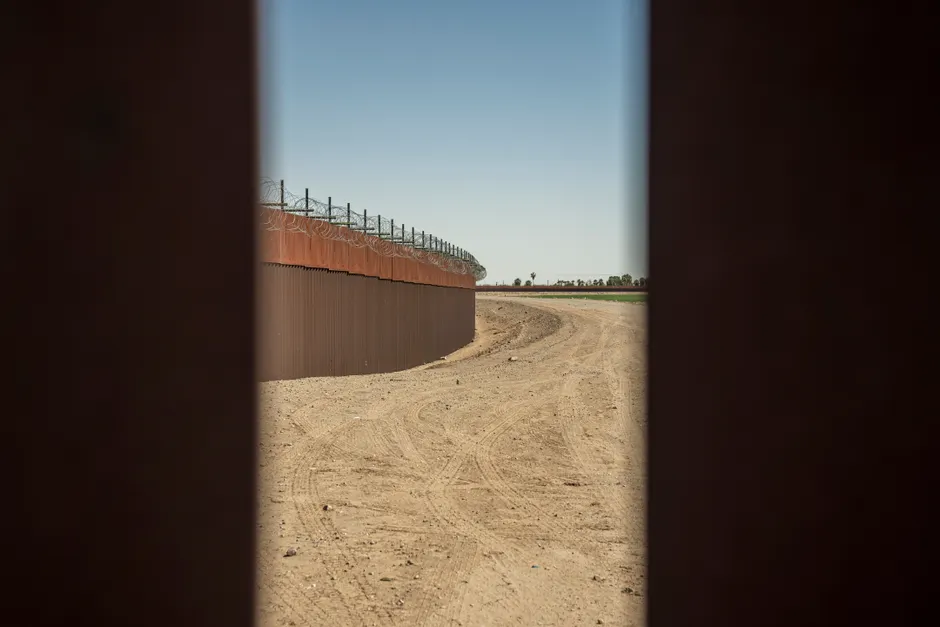
The practice at issue is called "metering"—CBP limiting how many people can enter the country at ports each day and forcing asylum seekers onto waitlists managed by Mexican authorities. This became common between roughly 2016 and 2020. Plaintiffs argued that metering turned ports into walls rather than checkpoints, violating the law that allows people to request asylum once they reach the United States. The government's acknowledgment that CBP sometimes did permit entry cuts both ways: it suggests ports nominally functioned as intended, yet it also shows that admission was discretionary and unpredictable rather than guaranteed.
These asylum cases hinge on two foundational legal questions: Can the government restrict access to the asylum process at ports without running afoul of the law? And if it can't, what remedy do courts have? The case changed names when Secretary Kristi Noem replaced her predecessor at the Department of Homeland Security, but that's purely administrative—the government's legal arguments remain the same.
The TPS cases raise a related but distinct question: How much power does the executive retain to reverse a designation that has been in place for years or even decades? The 1990 statute didn't spell out many procedural protections, so courts have had to build doctrine from general administrative law, particularly the "arbitrary and capricious" standard—the principle that government agencies must act rationally and with reasoned explanation.
Taken as a whole, these cases ask the Supreme Court to draw clearer lines around executive discretion in two areas of immigration enforcement that have always been politically fraught. The factual records being assembled—TPS population figures, CBP practices on the ground, how courts have interpreted the statute over time—will shape not just the immediate outcomes for current TPS holders and asylum seekers, but the legal framework that governs immigration enforcement going forward.