Cerebras CEO at Disrupt 2026: Can AI Keep Scaling Past Power Limits?

Cerebras Systems CEO and co-founder Andrew Feldman will speak on the Disrupt Stage at TechCrunch Disrupt 2026 in a session titled "Can AI Keep Scaling?" TechCrunch
The conference runs October 13-15, 2026 at Moscone West in San Francisco. The session will address growing demand for compute, energy and infrastructure and how Cerebras is approaching those constraints.
Feldman co-founded Cerebras in 2015. Before that, he co-founded and led microserver startup SeaMicro, which AMD acquired in 2012. He also held leadership roles at Force10 Networks and Riverstone Networks.
Why systems and power now shape AI growth
That history is useful context here, because scaling AI is now as much about hardware systems as models. Think of a cluster as thousands of chips that must act as one, with interconnect as the fast roads between them. Limits show up in buying cycles, data center build-outs and waits for utility power.
What Cerebras brings to the talk
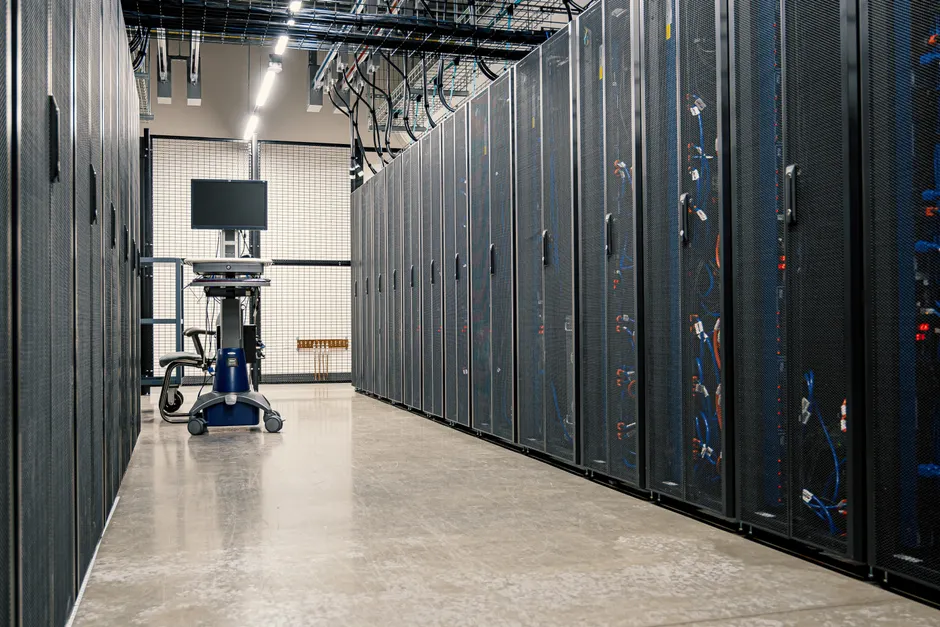
Cerebras provides AI compute through on-premise systems and its cloud platform. Its approach builds a processor across a whole silicon wafer instead of cutting the wafer into individual chips, tuned for AI workloads. In August 2026, the company introduced CS-4, the latest generation of that wafer-scale infrastructure. TechCrunch
Two recent business points frame the session. Cerebras raised $5.5 billion in its May IPO before September 30, 2026. It also signed a multiyear agreement with OpenAI to deploy 750 megawatts of Cerebras systems from 2026 through 2028. TechCrunch
The broader context here is that compute, energy and infrastructure can no longer be planned separately. Wafer-scale integration shortens chip-to-chip links, keeps memory close to processing, and treats yield at system level. It packs power and cooling in one place, which simplifies wiring but makes site choice and power supply harder.
In my view, Disrupt has put the right question on its main stage. Public debate still focuses on parameter counts and training budgets. The binding questions are operational. Where firm power comes from. How fast systems install and stay fed with data. Which workloads stay local for control or latency and which move to shared cloud.
Looking at what this means for technology leaders, the OpenAI commitment and CS-4 give Feldman concrete material. A 750-megawatt plan over three years is not a lab experiment. Power sets the pace. For buyers, the comparison is throughput per rack and per megawatt on real training and inference work, plus operating cost. Training builds models. Inference runs them for users.
Worth flagging for teams choosing between owning and renting is the split model. On-premise suits groups with secured power and data-control needs. Cloud suits teams needing burst capacity without new buildings. How Cerebras supports both should add detail beyond scaling slogans.
What to watch at Disrupt
The agenda also includes a Builders Stage covering fundraising, hiring, product-market fit and scaling. That track aims at early-stage operators, while the Feldman session speaks to infrastructure decision makers.
Looking ahead, further scaling will need systems, power and software designed together. That is not guaranteed, but it is achievable. Expect a pragmatic talk about what building takes and what it could enable.