Cerebras CEO Says Home AI Assistants Are Near, Mixing On-Device and Cloud

Cerebras Systems CEO and co-founder Andrew Feldman said on Oct. 13 at TechCrunch Disrupt 2026 that a future in which everyone has a personal AI appliance at home is not very far away. TechCrunch
Feldman predicted those assistants will split work between the device and the cloud, like a cell phone. The design is hybrid on purpose. Memory that persists over time and responses that must be instant stay close to the user, while larger models and fresher data stay remote.
He said future assistants will know users very well, have a security perimeter around them, and have access to credit cards to buy things for users. Personal memory, isolation and payment authority were the three properties he stressed.
He cited Meta's Muse and Instinct, a startup valued at $10 billion, as examples of consumer AI agents finding traction with everyday users. The point was adoption, not architecture. People outside the industry are starting to hand off tasks.
Feldman said he uses a collection of AI agents to sweep his calendar and pull up information about people he will have calls with. It is a narrow job. The agents prepare briefing material before meetings without prompting.
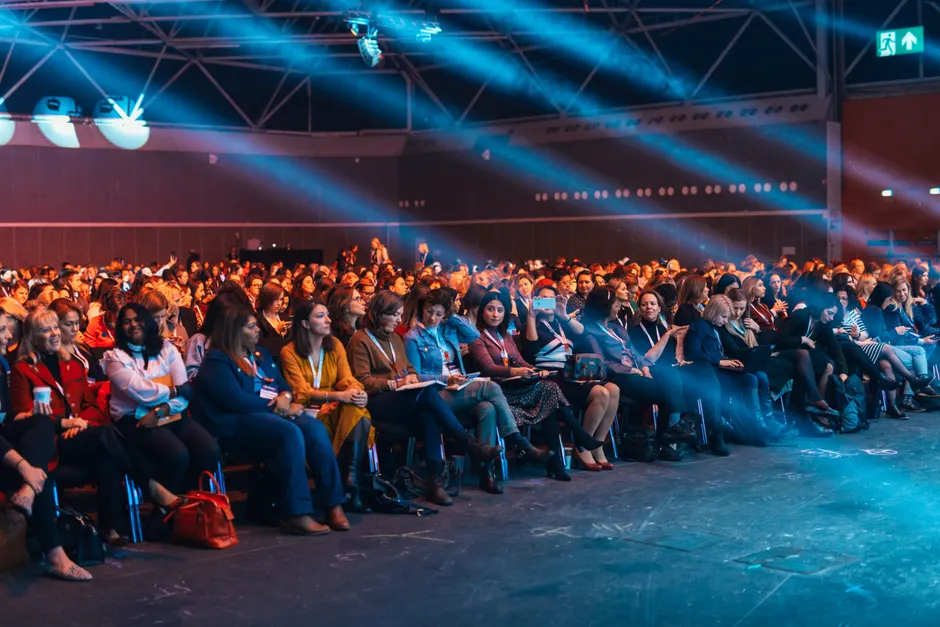
The remarks came in an on-stage interview at TechCrunch's own event, TechCrunch Disrupt 2026. Feldman was speaking as a systems builder, not as a model developer. Cerebras states a broad catalog of models are available in the cloud and on-premise. Cerebras
Feldman co-founded Cerebras in 2016. Forbes The company went public on the Nasdaq in May 2026. Forbes Its IPO was the year's largest IPO as of May 2026, and left Feldman worth $3.2 billion following the listing. Bloomberg He grew up on the campus of Stanford University. Bloomberg
Feldman has discussed AI infrastructure and the economics of inference, the cost of running a trained model to answer queries, with Bloomberg's Tom Giles. Bloomberg He has said renting out compute capacity is very profitable. Bloomberg
The broader context here will be familiar to anyone who works on deployment. Response delay, memory cost and privacy all push the same way, toward small on-device software for routine tasks, often built by distillation, which trains a small model to copy a larger one, with fallback to the cloud for multi-step reasoning, tool use and retrieval. Personalization sharpens that tradeoff. A useful assistant needs long-lived records of preferences, relationships and prior decisions, which are expensive to move and risky to expose.
In my view, the harder part of Feldman's sketch is not the appliance. It is the perimeter and the credit card. Enterprise buyers already understand identity, permission scopes, audit logs and least privilege, or giving software only the access it needs. Consumers do not, and should not have to. An agent that knows you well enough to be useful and can spend money needs delegated authority with clear limits, revocation and accountability when it misreads intent. Worth flagging, the cell phone analogy holds for connectivity, but phones trained users over a decade to approve permissions app by app. Agents will need an equivalent control system before mainstream users trust them with purchases.
From watching my own kids, I saw them learn to trust autocomplete, then voice assistants, then chatbots by testing where each system failed safely. Home agents will likely be adopted the same way, through low-stakes tasks that tolerate error. Calendar prep is a good example. If the agent pulls the wrong bio, the cost is embarrassment. If it books the wrong flight, the cost is real. That gradient helps explain why early traction centers on gathering information rather than completing transactions alone, and why persistent memory plus confined action will matter more than raw model power for the next phase of consumer use.