The Race to Build AI Infrastructure in Africa: Who Profits, Who Pays
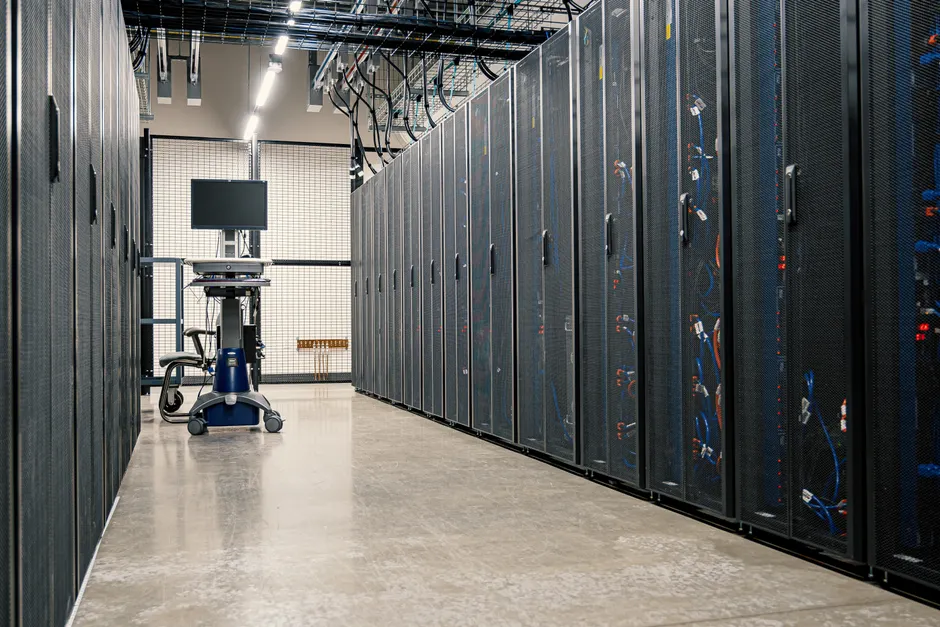
Africa holds 307 megawatts of data centre capacity — less than 2 percent of the global total, according to the Africa Data Centres Association — yet the continent is now the focus of an accelerating competition to build AI infrastructure that could shift where digital computing power sits globally. The real stakes lie not in whether this buildout happens, but in three interconnected questions: who will own these facilities, who will pay for the electricity to run them, and whether the arrangements will benefit African people or primarily serve foreign investors.
The scale of ambition is substantial. The World Economic Forum estimates that investment in green computing infrastructure across the continent could create $1.5 trillion in value. Microsoft has committed R5.4 billion to expand cloud and AI infrastructure in South Africa. In September 2025, South Africa's government launched the AI for Africa Initiative — a framework explicitly designed to align all 54 African nations around shared AI capabilities. The framing tells you something important: this is not just about market access. It is about whether African countries will control their own digital infrastructure.
The Energy Problem Is Not Simply Shortage
The resource side of this equation adds a structural difficulty that investment numbers alone miss. Globally, data centres consumed 448 terawatt-hours of electricity and 4.5 trillion litres of water in 2024, according to a UN report cited by Reuters. By 2030, projections show AI infrastructure demand reaching 945 terawatt-hours — roughly triple the 2024 level. This trajectory will strain electrical grids in regions where power supply is already unreliable.
Africa currently uses less than 1 kilowatt-hour (kWh) of data centre electricity per person, with projections showing this rising to just under 2 kWh per person by 2030, according to IEA data. That is the lowest rate of any world region. This statistic gets cited two ways. Some treat it as spare capacity waiting to be used. But it also reflects how underdeveloped existing power infrastructure is across the continent. Building massive computing facilities on electrical grids that cannot yet reliably power homes and hospitals is a sequencing problem without an obvious answer. Renewable energy — solar in particular — has become the default solution touted for "green compute" on the continent. Yet connecting new solar generation to grids at the scale data centres require demands investment in transmission lines and distribution networks that has not kept pace with the renewable energy pledges being made.
The distinction between building renewable energy and actually connecting it to grids reliably is worth holding in mind. One can exist without the other.
Data, Ownership, and Who Controls What
How investment arrives matters as much as how much it is. Microsoft's South Africa commitment represents a corporate infrastructure strategy — a company building cloud capacity to serve its clients. The AI for Africa Initiative is a state-led diplomatic framework — governments aligning to negotiate as a bloc. These are not inherently opposed, but they point toward different outcomes on issues like data residency, pricing, and who gets access to services.
When foreign cloud providers build massive computing facilities, they typically design them to move data through contractual and technical systems optimized for their own global operations — not for local rules about data governance. African governments have begun, unevenly, to pass laws requiring data to remain within their borders. Nigeria's data protection framework, Kenya's legislative efforts, and South Africa's POPIA (Protection of Personal Information Act) sit at different points on a spectrum, but all share the same aim: making sure African governments retain legal authority over data generated by African users. Whether these regulations can keep pace with infrastructure being deployed at speed remains an open question.
That $1.5 trillion value estimate from the WEF is a ceiling conditional on specific choices about how to invest. A data centre designed to power an African financial technology ecosystem generates different economic benefits than one designed to process training runs for AI models that will be sold globally and priced in foreign currency. The choice between these two paths is fundamental. It determines whether African nations build genuine digital economies or become energy suppliers for foreign companies.
South Africa's AI for Africa Initiative represents the first serious effort to negotiate the terms of this infrastructure before it is locked in. Its central challenge is whether a formal agreement among 54 nations with vastly different regulatory systems, power grids, and bargaining positions with major tech companies can actually hold together. Getting 54 African governments to align on data governance standards, pool their purchasing power, and resist the asymmetric deals that characterized previous technology waves is the institutional test ahead. The announcement was the straightforward part. The harder work — harmonizing rules, building shared negotiating capacity, and preventing infrastructure from sliding into the same dependencies of the past — has not yet begun.