Two Earthquakes Devastate Venezuela's Densest Regions; Rescue Race Accelerates

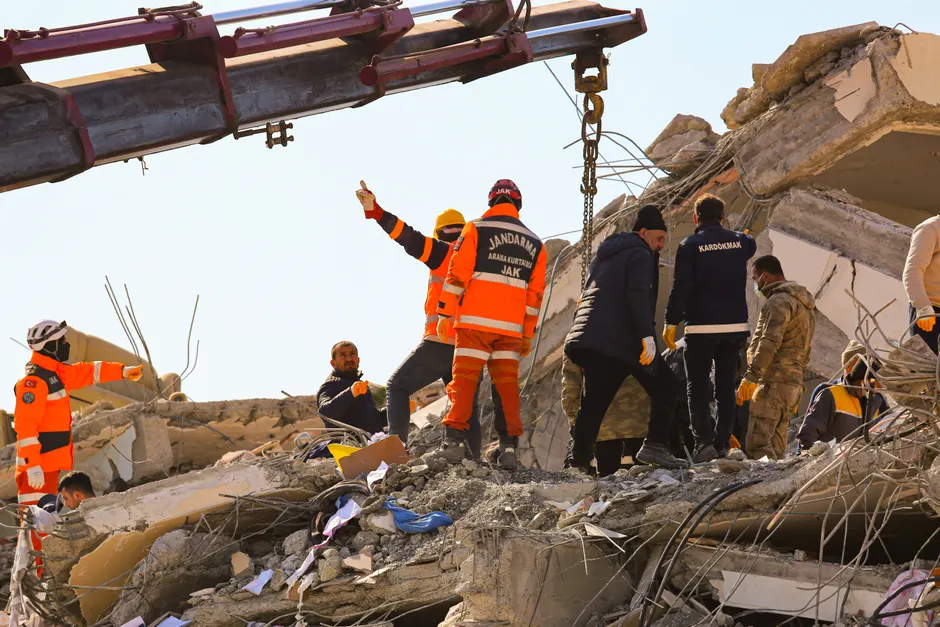
At least 920 people are dead and 3,360 injured after two earthquakes struck Venezuela on the evening of June 24, 2026, with thousands more still unaccounted for as search-and-rescue teams — including foreign contingents — work through the rubble, Reuters and AP reported on June 26.
The larger earthquake registered magnitude 7.5, with an epicenter 16 km southwest of Morón in Carabobo state and a shallow focal depth of 10 kilometers, according to USGS data. Shallow earthquakes transfer more energy to the surface compared with deeper ones of the same magnitude, which intensifies ground shaking and structural damage. Morón lies in Venezuela's north-central coastal corridor, a densely urbanized band that includes the capital, Caracas, and the port of La Guaira.
The Human Toll
The death and injury counts, drawn from official Venezuelan authorities as of June 26, are almost certainly provisional. In major earthquakes with widespread building collapse, reported fatalities typically climb over the first 72 to 96 hours as rescue teams reach areas previously cut off. Thousands remain reported missing — the exact number has not been officially confirmed — suggesting the toll will continue to rise.
Displacement is severe. AP reported that many survivors had no choice but to sleep in vehicles or under trees after losing shelter. This situation compounds vulnerability in a country where public health systems and emergency services were already under strain before the disaster. Foreign rescue teams joined domestic efforts by June 26, but the capacity to access and distribute aid remains the critical factor in determining how quickly help reaches those in need.
A Nation With Little Resilience
The earthquakes struck a Venezuela with limited institutional capacity to respond. A decade of economic decline, currency collapse, and mass emigration — roughly seven million Venezuelans have left since 2015 — has weakened hospital networks, emergency services, and the oversight of building codes. Buildings constructed to modern seismic standards elsewhere might have endured this magnitude 7.5 event; Venezuela's aging and poorly maintained stock did not.
Venezuela's northern coast sits on a geologically active zone where the Caribbean and South American tectonic plates meet. The El Pilar and San Sebastián fault systems run east-west across the country's northern margin. The region has a documented history of destructive earthquakes, including the 1812 Caracas event and the 1997 Cariaco earthquake. That history, however, does little to ease the humanitarian crisis now unfolding.
One Death Among Hundreds
Amid casualty figures that can strip away the weight of individual loss, one account drew wide attention. Venezuelan footballer Hector Bello announced on social media that his partner — the mother of his child — died shielding their daughter during the earthquakes. "You gave your own life for our daughter," he wrote. The post, reported by Marca and others, circulated widely because it attached a name and a story to a death toll that otherwise remains abstract.
The Immediate and Long-Term Outlook
The first priority for coordinating agencies — domestic civil protection, foreign rescue teams, and humanitarian organizations — is the race against time. Survivability among people trapped in rubble drops sharply after 72 hours without water. The earthquakes struck Wednesday evening, placing that critical threshold in the early hours of Saturday, June 27.
Beyond the urgent search phase, Venezuela faces a major rebuilding effort with few available resources and strained relationships with Western governments and international financial institutions. Sanctions and unresolved political disputes constrain Venezuela's access to reconstruction financing. Whether this humanitarian crisis prompts any temporary easing of those constraints — as has happened in other countries facing similar disasters — remains an open calculation for governments and aid organizations.
The death toll will almost certainly rise. The full scale of what Venezuela faces will take weeks to measure.