Two Massive Earthquakes Hit Venezuela in 39 Seconds — What Happens Next
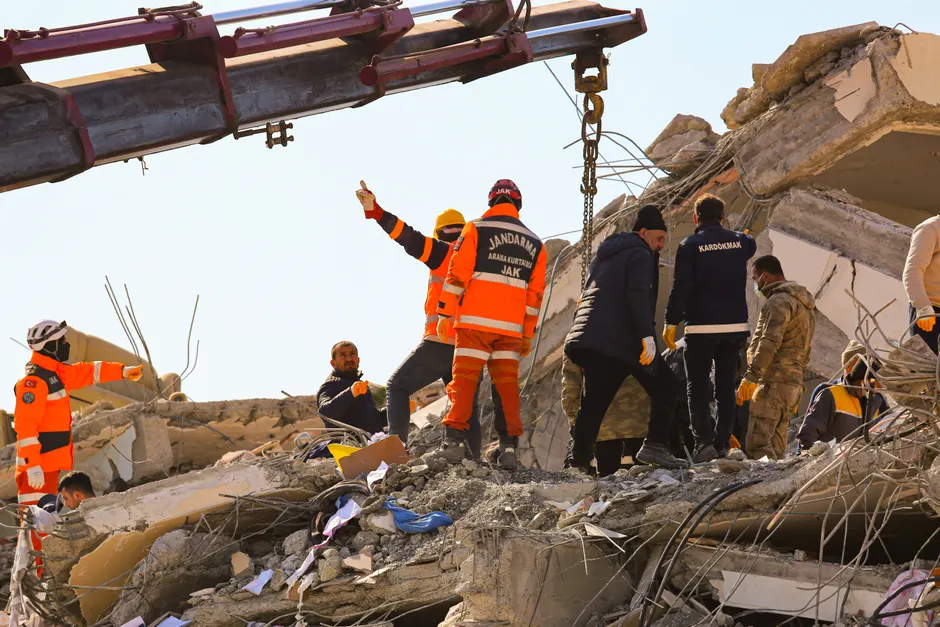
A magnitude 7.2 foreshock and a magnitude 7.5 mainshock struck Venezuela within 39 seconds of each other at approximately 18:04 VET on Wednesday, June 24, 2026, killing at least 32 people and injuring around 700, according to Reuters. The mainshock's epicenter was located 23 kilometers southeast of Yumare, in Yaracuy state, near the active tectonic boundary where the Caribbean and South American plates collide and grind against each other.
The compressed timing of these two events created an unusual and damaging scenario. A foreshock of 7.2 magnitude is already a major earthquake, capable of cracking and fracturing buildings on its own. When a stronger rupture follows within seconds, the cumulative ground motion becomes more intense than either event would have caused alone — think of two waves hitting a shore in quick succession rather than separately. The shaking was felt across a wide swath of the country, including Caracas, some 350 kilometers to the east.
Aftershock Sequence and Ongoing Hazard
The seismic sequence continued after the mainshock. A magnitude 5.1 aftershock struck Tucacas, in Falcón state, on the night of June 25, and by June 26 more than 302 aftershocks had been recorded in total, according to Wikipedia's event log. A sequence this dense is typical for major ruptures near plate boundaries in the Caribbean region, where aftershocks can decay over weeks following a mathematical pattern known as the Omori-Utsu law. Emergency responders usually treat the 72-hour window immediately after the mainshock as the highest-risk period for buildings already damaged by the initial shaking to collapse further.
The Falcón state coastline, where Tucacas is located, matters beyond immediate casualties. It is a major tourism area and home to critical oil and gas infrastructure. A 5.1 magnitude aftershock there raises concerns not only for human safety but for the integrity of refineries and pipelines — a particular worry given that Venezuela's energy production is already under strain.
Venezuela's Seismic History and Current Vulnerability
Venezuela sits along the southern boundary of the Caribbean tectonic plate, and large earthquakes are part of its recorded history. The 1812 Caracas earthquake and the 1967 Caracas earthquake are historical touchstones for seismologists studying the region. This June 2026 sequence is unusual for the near-simultaneous occurrence of two large-magnitude events and because its epicenter lay inland near Yumare, rather than in the coastal and eastern zones that have been struck more frequently in recent decades.
The death toll and injury count must be read against Venezuela's current condition. For years, the country has faced a prolonged socioeconomic crisis that has weakened hospital capacity, degraded the quality of buildings and infrastructure, and stretched search-and-rescue resources thin. The initial report of 32 deaths and roughly 700 injured will almost certainly change as rescue teams reach isolated municipalities. These figures reflect both the energy released by the earthquake and the fragility of the built environment itself. In wealthier nations with strict building codes and regular inspections, a 7.5 magnitude event at this depth would still inflict severe damage; in a place where informal, unregulated construction is widespread, the damage is substantially worse.
How quickly casualty figures and damage assessments stabilize depends on access. Damaged roads, landslides triggered by the shaking, and broken communication lines all slow information flow and rescue efforts. Aftershock risk also discourages rescue teams from entering partially collapsed buildings, forcing emergency managers to make difficult real-time tradeoffs between speed and safety.
The international response will be another factor to watch. Venezuela's government has been hesitant about accepting foreign disaster aid in the past, and any coordination with regional bodies like PAHO or CEPREDENAC will be shaped as much by political relationships as by logistical need.


