Venezuela's Back-to-Back Earthquakes: Why the Disaster Will Test More Than Geology

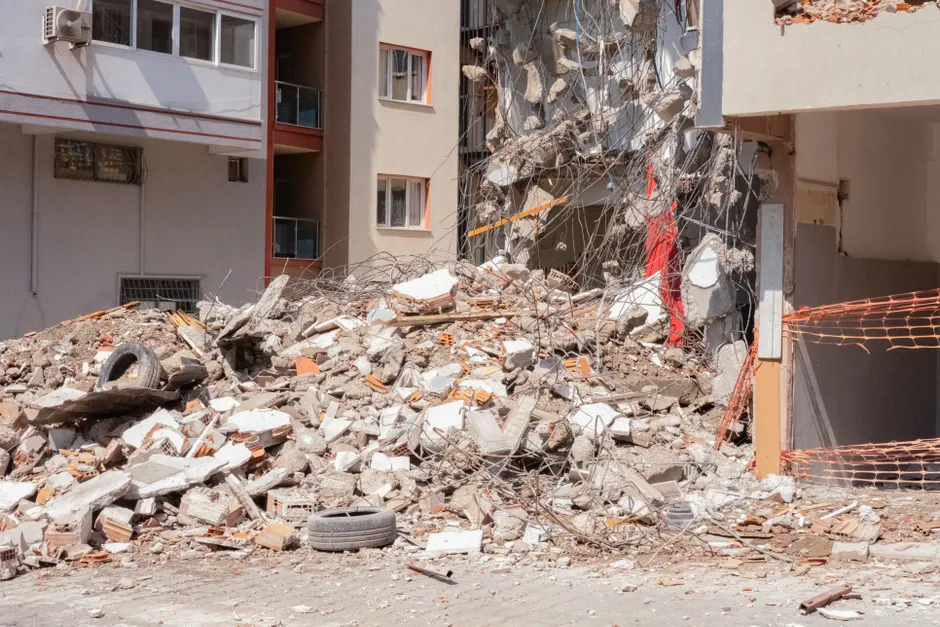
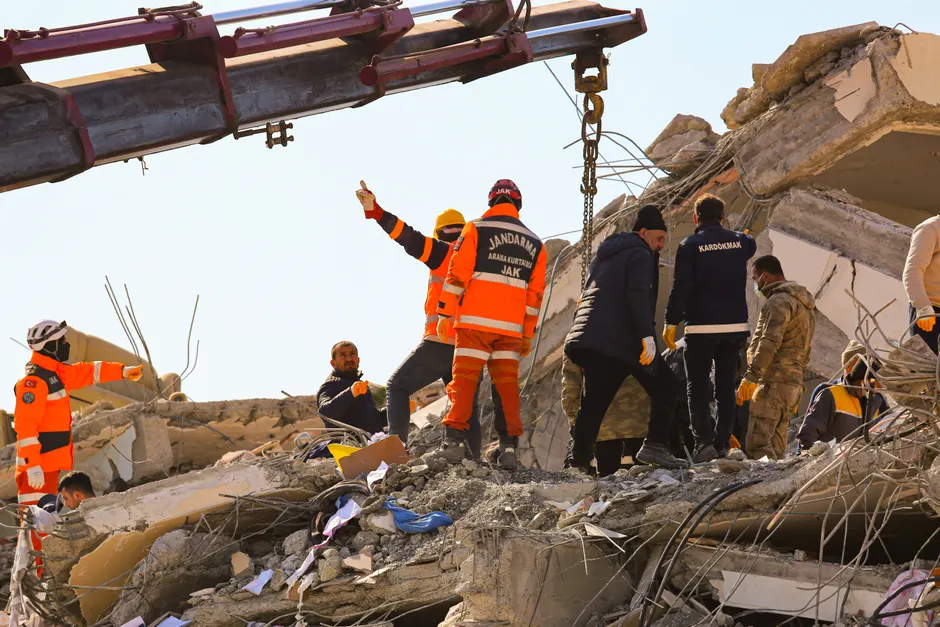
At least 164 people were killed and nearly 1,000 injured after two major earthquakes struck north-central Venezuela's Yaracuy state on June 24, 2026, with the death toll expected to rise as rescue teams work through collapsed structures near San Felipe, roughly 160 km west of Caracas.
The two events struck in rapid succession—a magnitude 7.2 followed by a magnitude 7.5 less than a minute later. This sequencing mattered. A 7.5 releases roughly twice the energy of a 7.2, and the interval was short enough that many structures already weakened by the first quake had no time to be evacuated before the second struck. According to PAHO's June 25 situation report, the combined impact zone covers approximately 3.9 million people. Both qualify as mainshock-class events by any seismological standard.
Reuters reported high casualties in the initial hours. AP reporting from June 26 confirmed the 164 fatality figure and near-1,000 injured count—the most current figures available.
Damaged Infrastructure, Compounded Problems
Electricity, water supply, medical gas, and telecommunications all suffered severe disruptions in the immediate aftermath, according to the Venezuela Health Cluster's June 25 situation report. In practical terms: hospitals operating without reliable power or oxygen precisely when surgical demand runs into the hundreds.
Venezuela's baseline infrastructure was fragile well before June 24. Years of underinvestment in the power grid, chronic medical supply shortages, and a healthcare system already operating below capacity mean the earthquakes hit a system with almost no buffer for a mass-casualty event. International responders will be fighting not only earthquake damage but pre-existing system failure.
Aftershock activity has continued. Venezuela's national seismological institute, FUNVISIS, recorded a magnitude 3.2 event 4 km northwest of Naiguatá on June 26 at 07:07 local time at a shallow depth of 5.1 km, and a magnitude 4.5 event 58 km northwest of Macuro later that day. Shallow-focus aftershocks in the 3–5 range are routine for a sequence of this scale and pose an ongoing hazard to already-weakened buildings—a factor that slows search-and-rescue teams when they must pause and reassess after each tremor.
The Political Layer of the Response
Disaster response in Venezuela has rarely been purely logistical. The Maduro government has historically controlled the terms under which international humanitarian organizations and foreign governments can operate, and that stance creates friction at moments when speed is essential. PAHO's presence and the Health Cluster's activation indicate formal coordination channels are functioning, but the scale of disruption—nearly 4 million people in the affected zone—will test whether those channels can move at the pace the crisis demands.
The political dimension also shapes aid acceptance. Governments and multilateral bodies that Caracas regards as adversarial face structural delays in deploying personnel and supplies into the field, regardless of urgency on the ground. How quickly the Venezuelan government expands that aperture will shape the final casualty count.
Tectonically, Yaracuy sits near the boundary between the Caribbean and South American plates, a corridor that has produced destructive earthquakes throughout Venezuelan history—notably the 1812 Caracas earthquake and the 1967 Caracas earthquake, which killed several hundred and prompted the country's modern seismic building codes. Whether those codes were uniformly enforced across affected municipalities, and when they were last updated, is a question that structural assessments will answer.
The immediate priority is rescue and stabilization. The days ahead will reveal whether Venezuela's institutional constraints—political, logistical, and financial—turn a major natural disaster into a prolonged humanitarian crisis.