Kyiv Under Fire: Why Russia Is Pressing the Capital

Kyiv Mayor Vitali Klitschko said on Oct. 2, 2026, that the capital is in a very dramatic situation and that it is no longer possible to pretend to live as in peacetime. "The enemy is tearing Kyiv apart," he said. The Guardian
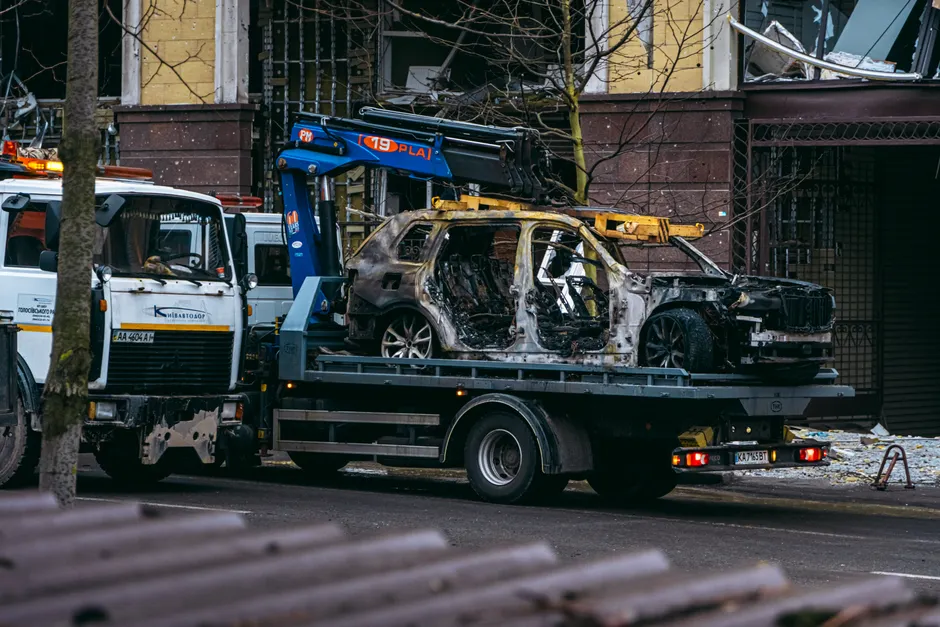
His warning followed a week of Russian missile and drone strikes on offices, datacentres, a school, a hospital and one of Kyiv's main bridges. Russia also targeted a thermal power plant, a large station that produces heat and electricity, and other energy facilities in Kyiv that week, leaving several neighbourhoods without power and water by morning. The Guardian
The effects were visible in daily movement across the Dnipro River. On the morning of Oct. 2, IT worker Artem Marchenko abandoned his car and walked for 20 minutes across the Pivdennyi Bridge to reach work after repeated Russian strikes damaged the crossing. A day earlier, on Oct. 1, a Russian jet-powered drone struck a school in central Kyiv. Jet-powered means faster than earlier propeller drones and harder to shoot down. Pupils escaped unhurt, according to officials cited by Reuters. Reuters Lawyer Valeriya Tkachenko told The Guardian on Oct. 2 that she spent two hours sheltering with her son at his central Kyiv school during an air raid alert while dropping him off. The Guardian
President Volodymyr Zelenskyy, in a Financial Times interview in the week of Sept. 29, said Russian President Vladimir Putin had ordered commanders to abandon the rules of war. Zelenskyy told reporters that same week that Russia wants Ukrainians to leave the capital to show that if you don't have the capital you don't have the country. The Guardian
Ukrainian officials link the damage to a specific air-defence problem. As of Oct. 2, Kyiv faced an acute shortage of Patriot interceptors, ground-launched missiles used to hit incoming ballistic missiles that fall at very high speed, combined with new faster jet-powered Russian drones that are harder to shoot down. Kyiv was fast-tracking new interceptor drones, small defending drones built to strike incoming attack drones, with several already in use according to three defence industry sources, but deployment at protective scale could take weeks or months. The Guardian
The current bombardment continues an escalation pattern documented through the summer. After a deadly Kyiv barrage reported on July 3, the Kremlin in Moscow vowed to further ramp up "pressure" on Kyiv, while Klitschko described that barrage as the "enemy's most massive attack." Russian forces launched another missile attack on Kyiv early on a Sunday reported on Aug. 16, with Klitschko saying falling debris had caused a fire. In September, Russian drones killed two people in a market outside Kyiv on Sept. 27, while three other people died in strikes in different regions that day. At least two people were killed when a drone hit the National Academy of Sciences in central Kyiv on Sept. 28. A Russian drone and missile strike on Kyiv on Sept. 8 killed five people and injured close to 30.
The broader context here is coercion centered on the capital rather than only on front-line attrition. Energy infrastructure, river crossings, datacentres and schools each impose a different cost. Power and water outages test municipal repair capacity. Bridge damage constricts labor mobility and logistics inside a city divided by a major river. Strikes on schools and hospitals, even when casualties are avoided through sheltering, alter household calculations about remaining in Kyiv.
In my view, the timeline that matters is air-defence supply. Patriot stocks for ballistic defence and the maturation curve for interceptor drones will determine whether Moscow can sustain pressure at lower cost to itself. Jet-powered strike drones compress engagement windows and raise the cost per intercept. If Ukrainian interceptor drones reach protective scale in weeks, the current vulnerability may narrow. If deployment stretches to months, further degradation of energy and transport nodes in Kyiv is likely, with displacement from the capital becoming a policy variable in its own right.