Israel Says 170 Killed Journalists in Gaza Were Militants
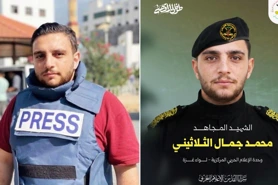
The Israeli military has published an investigation saying 170 people killed in Gaza were militants posing as media workers, The New York Times.
The material is on an English-language IDF mini-site titled "The Press Files" at https://www.idf.il/en/mini-sites/the-press-files/. The page alleges that people presented as innocent journalists were militants in the military wings of Hamas and Palestinian Islamic Jihad (PIJ), an armed Palestinian group. Its display copy refers to "THE 170 MILITARY" in connection with those claims.
The IDF describes the project as an online database documenting alleged militant ties of 170 Palestinian journalists killed in the Gaza war, Jewish Insider. The database includes Palestinians who worked for major international media outlets, The Times of Israel. Publication was reported on Oct. 1 and Oct. 2, with the most recent reporting dated Oct. 2.
On method, the IDF said it verified identities and militant ties using documents released by the militant groups themselves, The Jerusalem Post. The IDF also said some of the 170 people identified as journalists took part in the October 7 attack on Israel, Haaretz.
Separately, the Committee to Protect Journalists, a group that tracks attacks on the press, completed a review of journalists and media workers killed in Israel and the Occupied Palestinian Territory between October 2023 and August 2026, CPJ. That review was published on Sept. 24.
The broader context here is a clash over how deaths are counted and defined. One system centers on legal protection for the press under international humanitarian law, the rules of war. That includes distinction, the duty to separate civilians from fighters, and direct participation in hostilities, meaning a civilian loses protection while taking part in fighting. The other system centers on membership shown through internal rosters, pay records, and operational documents. It is like using two different scorecards for the same game. The dispute is definitional. For experts, the question is not whether fighters sometimes also work as journalists in irregular wars. They do. The question is whether the evidence is sufficient in each of the 170 cases.
Looking at what this means for newsrooms, legal advisers, and international monitors, much will turn on detailed proof. Names linked to checkable unit names, ranks, and records from the time carry weight. Ties suggested only by work for Hamas-run outlets, presence at controlled sites, or social media posts after death do not. Because the list includes staff tied to major international outlets, the diplomatic cost of an error is high and pressure for independent corroboration is strong. Expect close study of the IDF dossiers, parallel review of CPJ case files, and attention to whether employers, unions, and press-freedom monitors revise their own fatality lists.


