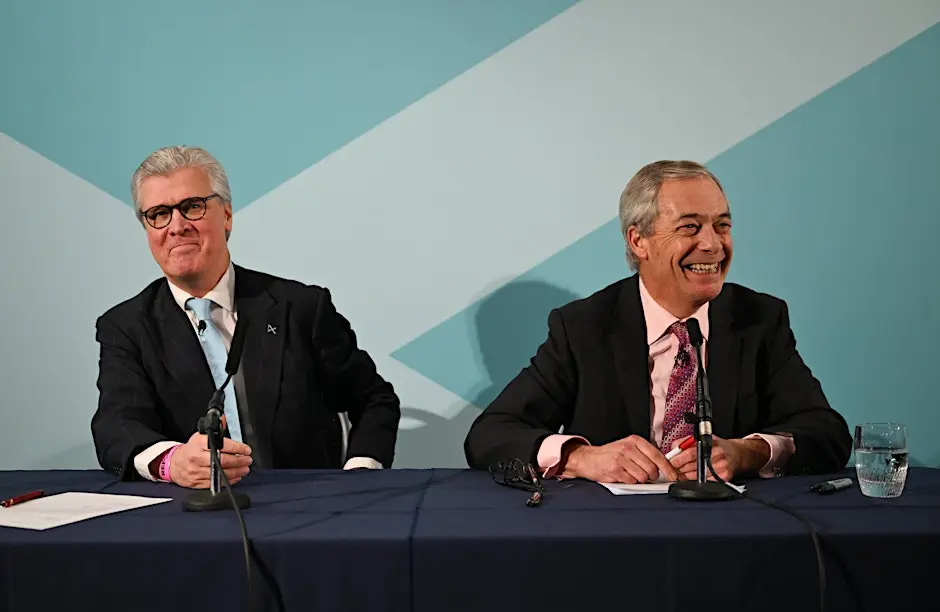
Badenoch Arrives at Tory Conference Stronger After Poll Recovery

Kemi Badenoch opened the Conservative Party conference in Birmingham on 3 October 2026 with no challenge to her leadership and higher poll numbers than a year earlier.
A year earlier, the party stood at 14-16% in the polls. Some Conservative MPs were openly talking about a possible leadership challenge in November, after Badenoch had completed 12 months in the job. By early October 2026, that talk had flipped. The Conservatives were in the low 20s and at times just ahead of Reform UK for the first time in almost two years, according to The Guardian.
Her personal ratings moved with the party. Opinium put her approval at -27 in May 2025. In its latest poll before the conference, she was at -3. Approval here means a net score of approve minus disapprove. Most of the gain was among past Conservative voters. Opinium polling reported by James Crouch found 64% of 2024 Conservative voters approved of Badenoch and 8% did not, and 56% of 2019 Conservative voters approved and 16% did not.
The wider public is split. YouGov research in the week before 3 October found four in 10 people used at least one negative term to describe Badenoch, while three in 10 used at least one positive term. The main compliments were strong and intelligent. Separate YouGov favourability tracking put favourable views at 32% in September 2026, below a 35% peak at the start of August. Ahead of the conference, YouGov put her net favourability (favourable minus unfavourable) at -15, up 20 points, and her net score for perceived job performance up by 39 points, according to YouGov.
Poll snapshots differ by pollster and fieldwork dates, the days when interviews take place. Like averaging several temperature readings to get a clearer picture, a polling average smooths out single polls. Opinium’s voting-intention poll carried out on 23 September 2026 and published on 26 September put Labour on 28%, up one point, and the Conservatives on 17%, down one point. The October picture of low-20s support and occasional leads over Reform comes from the average and more recent movement, not that one snapshot alone.
The 2026 conference took place in Birmingham, with Symphony Hall as the main stage, under the slogan ‘Stronger economy, stronger country’. The Guardian’s 3 October assessment was headlined ‘Badenoch returns to Conservative conference much stronger than a year ago’. A day earlier, its editorial was headlined ‘The Guardian view on the Conservative conference: a party still searching for a purpose’.
Her operation worked differently during the year. She had help preparing for Prime Minister’s Questions (the weekly session when the prime minister faces questions in Parliament) from senior Conservatives such as David Cameron. Conservative insiders told The Guardian in December 2025 that the party and the public were warming to her after a difficult first year. Luke Tryl, the director of the More in Common thinktank, which runs focus groups and polling, has tracked that change in voter language.
Robert Jenrick and Suella Braverman left the Conservatives to join Reform UK. At the 2025 conference, Badenoch told delegates that pro-Palestine marches had become ‘carnivals of hatred’. She later told the Financial Times she could not think of any mistakes she had made.
The broader context here is a contest for survival rather than dominance. Badenoch has ended talk of imminent removal and rebuilt support with 2024 and 2019 Conservatives. That gives her more authority over Conservative MPs than she had last autumn. It does not remove the structural pressure. A Conservative vote in the high teens to low 20s leaves the party level with Reform UK, while Labour keeps a national lead in voting intention. Economic messaging gives MPs, donors and activists common ground. Whether it connects with voters who still describe Badenoch in net-negative terms will shape the next phase. The signs to watch are confirmation across pollsters of a steady low-20s floor, favourability holding above September levels, and whether defections stop with Jenrick and Braverman.