Taking Exams in a Café: How Gaza's Education System Is Barely Holding Together
Dana Shabat, 18, walks roughly an hour each day to reach a café in Gaza where she can sit her high school final exams — a journey that, in ordinary circumstances, would take minutes to a school building. Al Jazeera reported her situation on 27 June 2026: displaced, living under canvas, and still attempting to complete the tawjihi (the Palestinian matriculation examination that serves as the gateway to university and formal employment).
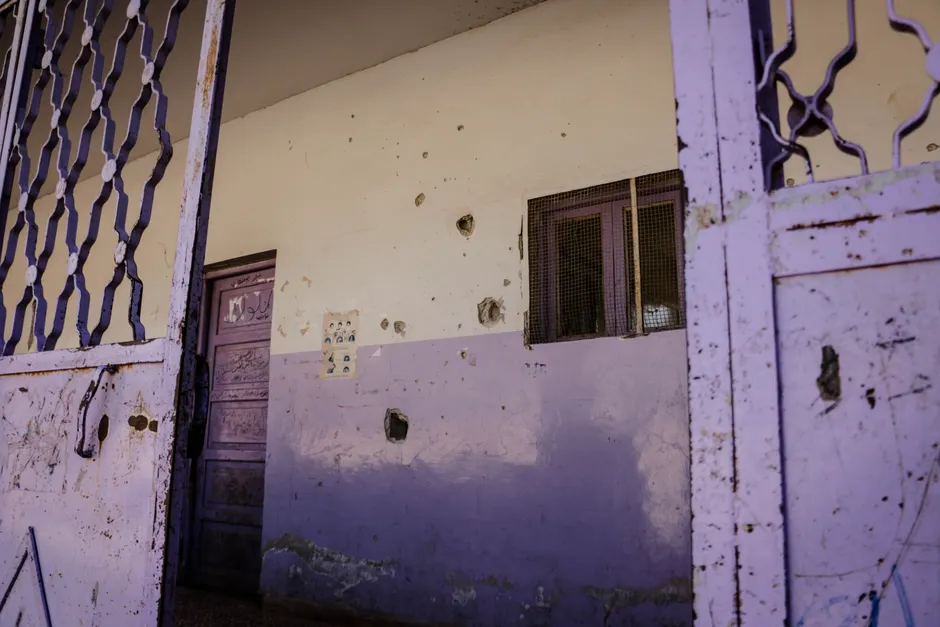
Shabat's commute reflects the scale of damage the war has inflicted on Gaza's educational infrastructure. Every school in the Strip closed following the Hamas-led attacks of 7 October 2023 and the Israeli military campaign that followed, according to AP reporting from May 2024. That closure has now stretched across nearly three academic years, affecting hundreds of thousands of students. For those pursuing the tawjihi — a standardised, high-stakes exam — the disruption carries particular weight: missing it is not simply a year's delay but a break in the sequencing of entry to higher education and employment.
Improvised Exam Centres
Administering public exams during active conflict requires makeshift solutions that push institutional capacity to its limits. For students who managed to cross into Egypt, the Palestinian embassy in Cairo began supervising end-of-year exams for approximately 800 students, Reuters reported in May 2024. The actual number exceeded projections: by late June 2024, an estimated 1,090 Gaza high school students had sat exams in Cairo after being displaced across the Rafah crossing, per Reuters. Those figures represent the students who could leave. For the majority who stayed — options narrowed considerably.
Café-based exam centres have emerged as one practical solution. They provide a physical location, some distance from crowded displacement camps, and — critically — access to electricity and internet in a territory where both remain unreliable. That cafés have become the de facto examination halls for Gaza's tawjihi class says something telling about the state of civil infrastructure across the Strip.
The Broader Challenge
The Palestinian Ministry of Education, working with UNICEF, has launched a Back to Learning Programme to expand non-formal learning pathways (community-based instruction outside accredited school buildings), UNICEF reported in January 2026. Non-formal education is a recognised humanitarian tool, but it has limits for students pursuing credentials that require formal state certification. The tawjihi is not a non-formal qualification; it is a state-administered exam whose results feed directly into university admissions across the Arab world. Getting students to the exam itself — in any venue — requires a functioning examination authority, physical security, and basic logistics. All three remain fragile.
The cohort that Shabat represents is demographically significant. Gazans displaced since October 2023 include a large proportion of young people whose entire secondary education has occurred during active conflict. The credential gap this creates is not simply individual hardship; it is a structural problem for post-conflict recovery, which will require a workforce with documented qualifications. Countries rebuilding infrastructure, schools, and services will need workers whose expertise is officially certified.
Educational continuity in protracted conflict is not a new regional challenge. Palestinian refugees in Lebanon, Syria, and Jordan have for decades navigated dual education systems — UNRWA schools alongside host-country systems — with complex consequences for credential recognition. Gaza differs in a meaningful way: the Palestinian Authority's examination infrastructure is attempting to function inside the conflict zone rather than from outside it. That distinction affects both the legitimacy of the credentials issued and the logistical strain on the body administering them.
What is visible in Shabat's daily walk — the hour each way, the café, the exam — is one student's effort to maintain her position in a credentialling system that war has not destroyed but has made nearly impossible to access. Whether the Ministry of Education and its international partners can sustain that system for the full cohort through a conflict now entering its fourth year is the question that matters.