NASA Tests Cryocoupler for In-Space Refueling Infrastructure
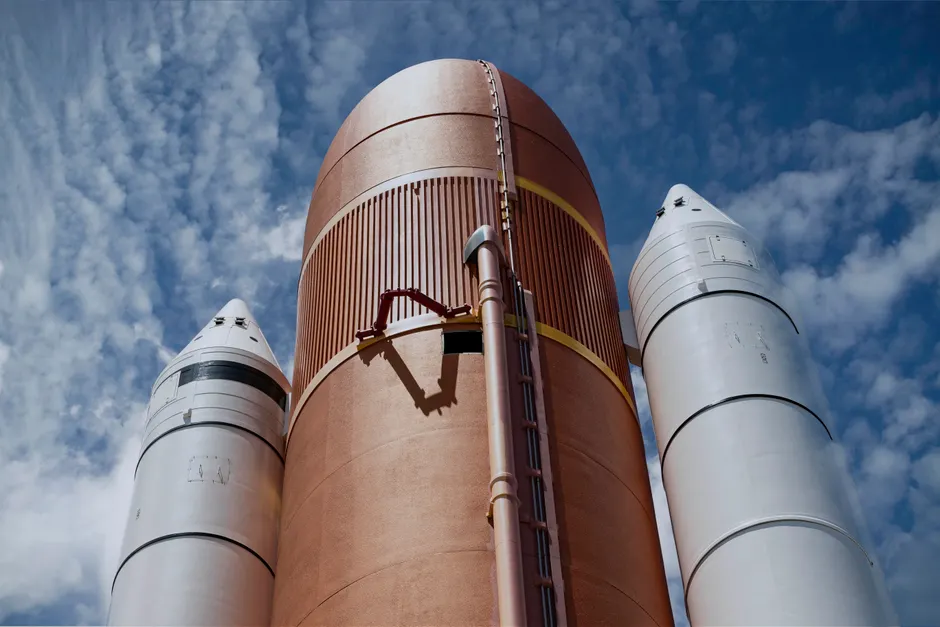
NASA has tested a cryocoupler — a coupling device designed to connect spacecraft to orbital propellant depots — taking a concrete step toward operational in-space refueling, according to a NASA announcement published 26 June 2026.
The cryocoupler is part of NASA's Cryogenic Fluid Management (CFM) portfolio — a collection of technologies for storing, transferring, and measuring ultra-cold liquid propellants such as liquid hydrogen and liquid oxygen in space. Transferring those propellants from a depot to a spacecraft requires a coupling interface capable of handling extreme cold, pressure changes, and zero-gravity fluid behavior. The cryocoupler addresses this specific challenge.
Why In-Space Refueling Architecture Matters
The principle behind on-orbit refueling is simple: a spacecraft launched with only the propellant needed to reach an intermediate orbit — rather than carrying enough fuel for its entire mission — arrives lighter, which reduces launch cost or creates space for additional payload. A network of depots in cislunar or low Earth orbit functions as a fuel station grid; the cryocoupler is the interface that makes each refueling stop possible.
NASA views in-space refueling as essential for reusable, sustainable space transportation. The emphasis on reusability matters: a vehicle designed to be refueled is architecturally different from one built for a single mission. This distinction ripples through spacecraft design, procurement, and operations across an entire program.
NASA is not alone in this work. In March 2026, the agency published details of a cryocooler developed by NASA Glenn Research Center with Creare LLC through the Small Business Innovation Research (SBIR) program, designed for lander refueling. The cryocooler and cryocoupler solve adjacent but separate problems: one manages temperature to keep propellant liquid; the other manages the physical transfer connection. Both are required for a functioning depot system.
Commercially, L3Harris has developed on-orbit refueling and propellant management systems for both monopropellants and cryogenic fuel, as outlined in April 2025. The presence of a commercial supplier already offering cryogenic on-orbit refueling suggests the market is moving beyond proof-of-concept, even as NASA's component-level work continues maturing.
What the Test Establishes
The cryocoupler test is hardware validation under controlled conditions, not a flight demonstration. At this stage, proving a device performs as designed in flight-representative conditions is a necessary step before any on-orbit qualification campaign. The distance between a successful ground test and a flight-ready system is real, but ground tests are where that distance begins to shrink.
Cryogenic fluid management has historically been one of the longer-lead challenges in serious in-space propulsion architecture. Cryogenic propellants deliver better performance than storable hypergolics, but managing them in microgravity — dealing with sloshing, boil-off, two-phase flow, and transfer when the propellant mass is not settled at the tank bottom — has required sustained engineering effort over many decades. Progress typically arrives through incremental hardware milestones rather than breakthrough announcements.
The broader context here is that the cryocoupler test amounts to infrastructure work: component validation that rarely generates headlines but matters considerably when a depot architecture moves from program planning to actual procurement. The comparison to terrestrial infrastructure has limits but offers perspective — nobody writes about standardizing a fuel nozzle fitting, yet incompatible standards have delayed energy transition projects. Getting the coupling interface right before multiple depot operators and spacecraft manufacturers commit to competing designs is the kind of decision whose full value becomes clear only later.
NASA's Space Technology Mission Directorate (STMD), which oversees this test through the Tech Demo Missions Program, is advancing CFM as an integrated portfolio rather than isolated technology tracks. That systems-level approach — treating storage, transfer, measurement, and coupling as interdependent challenges — is the right strategy for a technology that only works when all components function together in orbit.