Scuffles in Gosport as 149 People Are Brought Ashore From Channel Dinghy

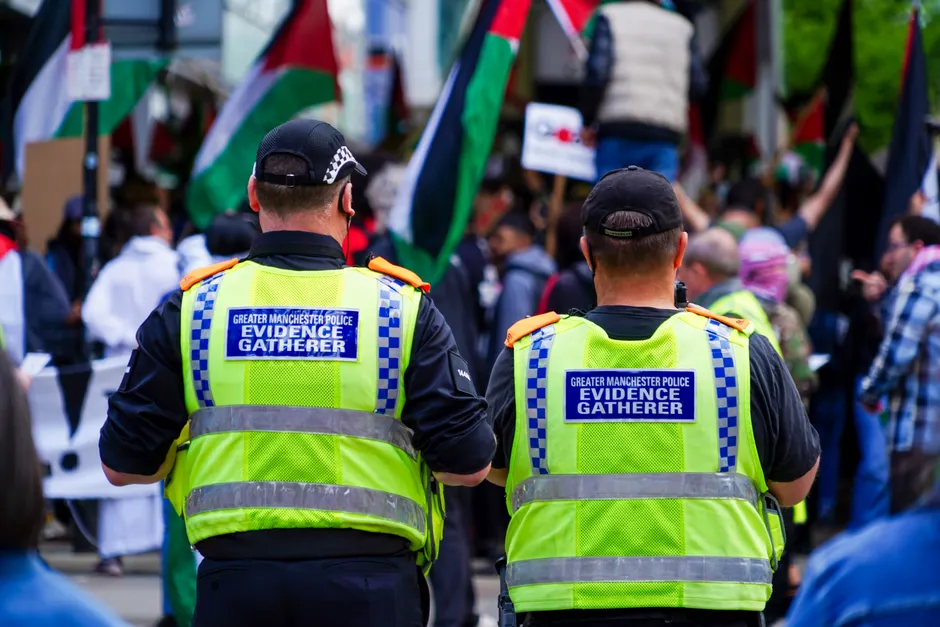
Protesters against migration scuffled with police in Gosport, Hampshire, late on Sunday evening as rescue boats landed people from a crowded Channel dinghy.
Hampshire and Isle of Wight Constabulary said officers were sent to the town to support other agencies in case of an emergency at sea. Demonstrators gathered near Haslar Marina. Flares were lit and scuffles with police followed. Live reporting put the crowd at about 100 The Independent. Police set conditions under the Public Order Act, the law that lets officers place limits on protests, and used powers to ban face coverings. Ambulances and coaches were seen nearby.
Several of those rescued arrived at the marina on two RNLI boats, the charity that runs lifeboat rescues. Ship tracking data suggested French rescue vessels had followed the dinghy across the Channel before RNLI crews met it in English waters. The Home Office said 149 people were believed to have been on board The Guardian. It said those brought ashore would be taken to short-term holding facilities in Kent for processing, including health checks, security checks and biometric checks such as fingerprints and photographs.
Sunday was the second time protesters had gathered in Gosport after rumours that rescued people would land there. Last month, hundreds gathered in anticipation of a dinghy arrival. Six people were arrested on that occasion. The migrants were eventually taken to Dover by sea. Three people were later charged with assault after anti-migration protests in Gosport The Guardian.
The Gosport landing was the third far-west Channel crossing in a month, although such departures have been rare in recent years. In September, 51 people who left from Normandy spent about 30 hours at sea, refused help from the French coastguard and reached Dover after transfer to Border Security Command boats, the UK teams that deal with small-boat arrivals.
Provisional figures put Channel crossings this year at 19,451, down 43% on the same point last year and 23% below the same stage in 2024 The Guardian. The count covers detected small-boat arrivals.
The broader context here is practical as well as political. Dover is still the designated reception point, like a main hub that handles arrivals. Landings further west spread reception, transport and policing work at short notice. They also test coordination between France and Britain, with French vessels staying near boats that refuse help until British crews take over. For officials balancing rescue duties with public order, rumour-led gatherings are a separate problem. Crowds can form before final decisions are made.
Looking at what this means for the weeks ahead, the question is whether far-west departures stay unusual or become an established route. A lasting shift would make interception harder, keep people at sea longer and raise medical risks. It would also spread protest activity beyond Kent. The use of Kent holding facilities after a Solent landing shows the pull back to existing processing centres, even when people come ashore elsewhere.