Libya's Teachers Strike Nationwide, Delaying the School Year
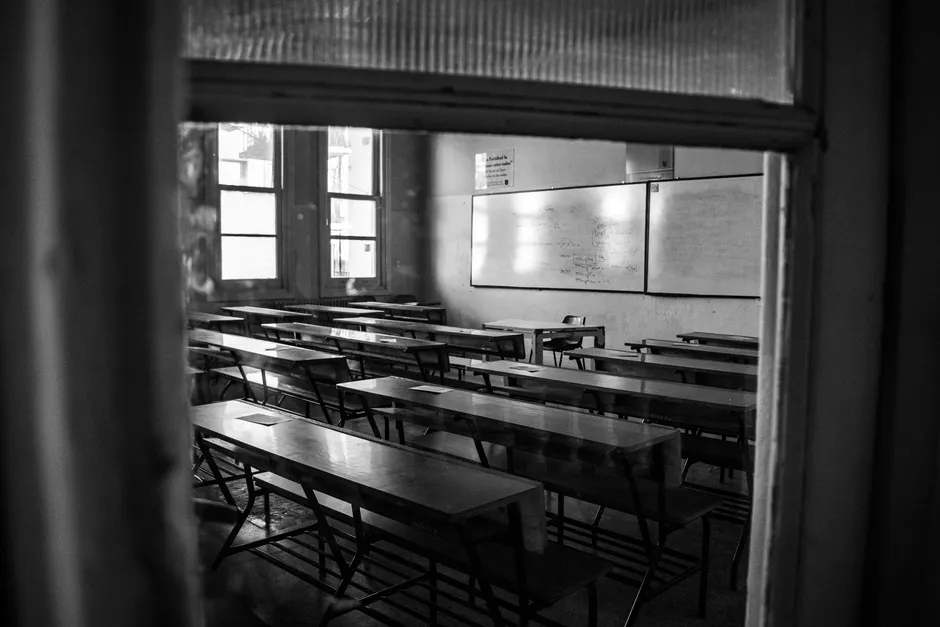
Libyan public-school teachers have started an open-ended nationwide strike, keeping students out of classrooms and delaying the new academic year, according to Reuters. Schools across the country are idle.
The protests began on September 13, the day classes were due to start, according to Al Jazeera. Teachers held sit-ins outside schools and government buildings in Tripoli. Two weeks later, the teachers union called a nationwide strike.
The strike covers both western Libya, governed by the Government of National Unity, and eastern Libya, controlled by Khalifa Haftar's Libyan National Army. Prime Minister Abdul Hamid Dbeibah of the Government of National Unity met with cabinet members to discuss a response. Several unions in other sectors have threatened to join unless the government holds talks on the cost of living crisis.
The teachers are asking for higher and more equal pay, health insurance, and better protection on and off school grounds. The central demand is a unified pay system, one salary scale designed to reduce gaps between different public-sector jobs. The unions say it should adjust for the cost of living and the dinar-U.S. dollar exchange rate, which shapes what wages can buy. They have also called on the attorney general to act against corruption in public spending.
Ninety-one percent of Libya's education budget goes to salaries, according to a budget brief by Libya's National Council for Economic and Social Development with UNICEF. The sector had 560,000 employees in 2024, including about 270,000 teachers in basic and secondary education.
The broader context here is tight budgets meeting wide organization. It is like a household budget where almost everything already goes to rent, leaving little for anything else. That makes raises and health coverage hard to fund without revisiting pay across the public sector. A unified scale linked to prices and the exchange rate would turn a teachers' dispute into a budget-wide promise. That helps explain why other unions have linked their threats to talks on living costs.
Looking at what this means for the weeks ahead, three variables will shape the path. The first is whether Dbeibah's cabinet offers talks that other labor groups accept. The second is whether coordination between teachers in the west and east holds. The third is whether the attorney general's office answers the corruption complaint in a way unions see as substantive. Without movement on pay, the risk is a wider stoppage that keeps classrooms closed well beyond the delayed start.


