Safeworld Raises $12M to Test AI Robot Controls Around People

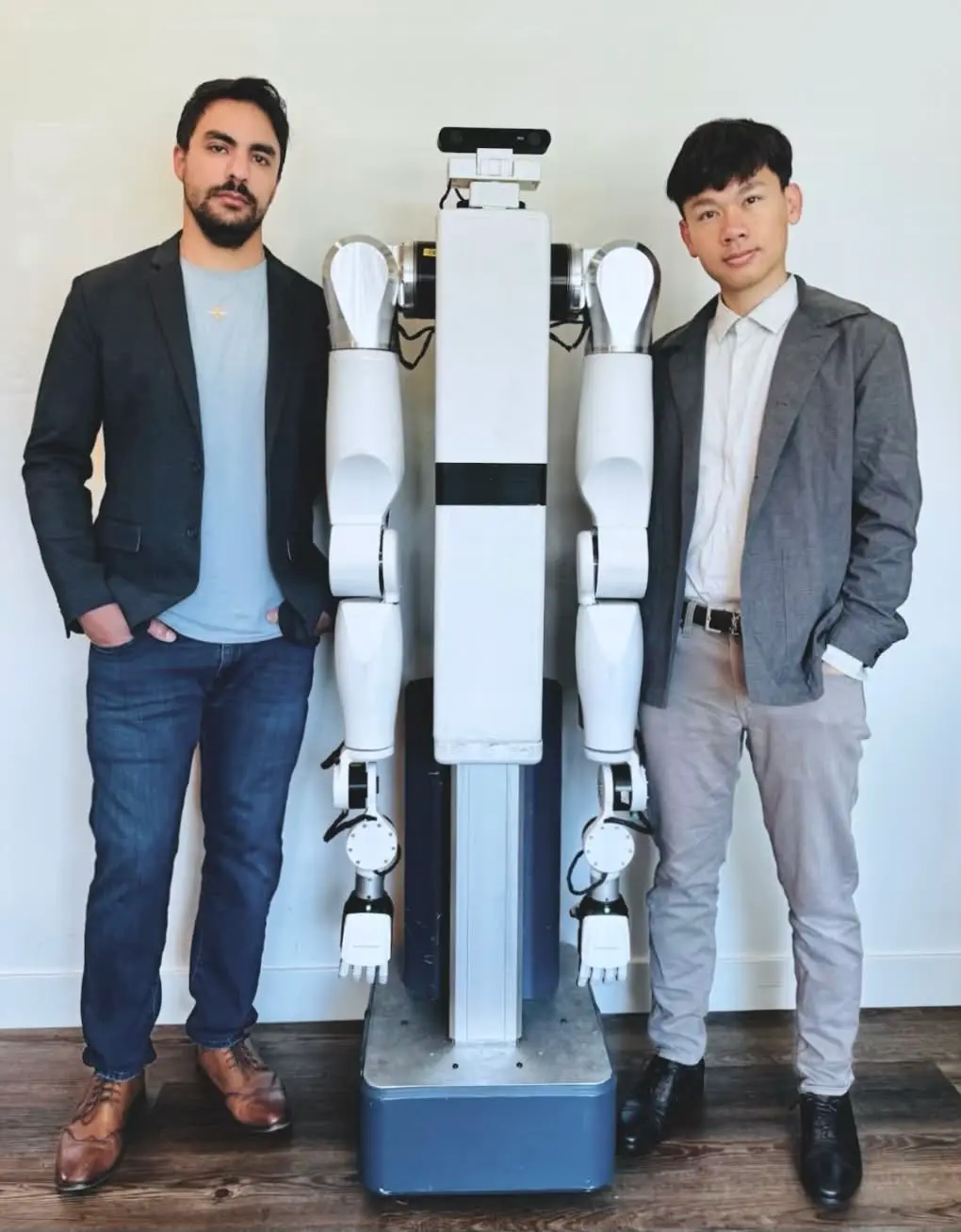
Safeworld has come out of stealth with more than $12 million in seed funding to test generative AI robot controls in simulation before robots work around people. The round was led by Shine Capital and a16z Speedrun, with participation from Box Group, Carnegie Mellon University Endowment, Innovation Endeavors and SV Angel, according to TechCrunch. The company was founded by Ding Zhao, Kyle Wong and Simo Rachidi.
Zhao directs the Safe AI lab at Carnegie Mellon University. The team is building Safeworld as an independent testing layer for robotics developers, rather than as a robot maker itself.
For each customer system, Safeworld builds a digital copy of the planned test environment in physics simulators like Genesis or MuJoCo, which model how objects move and touch. It then plugs in the robot's real software and runs thousands of scenarios where lifelike simulated people meet the robot, similar to how pilots train in a flight simulator.
That software-in-the-loop method keeps the actual policy, perception and control stack under test, not a simplified stand-in. The policy is the AI model that chooses the robot's next action. The factor varied across tests is human behavior around the machine, including proximity, occlusion, or blocked camera views, unpredictable movement and contact risk. For engineers used to log replay, unit tests and limited on-site pilots, the pitch is wider coverage of human-robot encounters without putting people at risk during data collection.
Gritt Robotics is partnering with Safeworld on safety simulations. Vishal Dugar is chief technology officer of Gritt Robotics. Safeworld lists its site at safeworld.ai and describes itself there as providing safety testing and simulation for robots working around people to help enterprises evaluate risks and deploy autonomy safely, according to Safeworld.
The hard technical issue is not physics detail alone. Rigid body contact, friction and sensor noise are now handled well in modern simulators. Human motion is harder. People do not follow optimal paths. They hesitate, change direction mid-step, reach into workspaces, crowd around interesting hardware and adjust once they decide a robot is safe to ignore.
In my view, that unpredictability is why a test setup filled with simulated people is worth watching. Current VLA models, which connect vision, language and action, and diffusion-based policies expand what robot arms and mobile bases will try in messy, unstructured places, but they also widen the range of rare failures. Sampling thousands of scripted and generated human encounters before a pilot lets teams measure collision rates, near misses and unsafe forces, and compare software versions against the same test set.
The broader context for safety and compliance teams is how that simulated crowd is checked. The open question is how the simulated human behavior is validated, versioned and linked to real-world observations, since any gap there carries straight into false confidence.
Enterprises considering pilots in warehouses, retail backrooms or care-adjacent environments need a risk assessment they can share internally. A third-party simulation report does not replace interlocks, speed and separation monitoring, or on-site supervision, but it gives operations and legal teams a concrete basis for setting those controls and for deciding where autonomy is allowed to run.
Looking ahead, if the method holds up under independent testing, it could allow a faster loop for robotics near people. Teams could test a new software checkpoint each night against the same human interaction suite, catch regressions in yielding or stopping behavior, and ship with measured evidence rather than stories about safe operation.