Norway Proposes Temporary Ban on Smart Glasses in Public Places

Norway's government announced on October 5, 2026 that it plans to propose a temporary ban on camera-enabled smart glasses in selected public places. The Guardian The proposal would make Norway the first country to seek such a restriction. Financial Times
The draft bill would prohibit use of the devices in parks, beaches, museums, shopping centres, schools, daycare centres, healthcare facilities, gyms and public events. Private use would remain permitted. The line is deliberate. It targets recording in shared and sensitive spaces rather than ownership itself.
Torgeir Micaelsen, Norway's minister of digital affairs, said he is worried the technology risks people being photographed, filmed or audio-recorded without knowing it. The government said it plans to submit the bill as soon as possible. In parallel, it will task an expert group with drawing up permanent regulations.
Norway's Labour Party heads a minority government. It needs support from other parties to pass the measure. No vote has been scheduled.
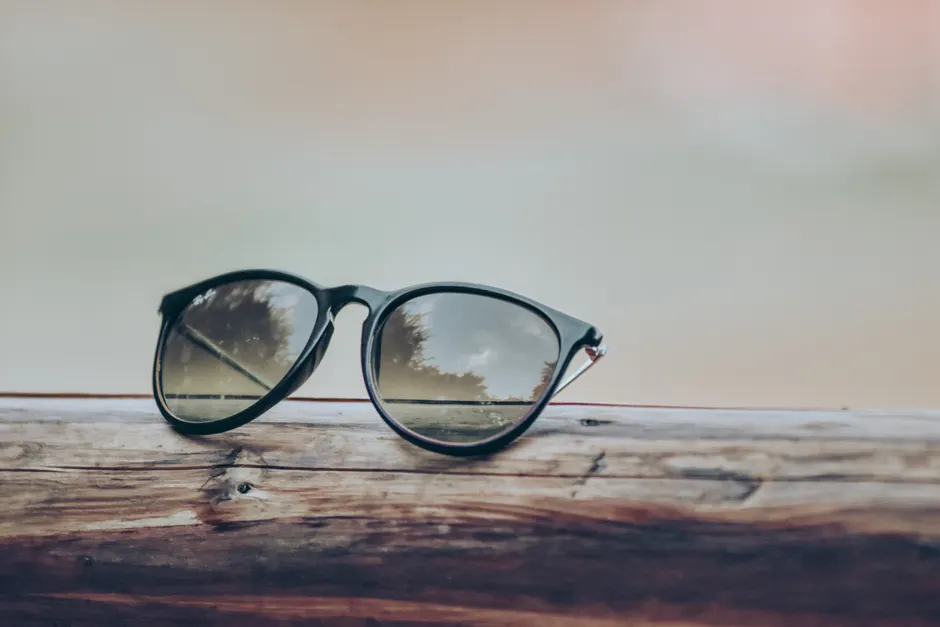
The proposal deals with devices that have moved from niche hardware to consumer product. Meta sells smart versions of Ray-Ban and Oakley glasses that can film, take photos, make phone calls, play music and execute AI prompts. Meta has sold at least nine million pairs of the Ray-Ban versions since the start of 2023.
Meta says each pair has a tamper-proof LED light that blinks white when recording or taking pictures, similar to the recording light on a video camera. That safeguard has not settled privacy concerns in several jurisdictions. Restrictions on smart glasses already exist in British and American courtrooms and in some pubs, cinemas and restaurants over privacy fears.
In Britain, restaurateur Jeremy King and the pub chain Wetherspoons have said they do not want customers using smart glasses. British cinemas began introducing policies in August to ban or restrict the devices, citing privacy and film piracy concerns.
In the United States, California Governor Gavin Newsom vetoed legislation that would have penalised using smart glasses to record people without permission in changing rooms, doctors' offices and other spaces considered private. In France, the child welfare group E-enfance said it received about 20 reports this year of women filmed without their knowledge with camera-fitted glasses, mostly involving Meta smart glasses.
The broader context here is regulatory fragmentation without a common standard for face-worn cameras. Norway is opting for a time-limited, location-based prohibition while permanent rules are drafted. That narrow scope limits the scope for legal challenge over proportionality. But it leaves open difficult questions of enforcement and definition.
Looking at what this means for policymakers elsewhere, the Norwegian model separates two problems that are often conflated. One is covert recording in places with a reasonable expectation of privacy. The other is the normalization of continuous capture in fully public space. A temporary ban gives legislators room to test where the line holds. It also puts pressure on manufacturers over consent signals, data retention and the practical visibility of recording indicators in daylight, crowds and low light.
Looking at the practical side for technology providers and venue operators, the near-term question is compliance without constant confrontation. Staff would need to distinguish camera-enabled frames from ordinary eyewear. Visitors would need clear notice of where use is barred. If Oslo proceeds, other governments weighing similar limits will watch whether a narrow, reversible measure reduces complaints enough to justify permanent legislation, or whether enforcement proves too uneven to sustain.