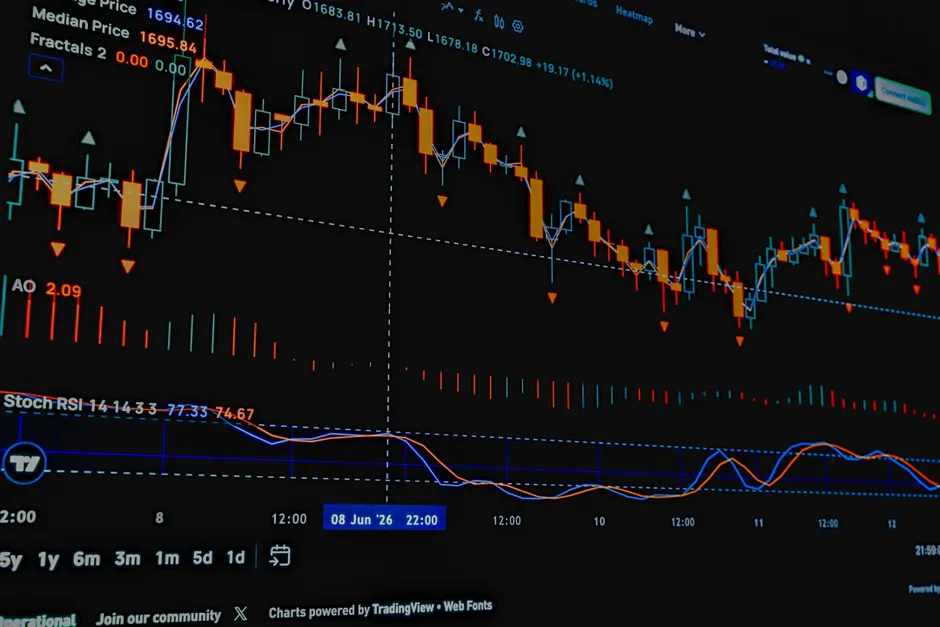
Nasdaq Hits Record as 10-Year Yield Stays Above 5.3%

The Nasdaq Composite set fresh intraday and closing records on October 5, 2026. The S&P 500 rose as most megacap and growth stocks advanced. Treasury yields, the interest rates paid to borrow, held near multi-year highs even as stocks moved higher. Kitco Investopedia
The Wall Street Journal followed the session live as 'Stock Market Today: 10-Year Yield Rises.' In an update stamped 12:35pm ET, it noted the Nasdaq was poised for a new high while the 10-year yield rose. Stocks were up. Yields were up. WSJ
The benchmark 10-year started the week at 5.33%, according to the Journal's October 5 report. Intraday reports put it at 5.30% to 5.31%, up from 5.28% late Friday. The 30-year rose more than 3 basis points to 5.664%, where a basis point equals 0.01 percentage points. The moves followed a 5.34% print on Thursday, October 2, which Reuters reported as the highest in 24 years. WSJ Reuters
Brent crude eased as stocks rose. It settled at $100.32 a barrel on October 5, down 1.9%, after trading in a $100 to $103 range. Morning reports had it at $101.83, down 0.4%. The pullback still left crude above $100, a level retaken in September on worries about global oil supply and a flare-up in Middle East tensions. Boston Herald Reuters
The prior sessions put Monday in context. U.S. stocks recovered from early losses to close slightly higher on October 1, with the S&P 500 bouncing from a two-week low. Oil was volatile into that rebound. The Journal had reported Brent falling 2.1% to $104.32 a barrel on September 25, ending a week of rising yields and volatile oil prices. Reuters
The broader context here is higher borrowing costs without lower stock valuations. A 5.3% 10-year with a 5.66% long bond resets discount rates, pension valuations, and mortgage and business refinancing math. For ordinary savers that can mean higher interest on savings, for borrowers it means higher monthly costs. That stocks still advanced points to strength in long-duration growth stocks holding up against higher rates, rather than broad participation.
In my view, the oil tape eased one channel for inflation. A 1.9% daily fall to $100.32 does not end triple-digit crude, but it trims near-term headline inflation pressure while nominal yields test generational highs. If crude holds above $100 while inflation-adjusted 10-year yields stay high, support for megacap growth narrows. Profit margins and buyback capacity must do more work.
Looking at what this means for positioning, high yields focus attention on bond supply, convexity hedging, and cross-market liquidity, or how easily risk moves between markets. Record index levels led by megacaps can coexist with tight financial conditions for a time. The risk is dispersion, where index strength masks rate strain for small caps, commercial real estate credit, and floating-rate borrowers facing resets.