France's Student Protests Escalate Ahead of October 6 Day of Action
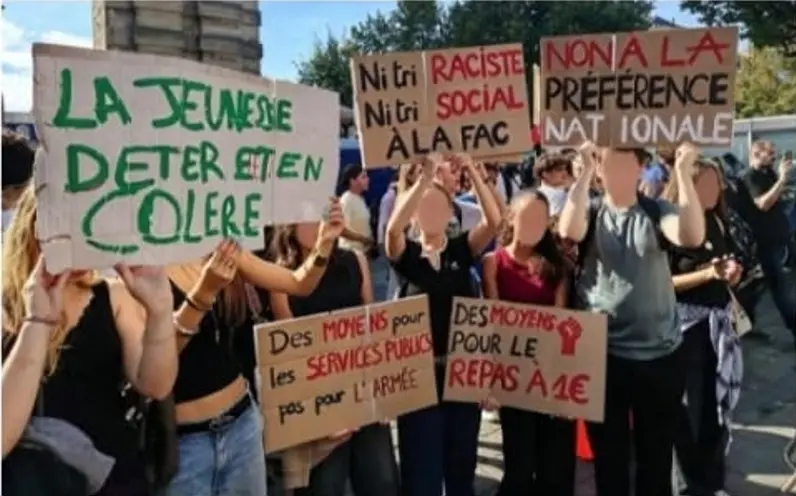
French high-school organizers and education unions have called a nationwide day of action for Tuesday, October 6, to support students demanding more investment in education. The call came Monday, October 5, after a week of blockades, closures and clashes that left scores injured and thousands in custody.
The wave began in September in Paris over crowded classrooms, run-down buildings and a lack of teachers. What started among lycéens, or high-school students, spread to universities and then to cities across the country, according to reports from the past week. BBC Hundreds of schools were blockaded. Roughly 500 schools stayed closed Monday amid fires, blockades and clashes with riot police. TIME On Friday alone, 735 establishments were affected, and firefighters tackled a blaze near the Lycée Berthelot in Aubervilliers near Paris. Le Monde Riot police clashed with high-school students across France on Friday. Reuters
At least 190 students were injured. Two cases have drawn particular attention. A 15-year-old boy's hand was blown off during a confrontation near a school in Lens on Monday, and officials said his injury is not life-threatening. In Saint-Ouen-l'Aumône last week, 14-year-old Eden suffered a double jaw fracture and underwent major surgery after reportedly being struck on the head by a tear gas grenade. Education Minister Édouard Geffray said 24 schools had been burned and ransacked since the start of the protests. BBC
A total of 5,060 people have been arrested since the start of the movement, of whom 87% were minors and 13% were adults, according to France's justice ministry. Fourteen people were placed in pre-trial detention, meaning held in jail before trial, and 1,802 people are facing prosecution, including 319 adults and 1,483 minors. Interior Minister Laurent Nuñez reported 1,954 arrests on Thursday and 1,747 arrests on Friday in connection with the mobilization. Le Monde
The government responded Sunday. Prime Minister Sébastien Lecornu announced measures to address difficulties faced by secondary-school students and education staff, promising "visible changes in schools." Nuñez said the demonstrations had been policed in "an extremely proportionate manner." Student and union leaders rejected that description. The Union Syndicale Lycéenne called on people to join its mobilisation on Tuesday, saying the government had offered nothing concrete. Teachers' union SNES-FSU urged its members to join in support of students. An intersyndicale, essentially a team-up of National Education unions acting together, had already called on Friday to join the mobilization day on Tuesday, October 6, and the FSU called nationally for a day of strike and demonstration on that date. FSU33 La France Insoumise leader Jean-Luc Mélenchon described the protests as "the most powerful high school and university student youth movement since 1968."
The broader context here is a test of containment. Lecornu is offering administrative fixes for staffing and buildings, while the policing record, with most of those arrested and prosecuted under 18, is becoming a grievance in its own right. In France, high-school movements have repeatedly forced education ministers to retreat. What to watch is turnout on October 6 in secondary schools and universities, the stance of the union alliance after that date, and whether court cases deter or extend blockades. Large, coordinated turnouts in Paris and the regions with union backing would pressure the government to turn promises into timetabled commitments on posts, renovation and class sizes. Fragmented turnout or more violence around schools would likely shift debate from education funding to public order, ground where governments usually harden rather than concede.


