BougeRV DuneRover Puts Dual Motors and Remote Control in a Heavy-Duty Wagon
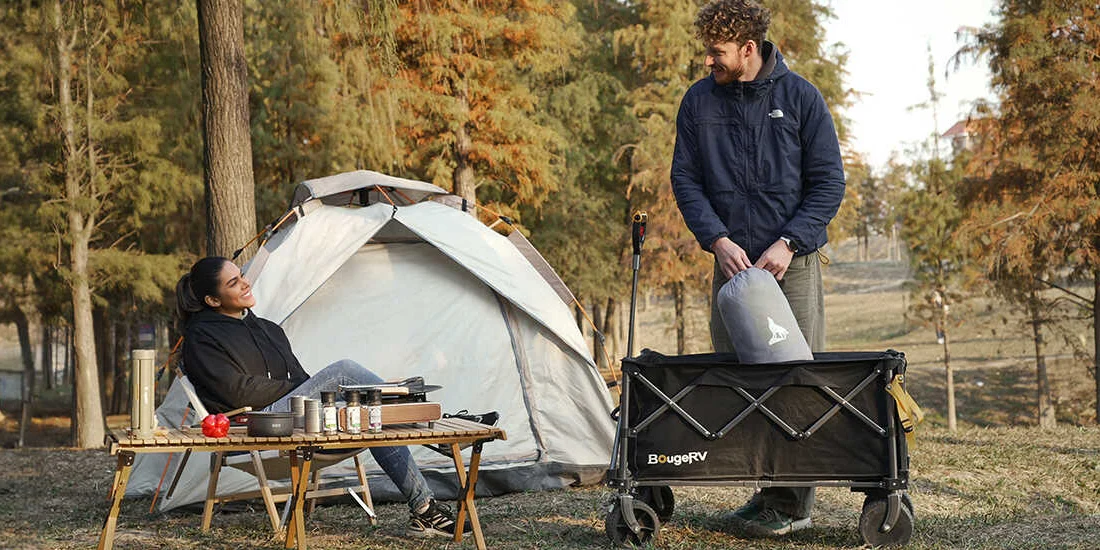
BougeRV has listed its DuneRover remote-controlled electric wagon on Kickstarter for $467 for early backers, against a planned list price of $899. Production units are scheduled to ship in February 2027. The Verge
The unit tested so far was a Kickstarter prototype supplied by BougeRV. In that configuration it carried more than 200 pounds of gear over hills and crossed soft sand where conventional wagons stall.
Power comes from two brushless geared motors, one per axle. Each is rated up to 400W output with up to 33Nm of torque, or turning force. Driving both axles spreads the effort instead of pulling a loaded chassis from one point.
Control is split between physical and wireless inputs. Squeezing a trigger in the handle powers the wagon while pulling, and releasing it stops the wagon even on an incline. The handle also works as a wireless remote away from the tow position, and movement and settings can be controlled from a phone. BougeRV
The DuneRover sits alongside BougeRV's existing Electric Wagon line. For that line, BougeRV lists battery-powered transport up to 440 lbs with a 133Wh battery option. BougeRV It also lists four braking modes for its electric wagons: electronic brake, inductive brake, automatic hands-free brake, and foot brake. Those load, battery and brake figures are for the Electric Wagon, not separately published for the DuneRover prototype.
The DuneRover includes LED lighting, with rear light bars that switch on by default at power-up. They can be turned off in the app, but the setting resets and must be turned off again after each restart. The body has zippered openings on both sides so pets can hop in and out.
The broader context here is the last hundred meters of personal logistics. Electric bikes and scooters added assistance for riders. Powered carts handle a different load. Coolers, tents, batteries, camera rigs, and dogs do not ride well on a bike rack. Sand, grass, and boat ramps punish small casters. Motor power plus remote operation turns the wagon from passive trailer to powered carrier.
In my view, the controls matter more than the torque numbers. A pull-to-enable trigger with stop-on-release works as a simple interlock. It keeps behavior predictable if hands leave the handle on a slope. Remote operation from the handle or phone helps in tight cases, such as repositioning a loaded wagon while packing a car or inching it over soft ground. The trade-off is complexity. Wireless links, app settings, and lighting defaults add states to manage, as a light that resets to on shows.
Looking ahead, what this enables, if production matches the prototype, is less strain per trip rather than longer trips. Beach access is the clearest case. Field maintenance, sideline sports, and small-site work follow the same pattern. Short hauls with heavy, bulky loads over poor surfaces.