Pocket's $11 Million Bet on Purpose-Built AI Note-Taking Hardware
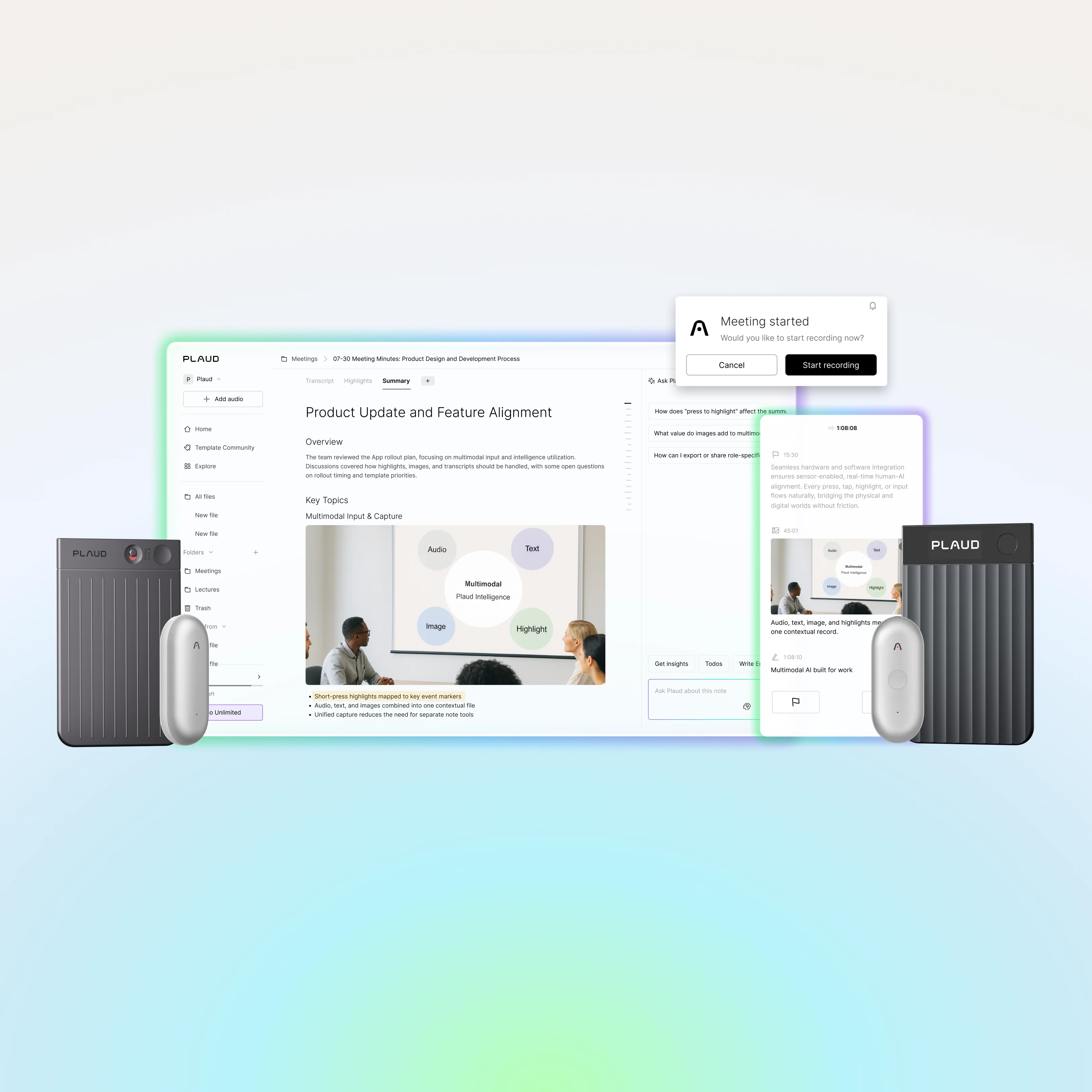
Pocket has raised $11 million in funding to build dedicated hardware devices designed specifically for AI-assisted note-taking, according to a report from TechCrunch published June 29, 2026.
The company enters a category that has seen growing investment over the past two years. Rather than adding AI transcription and summarisation features to existing smartphones or laptops, Pocket is creating purpose-built devices — hardware paired with custom software — that centre around capturing and retrieving spoken and written information with AI assistance.
This thesis has precedent. In January 2024, Ask-AI raised $11 million for its Generative AI Sidekick, a tool designed to unify siloed enterprise data into AI-assisted workflows. HPCwire/BigDataWire covered that round. Pocket's raise, however, lands in a materially different moment: AI models are substantially more capable than in early 2024, on-device inference — running AI processes directly on hardware rather than in the cloud — has become significantly cheaper, and both consumer and enterprise buyers are more receptive to AI-native tools.
The core strategic tension is unavoidable. Smartphones already have capable microphones, processors with AI capabilities, and mature transcription systems from Google, Apple, and Microsoft. All three have invested heavily in AI-powered meeting summaries and voice memo tools. A separate device means Pocket must convince users to carry it alongside their phone — a real distribution challenge. Yet purpose-built hardware carries structural advantages: optimised microphone design, a user interface built entirely around note-taking without competing with dozens of other phone functions, and battery and processing power managed solely for this task rather than shared across many applications.
The e-reader market offers a useful parallel. Smartphones could display e-books; the Kindle succeeded anyway. The difference was not raw capability but intentionality of design and the friction removed by a device that did one thing without requiring you to choose between that and everything else.
The competitive landscape warrants scrutiny. The AI note-taking space already hosts several software-first players — Otter.ai, Fireflies, Notion AI, and others. Once these companies build their AI infrastructure, adding more users costs them almost nothing; software scales efficiently. Hardware companies face a structural disadvantage: manufacturing, supply chain management, returns, and customer support all consume margin in ways software companies avoid. For Pocket to justify its premium price over embedded software alternatives, its differentiation case needs to be compelling.
The $11 million amount itself tells a story. It is sufficient to advance a focused hardware product through development and into limited production, but it falls short of the capital required for a broad consumer launch. The more realistic path in the near term is enterprise or prosumer markets — specific industries where accurate, private, friction-free capture genuinely drives productivity: legal practice, medicine, consulting, journalism. These buyers can absorb a hardware price premium and often have clear ROI to justify purchase.
Larger signals reinforce the pattern. This same month, Irish space-tech company Ubotica Technologies raised $11 million for an AI-powered edge inference platform being scaled toward maritime security. Silicon Republic reported that on June 24, 2026. Different domain entirely, but another indication that investors are funding AI at the hardware and embedded layer, not only in cloud software.
The path ahead for Pocket hinges on demonstrating that a purpose-built, intentional device experience converts sufficient users to sustain the economics of hardware manufacturing. The funding buys runway to make that argument. Whether the market will ultimately adopt a dedicated AI capture device — the way it embraced wireless earbuds or smart speakers — will become clear as Pocket moves toward its next product cycle.