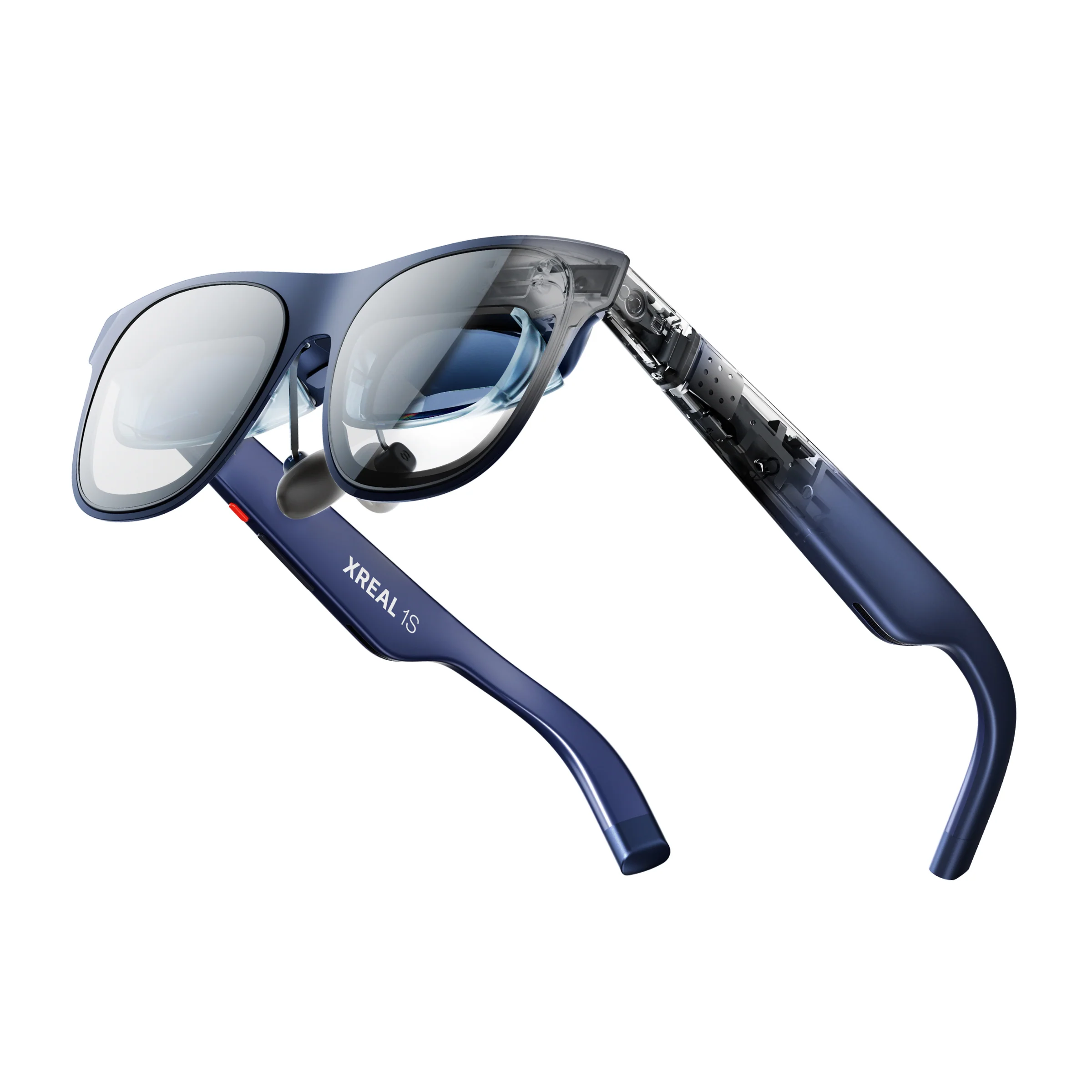
Xreal Aura Glasses Open for Pre-Order at $1,279 With Limited Launch Supply

Xreal has opened pre-orders for its Aura glasses starting at $1,279. Early ordering is limited to buyers who already placed a reservation. Orders are expected to open to the general public in the coming weeks, according to The Verge.
Two configurations are available. The $1,279 model ships with 12GB of RAM, the working memory used to run apps, and 256GB of storage for apps and files. A higher-tier model with 16GB of RAM and 512GB of storage is priced at $1,499. Xreal had previously said the Aura price will not exceed US$1,500, excluding applicable charges, as reported by 9to5Google.
Launch quantity is limited. Only the first 2,000 Founder's Edition pairs are guaranteed to arrive at launch. Xreal CEO Chi Xu said those Founder's Edition units will ship this year. Reservation holders get access first, with general buyers next.
Aura will initially ship only in the US, Canada, Japan and South Korea. Availability in other regions is scheduled for 2027.
The reservation funnel has been building for months. Xreal offered an Aura reservation for a $99 deposit, with a $199 credit applied toward the final purchase, as 9to5Google reported in June. By late August, Aura had surpassed 10,000 global pre-orders ahead of its 2026 launch, according to Ubergizmo. That 10,000 figure is larger than the 2,000 units guaranteed for launch arrival.
Xreal describes Aura as a next-generation Android XR spatial computer, built in a glasses form factor for developers to build Android XR experiences. It is best understood as a wearable computer that can place digital apps and content in the space around you. The system combines lightweight glasses with a dedicated compute puck, a separate pocket-sized unit that handles processing, and is powered by Android XR and Gemini. Xreal lists immersive entertainment, spatial productivity and AI-assisted learning as primary use cases, according to Xreal.
The broader context here is pricing for developer hardware. At $1,279 and $1,499, Aura sits above impulse-buy accessories and alongside professional tools. In my view, the two memory and storage tiers reflect that positioning. Developers building immersive entertainment, spatial productivity and learning experiences need headroom for large assets and local data, and the choice lets smaller tests start lower while heavier workloads move up.
Looking at what this means for early work, scarcity and geography will shape who builds first. With 2,000 Founder's Edition pairs guaranteed at launch and four launch countries, initial testing will concentrate among reservation holders in those markets before wider availability in 2027. I have watched new input methods look awkward for a year and then feel inevitable once developers settle interaction patterns, and head-worn computing may follow the same curve. If the early hardware reaches builders this year as stated, it enables the practical experimentation that later software catalogs depend on.