Apple Plans Touchscreen MacBook Pro and New iPad Mini for Late October

Apple plans to introduce a touchscreen MacBook Pro and an updated iPad Mini on or around October 27, according to Bloomberg reporting published October 8. Bloomberg
That would place two distinct hardware updates in a single late-October showcase. The format, Bloomberg reported, will combine an online video presentation with an in-person component for the press. The schedule is tight. Apple has already announced an event for October 13, rumored to focus on smart home products. The Verge
The MacBook Pro update centers on input and display. Bloomberg reported that the new MacBook Pros will have touchscreen OLED displays in 14-inch and 16-inch sizes, will be lighter than current models, and will adopt iPhone-like Dynamic Island interfaces. OLED means each pixel produces its own light, like a tiny lamp for each dot, which allows thinner panels and deeper blacks. Dynamic Island is the pill-shaped camera cutout first used on the iPhone that also shows alerts. Mark Gurman described the models as 14-inch and 16-inch MacBook Pro models with touch-enabled OLED displays.
Apple also plans MacBook Pros retaining the current design with the M6 chip, according to the same reporting. One version would use a new chassis, display assembly, and interaction model. The other would keep the existing industrial design while moving silicon forward.
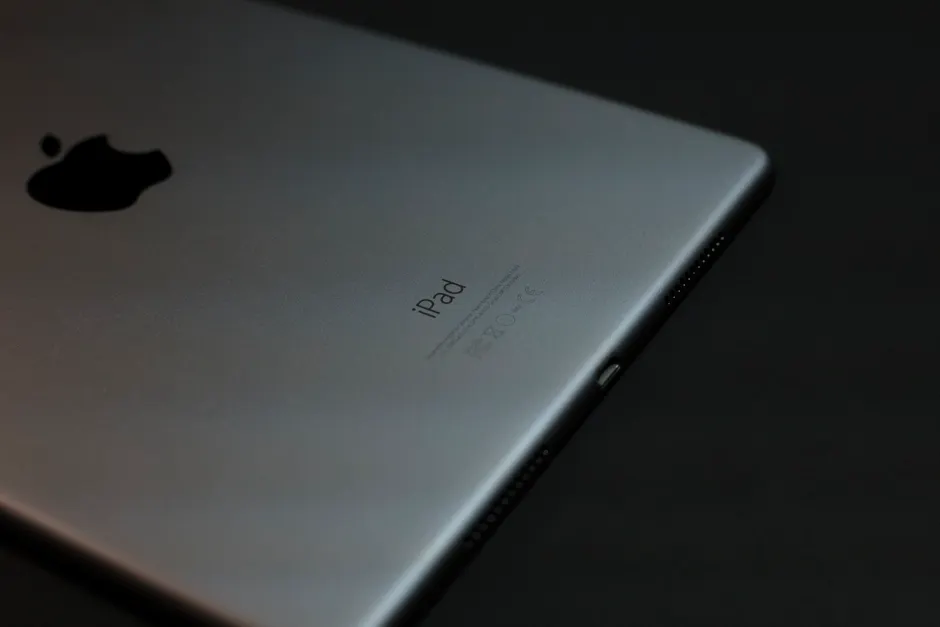
The iPad Mini changes are narrower and tied to how the device is held and heard. Bloomberg reported that the updated iPad Mini will move the front-facing camera to the landscape side, the long edge used when the tablet is held sideways, and will have a revamped speaker system. The Mini was last refreshed in 2024.
The October 8 report was titled "Apple Set to Debut Touch-Screen MacBook and New iPad Mini." It followed an October 4 Bloomberg newsletter titled "Apple's John Ternus Has Found a New Design Chief: Himself" with an update on the touch-screen MacBook Pro.
Reporting on a touch Mac goes back several years. Reuters reported in January 2023, citing Bloomberg News, that Apple's first touch-screen Mac could launch as soon as 2025 as part of a MacBook Pro update. Reuters reported again in October 2025, citing Bloomberg News, that Apple was preparing a redesigned MacBook Pro with a touch display for late 2026 or early 2027, with a hole-punch screen, a display with a small opening for the camera. Those earlier items provide context. The October 8 account is used here for date and configuration.
In my view, the technical interest here is less about touch as a feature and more about what it forces elsewhere in the system. An OLED panel with touch changes the display driver, power budget, cover glass, hinge tolerance, and palm-rejection logic, the software that ignores accidental touches. A lighter enclosure adds to those limits. Dynamic Island on macOS raises separate questions about menu bar layout, camera and sensor housing, notification routing, and pointer versus finger hit targets.
The broader context here is convergence without collapse. Apple has kept iPadOS and macOS distinct on input assumptions, windowing, and app lifecycle even as chips, software frameworks, and accessories have overlapped. A touch-capable Mac does not erase that separation. It pressures developers to reconsider control density, hover dependence, and gesture collision in pro apps where precision still matters. Worth flagging for teams shipping Mac software: touch support favors larger targets and backup controls, but it punishes interfaces built around tiny buttons.
What genuinely changes if the late-October date holds is workflow optionality. Touch on a clamshell remains secondary to keyboard and trackpad for sustained work. It becomes useful for scrubbing timelines, marking up documents, tapping controls in full-screen preview, and handing the machine to someone else for a quick interaction. Over the long arc, that kind of incremental input flexibility tends to get absorbed quietly. It enables new habits rather than replacing old ones.