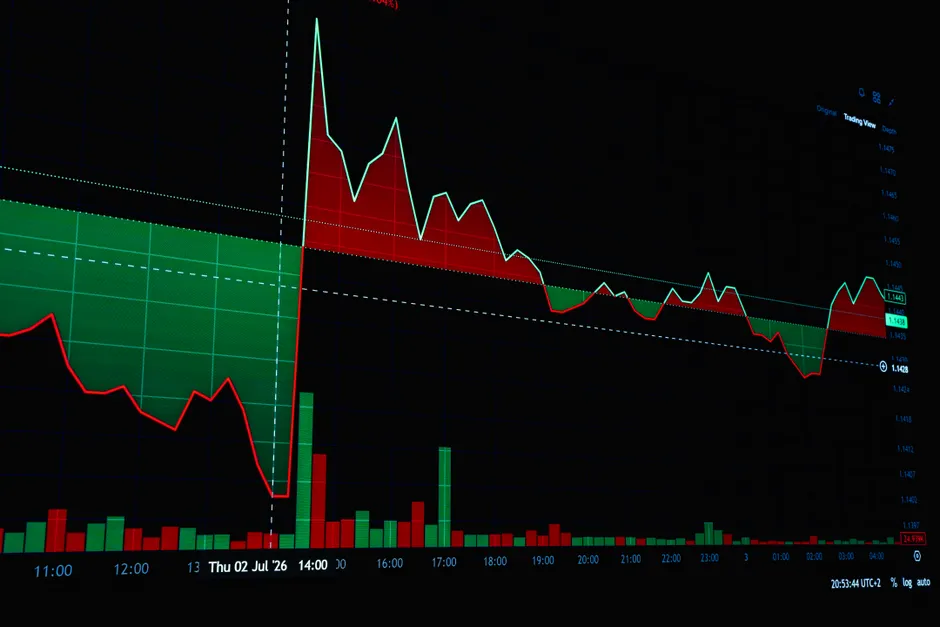
Futures Bounce After Oil-Driven Selloff: Why $100 Crude Still Sets the Tone

S&P 500 futures gained 0.3% and Nasdaq 100 futures climbed 0.5% on October 9, 2026, pointing to a firmer open after a sharp selloff.
Brent crude sank below $103 a barrel after surging more than 4% on Thursday, while West Texas Intermediate traded near $90 a barrel, according to Bloomberg. The overnight equity bounce was reported by Bloomberg. The reversal was partial.
The Nasdaq Composite and S&P 500 closed sharply lower on October 8, 2026, as AI-tied stocks retreated and crude prices jumped, according to Investopedia. Stocks with long duration, where value rests on profits far in the future and falls fast when rates rise, dropped while energy spiked. Breadth deteriorated into the close, with fewer names holding up.
That move followed a brief period of stability. Brent was around $100 a barrel amid steady oil prices in early October 2026, and Wall Street shares notched records as oil prices stabilized, according to Reuters. The calm did not hold. Stocks and oil started moving together again, quickly.
September showed the same link. The S&P 500 ended down as oil topped $100 per barrel, and U.S. stocks closed lower as oil prices soared above $100 a barrel, according to Reuters. Soaring oil later sent diesel prices to record levels, according to Reuters. Brent futures then dipped below $100 a barrel to their lowest level since September 9, later settling at $100.34 per barrel, according to Reuters. U.S. stocks fell as oil prices and Treasury yields, the rates on government debt that help set mortgage and loan rates, increased after Trump rejected an Iran peace proposal, according to Reuters.
The broader context here is the familiar three-way tension between crude, long-term rates, and high-multiple equities. Think of pricey growth stocks like long-dated promises. When crude jumps alongside yields, the extra return investors demand for holding stocks gets squeezed and those long-dated promises take the biggest hit. Energy shares offset part of the index fall but do not hedge the tech-heavy Nasdaq. That split is why headline moves can hide sharper rotation below.
In my view, the sequencing from October 6 to October 9 matters for how desks read the tape. Stability near $100 lined up with record equity closes. The Thursday surge of more than 4% broke that balance and forced AI-linked names down at the same time. Friday futures then priced a modest retracement in both. For systematic funds, that looks like volatility clustering, choppy days grouped together, rather than a lasting regime break, with crude setting the pace for intraday swings.
Looking at what this means for risk management, the key is correlation, not level. A $100 handle on Brent is digestible when curves and yields are steady. A vertical move is different. It reprices near-term inflation, the general rise in prices, lifts volatility in fuel margins, and tightens conditions through the pump and higher borrowing costs at once. Futures up 0.3% to 0.5% after a sharp down day fit that framework. It looks like position squaring before more news, not a verdict on supply.