Trump's Mount Rushmore Speech: How a 250th Anniversary Became a Midterm Battleground

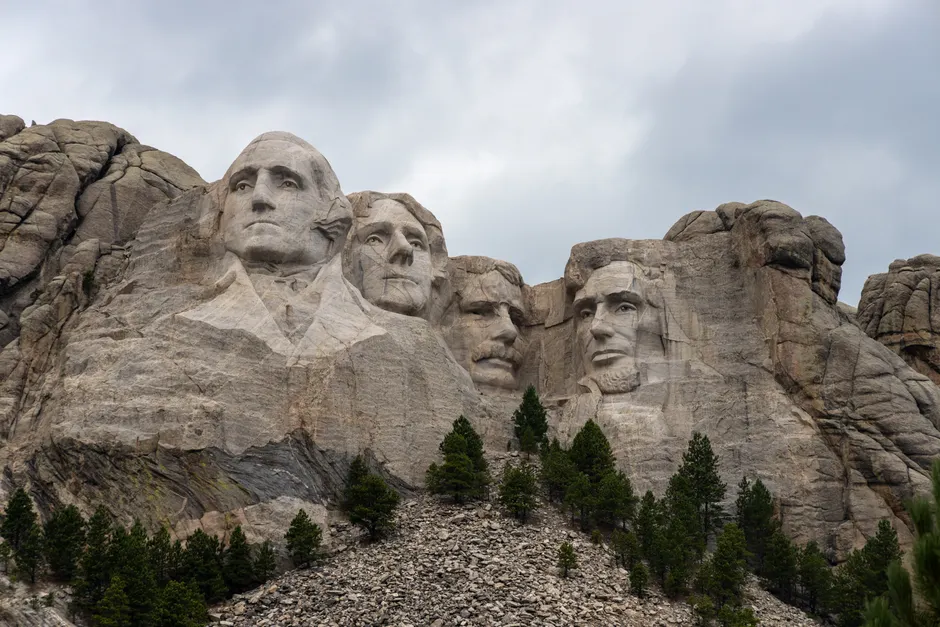
President Donald Trump delivered a 30-minute address at Mount Rushmore on July 3, 2026, using the nation's 250th anniversary celebration to draw sharp ideological lines four months before the November midterms. F-16s swept overhead as the crowd chanted "USA! USA!" — a carefully planned visual backdrop that the White House had been arranging since January 2025, when Trump formally launched the semiquincentennial program.
Trump praised Washington, Jefferson, Theodore Roosevelt, and Lincoln — the four presidents carved into the granite wall behind him — and commended the U.S. Army. But commemoration was not the speech's main thrust. "There is now a resurgence of the communist menace in our land," Trump said, according to the transcript published by Roll Call's Factbase. He escalated further, arguing that communism posed a graver threat to American liberty than World War I, World War II, and September 11 combined. "Communism is the exact opposite of life, liberty and the pursuit of happiness," he declared. "It's death, tyranny and the pursuit of evil."
Trump then linked anti-communist rhetoric to immigration, referencing "newcomers to our country who embrace ideas totally opposed to our way of life" and telling an overwhelmingly white audience, "We are going to give our country its identity back." This pairing of ideological and demographic concerns—both attributed to an unnamed adversary—echoed language from his first term, but the Mount Rushmore setting, chosen for its symbolic weight, sharpened the contrast he was constructing.
The political context
The speech occurred within a charged electoral moment. Hours earlier, Zohran Mamdani, New York City's mayor and a self-described democratic socialist, delivered a pro-immigrant address that The Guardian characterized as a direct response to Trump. The counterprogramming was unmistakable: two politicians, on the same national holiday, offering opposing visions of what America at 250 should represent.
Mamdani's remarks came alongside broader shifts in Democratic primary races. In the week before July 4th, four progressive candidates — three of them democratic socialists — won primary elections in New York and Colorado. Progressive candidates have also prevailed in Kentucky, New Jersey, Ohio, Pennsylvania, and Texas as the midterms approach. The left wing of the Democratic Party, traditionally viewed as a political liability, has been gaining strength in primary contests across regions well beyond coastal areas.
Trump's framing of this movement as a "communist menace" and its supporters as "enemies of July 4th 1776" is fundamentally a midterm strategy. With both the House and Senate races competitive, the White House appears to be betting that a cultural argument—communism versus American values—can unite Republicans and attract swing voters uncomfortable with the "socialist" label, even if they might support specific progressive policies. The 250th anniversary provides an unrivaled patriotic platform that opposing candidates cannot access on the same evening.
The immigration argument in Trump's speech follows a similar logic. Immigration enforcement has been central to his second-term agenda, and framing it as a philosophical question about American identity—rather than solely as a logistical issue of deportation rates or court delays—shifts the terrain from operational ground where the administration's record faces scrutiny, to identity terrain where polling has historically favored restrictionist positions.
One element worth separate attention: Trump has never publicly closed the door on having his own image added to Mount Rushmore. His choice to deliver his 250th-anniversary remarks at this particular site, with the transcript formally recorded, ensures that the symbolic association is permanently documented, whatever might unfold in the future.
The fireworks and military flyovers will dominate weekend coverage. But the underlying political calculation—a president harnessing a constitutionally neutral holiday to define the election as a clash between civilizations—is what political strategists and analysts will be tracking through November.