Meta Releases Muse Wonder, Its First Frontier-Class AI Models

Meta's Superintelligence Lab released Muse Wonder and Muse Wonder Full on Monday, Oct. 12, 2026. The two systems are Meta's first attempt at frontier models, the industry term for the largest and most capable general models. TechCrunch
Muse Spark was a lightweight model built for low latency, or fast response times. The Wonder models are larger and more capable than Muse Spark, with higher benchmark scores and better results on complex tasks like coding.
Muse Spark 1.1 is the latest release in the Muse Spark family of models developed by Meta Superintelligence Labs. Meta
According to Meta's testing, Wonder and Wonder Full achieve benchmark scores comparable to Fable 5.1 and GPT-6 Astra.
Accessed through the Meta Model API, a way for developers to call the model from software, Wonder costs $4.00 per million input tokens and $20.00 per million output tokens. TechCrunch Tokens are small chunks of text the model reads and writes. Wonder's cost is roughly equivalent to GPT-6 Sol or Opus 5.5.
Wonder Full will only be available to Muse Code subscribers and will not be served through the API. Both Wonder models will be used to power the Muse agent.
Meta's Muse AI agent allows users to delegate tasks such as shopping, travel booking and form-filling to an AI agent. Reuters
Meta calls the Wonder models' ability to retain and synthesize user-provided information 'active memory'. According to Meta's testing, Muse Wonder scores higher on MemoryBench, a test of that retention ability, than Fable, Opus or Astra.
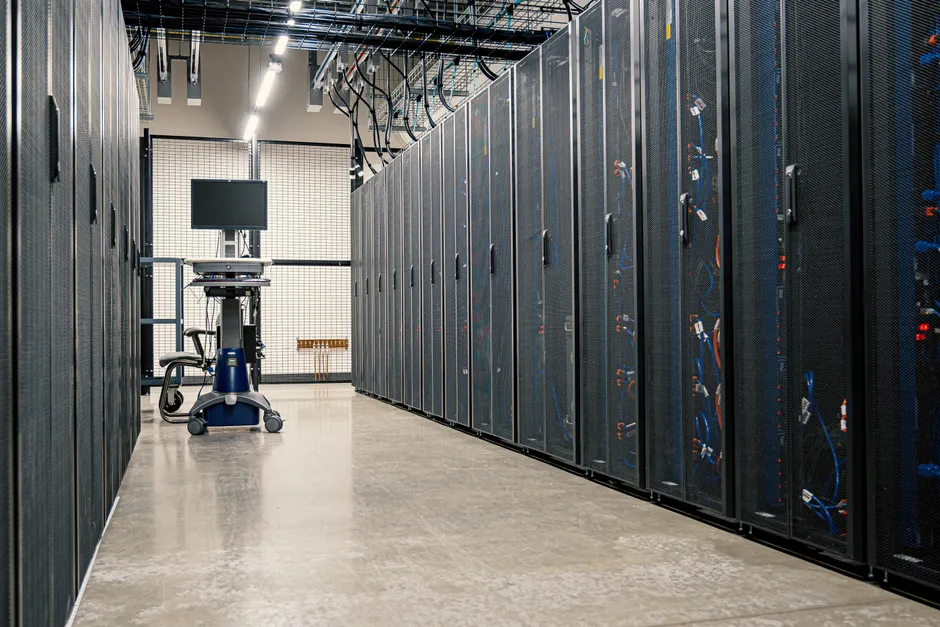
The Wonder models were trained at Meta's Prometheus data center in central Ohio.
On August 10, 2026, Meta introduced Muse Glimmer, a downloadable AI model that can run on a personal computer. Bloomberg Muse Glimmer is a 30-billion-parameter open agentic model developed by Meta Superintelligence Labs. Meta Research Parameter count is a rough guide to size. It is designed for agentic tasks, multi-step work done on a user's behalf, and can run on a personal device such as a Mac.
Looking at what this means in practice, the packaging is as notable as the scores. One model enters the standard API market at familiar pricing. The other stays inside a coding subscription.
In my view, Meta is segmenting by workflow rather than by capability alone. API access invites comparison on cost per task, inference latency, the delay before a response, and tool use. Subscription-only access fits coding work where remembered context across files and prior edits helps. For agent builders, the test will be how active memory handles long histories with contradictory or stale input.
The broader context here is a tiered Muse lineup. Spark covers low-latency work. Glimmer covers local experimentation on a personal machine. Wonder covers frontier-class coding and complex tasks. That gives builders a clear routing choice, with budget attention on input and output token volume.
Worth flagging for evaluation is MemoryBench leadership. A higher score than Fable, Opus or Astra is useful signal, but production use will depend on accuracy during extended shopping, booking and form tasks. If active memory cuts repeated prompting, the efficiency gain could be large. The direction is encouraging, since models that hold context with less friction make delegated work usable day to day.