Cricket Match Called Off After 800kg Bull Breaks onto Field in Northeast England

Cricket Match Called Off After 800kg Bull Breaks onto Field in Northeast England
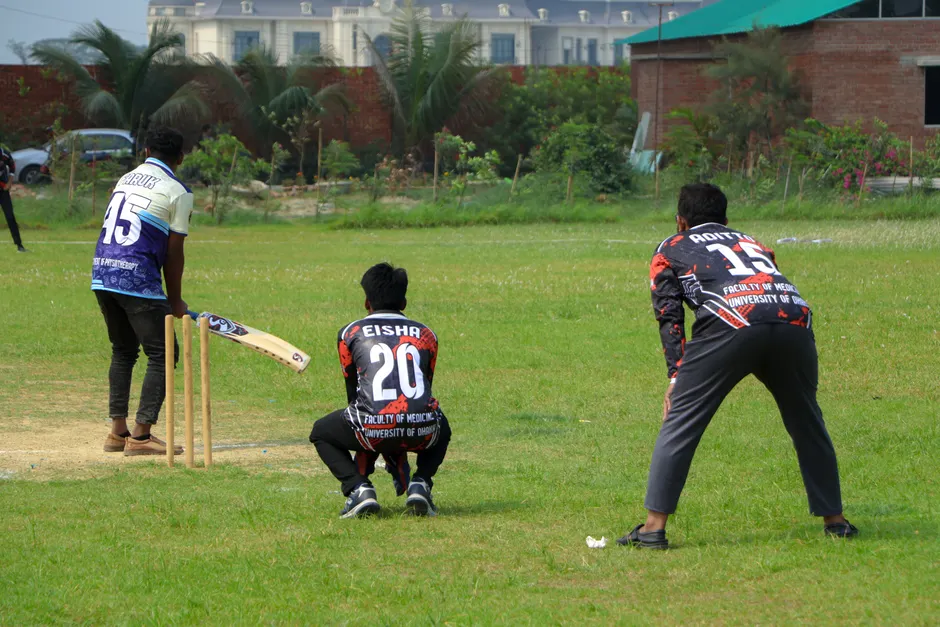
A league cricket match in County Durham was abandoned on 4 July 2026 after a juvenile bull escaped from a nearby farm and charged across the playing field at Burnopfield Cricket Club, near Newcastle, according to The Guardian.
The animal traveled roughly a mile from its farm, arriving around 3pm. Burnopfield, sitting second in the league table, had just finished batting with 226 runs. Hetton Lyons, their opponents, had posted 12 runs for one wicket when play stopped.
Two farmers rushed onto the outfield to capture the loose bull. One was struck by the animal but sustained no serious injuries. The owner made several attempts to recapture it — first trying to pen it on the ground, then driving a cow to the venue hoping to lure it away. Neither worked. When police were called, the bull eventually left on its own. Throughout the incident, witnesses described the animal as frightened and spooked rather than intentionally hostile.
Martin Oswell, director of Burnopfield Cricket Club, said there was no realistic chance of resuming play within the time limit set by league rules. The match was formally abandoned.
The practical fallout depends on how the ECB-affiliated competition treats abandonments caused by circumstances outside either team's control. Since Burnopfield sits second in the league, the points outcome from this match carries weight in the title race.
What makes this incident worth examining is how it exposes a particular vulnerability in rural English cricket grounds. Burnopfield sits in County Durham farmland where the line between agricultural land and the cricket field is often just a fence. At this level of cricket, ground design rarely accounts for livestock escape as a serious risk — yet the geography and farm proximity make it a real, if uncommon, threat. This was newsworthy precisely because it happens so seldom that most grounds have never needed to plan for it.