Six Suspected Space Debris Objects Wash Ashore in North Queensland — What We Know

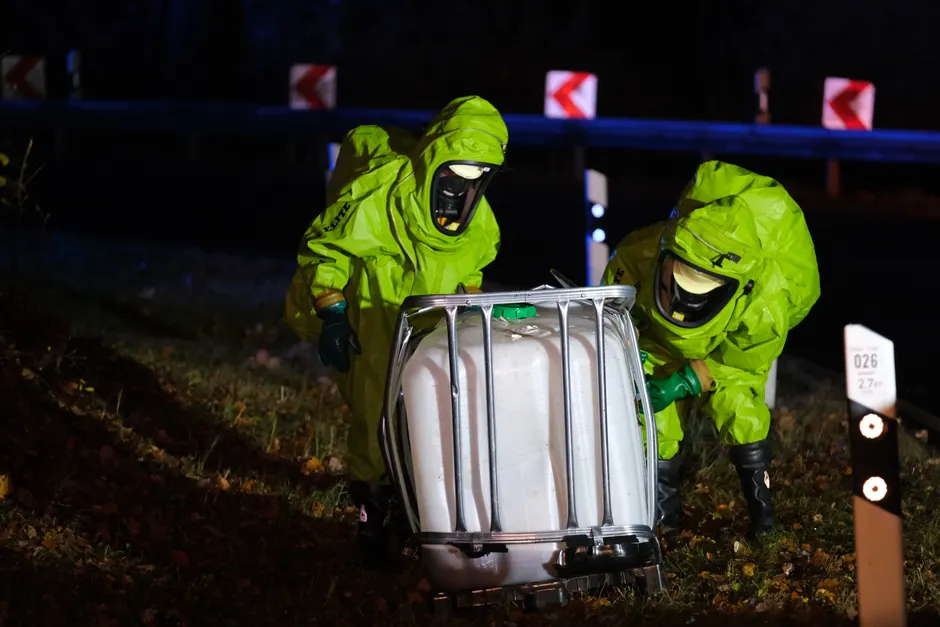
Six large spherical objects suspected to be space debris were recovered from beaches in the Forrest Beach area north of Townsville, Queensland, beginning on 3 July 2026. The Australian Space Agency confirmed on 5 July that it was working to determine their nature and origin. The discovery triggered a hazmat response, beach closure, and coordinated effort involving multiple state and federal agencies.
According to Queensland Police Service reports, three objects turned up on 3 July and a fourth on 4 July at 2:30pm. By the following day, six had been found. The Queensland Fire Department secured five into drums and rendered the sixth safe. Police said the objects were suspected of containing hazardous chemicals but posed no immediate danger to residents and were not part of a criminal investigation.
The Australian Space Agency began supporting local authorities alongside police and the National Emergency Management Agency. This multi-agency coordination follows standard protocol when space debris of unknown origin reaches the surface — jurisdiction and responsibility remain unclear until provenance is established.
What the Objects Likely Are
Associate Professor Alice Gorman, a space archaeologist and debris specialist at Flinders University, examined news footage and provided the most technically detailed public assessment. Gorman noted the objects showed no visible burn marks or scorching — an important observation, because objects re-entering Earth's atmosphere typically show heat damage on their surfaces. Their appearance matched pressurised fuel containers made from titanium alloys, a category informally called "space balls."
These vessels store fuel under high pressure inside rocket upper stages and are built to withstand re-entry. They represent the most frequently recovered type of space debris worldwide, washing up on multiple continents sometimes years after launch. If these are pressurised fuel vessels, they could contain residual hydrazine — a highly toxic rocket fuel — which would justify the hazmat precautions taken by Queensland emergency services.
On origin, Gorman identified the Russian Fregat upper stage as a reasonable candidate. Fregat uses spherical titanium pressure vessels of similar size and shape and flies regularly on missions to geostationary and high-inclination orbits. She emphasized, however, that the objects could have a marine origin unrelated to space activities altogether. No attribution has been confirmed.
The Broader Picture
This incident occurs within the context of measurable orbital debris buildup. Current estimates place trackable orbital debris above 30,000 objects — operational satellites, defunct rocket stages, fragmentation pieces — with a vastly larger population of smaller particles too small to track. Large, dense titanium vessels re-entering Earth is not unusual; what makes Forrest Beach operationally significant is the cluster of six objects in one area, the unresolved origin question, and the possibility of additional arrivals. The Queensland Fire Department warned residents that more objects could wash ashore over coming days and advised monitoring guidance from the Australian Space Agency.
Underlying every unattributed debris event is a legal question: who is responsible? The 1972 Convention on International Liability for Damage Caused by Space Objects assigns liability to the launching state, but first that state must be identified. With the origin still unresolved — possibly Russian, possibly marine — responsibility cannot yet be determined.
The immediate focus rests on the Australian Space Agency's investigation. Its conclusions will shape what comes next: a potential diplomatic matter, routine cleanup, or simply an unusual oceanic arrival that happened to land in formation on a north Queensland beach — a possibility Gorman said genuinely remains open.
Forrest Beach Takeaway, meanwhile, began selling a "space junk snack box."