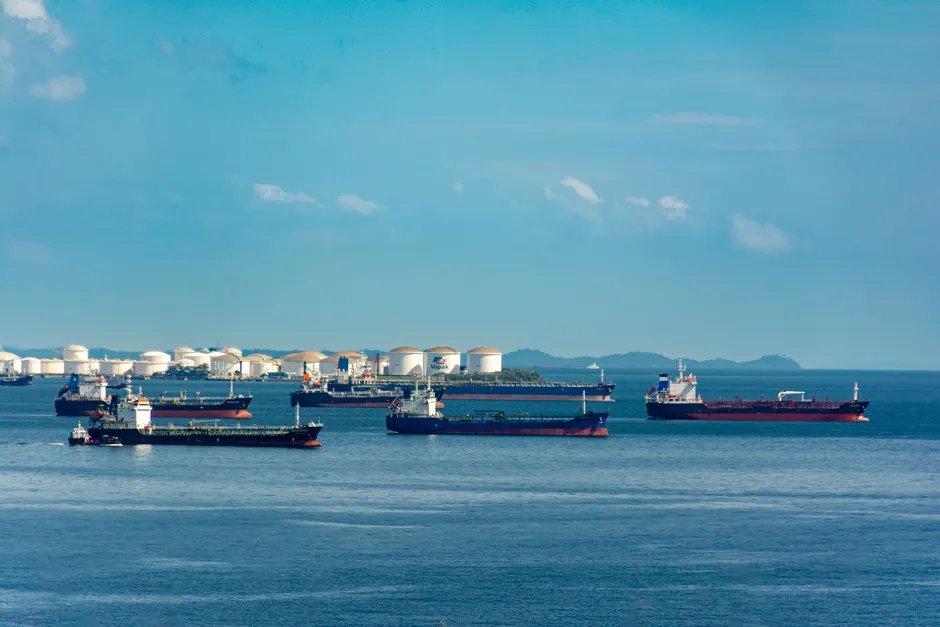
Iran's Gambit for Control of the Strait of Hormuz: What It Means for Global Oil

Iran is demanding that the United States formally recognize Iranian control over the Strait of Hormuz and release frozen Iranian financial assets. Reuters reported on July 1, 2026, citing senior Iranian sources, that these demands go beyond traditional sanctions relief. Tehran wants international legal recognition of its right to charge fees on ships passing through the strait — essentially creating an institutionalized toll system over a critical waterway through which roughly 20 percent of the world's oil and liquefied natural gas flows during peacetime.
The demands have emerged three months into an active military conflict between the U.S. and Iran that began when President Trump denied, in late May 2026, that any Hormuz deal had been negotiated with Iran and Oman. Iran's state television had suggested the strait could reopen within a month if terms were agreed. When the U.S. rejected those terms—which included sanctions relief, nuclear rights, and Hormuz recognition—additional American strikes followed.
The Legal Case Iran Is Making
Iran's push for Hormuz control is not merely a wartime pressure tactic. It is underpinned by a deliberate legal and diplomatic campaign. On May 28, 2026, Iran's Foreign Ministry mission in Geneva released a formal document titled "The Strait of Hormuz—Legal Aspects of the New Arrangements in Light of Aggression and Fundamental Change of Circumstances" invoking the rebus sic stantibus doctrine. This is a principle in international law—recognized under Article 62 of the Vienna Convention on the Law of Treaties—that permits renegotiating treaties when circumstances fundamentally change. Iran argues that what it characterizes as external aggression justifies rewrites to the existing international rules governing the strait. The doctrine sets an extremely high bar for invocation, which signals Iran is seeking a durable legal foundation, not a temporary disruption.
The Geneva document was part of a coordinated messaging sequence. In May, an infographic on khamenei.ir framed events as "a new chapter for the Persian Gulf and the Strait of Hormuz," and Iran's Mumbai consulate published a piece on the "Program and Strategies of the Leader of the Revolution for Managing the Persian Gulf and the Strait of Hormuz" under a framework of a "Strong Iran." The sequencing—ideological messaging, legal argument, diplomatic distribution—reflects deliberate orchestration.
At the United Nations in May, Iran's ambassador responded to a U.S.-Bahrain draft resolution on the strait by insisting that "the only viable solution in the Strait of Hormuz is a permanent end to the war, the lifting of the maritime blockade, and the restoration of"—the statement as published truncates here—signaling Tehran's intent to press its position through every available multilateral channel.
The Role of Mojtaba Khamenei
The most operationally significant statements have come from Ayatollah Seyyed Mojtaba Khamenei, the son of Supreme Leader Ali Khamenei. He has taken on increasing public prominence. In March 2026, he declared that "the lever of blocking the Strait of Hormuz must definitely continue to be used." In a National Persian Gulf Day message, he stated that "the legal rules and the exercise of new management over the Strait of Hormuz will bring comfort and progress for the benefit of all the nations"—framing coercive control as a regional public good. Another message asserted: "We will definitely take the management of the Strait of Hormuz to a new phase."
That new phase is already operational. As of July 4, 2026, the Institute for the Study of War assessed that Iran continues to pressure commercial vessels to transit through what ISW calls an illegal traffic separation scheme (TSS)—a navigational routing system Iran has imposed unilaterally. Under international maritime law (COLREGS and UNCLOS), a TSS must be established through the International Maritime Organization. One imposed by a coastal state without IMO approval has no legal standing.
On July 5, Iran's ambassador to China vowed that ships from "friendly countries" would receive "special" treatment in the strait, according to Al Jazeera. This pledge effectively divides global shipping into allied and adversarial categories—a direct economic tool to reward trading partners and penalize others, with China as the most significant audience.
Also on July 5, Ayatollah Ali Khamenei met with Venezuelan President Nicolás Maduro and referenced both the Strait of Hormuz and Bab el-Mandeb (another major waterway) in his remarks. Pairing these two critical chokepoints in a meeting with a heavily sanctioned petrostate is deliberately strategic: it presents Iran's Hormuz position as part of a broader anti-Western alliance.
What the Demand Actually Means
Under existing international law, Iran's claim to charge fees on transit ships is legally indefensible. UNCLOS Article 38 guarantees the right of transit passage through international straits, and coastal states are explicitly prohibited from imposing fees on that passage. Iran counters with the argument contained in its Geneva document: that the legal baseline has been altered by aggression, and that new arrangements are therefore justified.
Whether any nation formally accepts that argument is different from whether operational reality—ships complying with Iranian routing demands or avoiding the strait—produces what amounts to de facto recognition. This gap between legal invalidity and actual compliance is the space Iran is occupying.
Iran's Foreign Ministry has publicly maintained that "the Strait of Hormuz is not closed" and that maritime traffic continues. Technically, this is true; the strait remains open. But traffic moving under Iranian-imposed conditions, through an unrecognized routing system, at risk of interdiction for non-compliance, is not the same as traffic transiting freely under international law. That distinction is the entire substance of the negotiation now underway.