Iran Goes on the Offensive as US-Iran Diplomatic Deal Expires
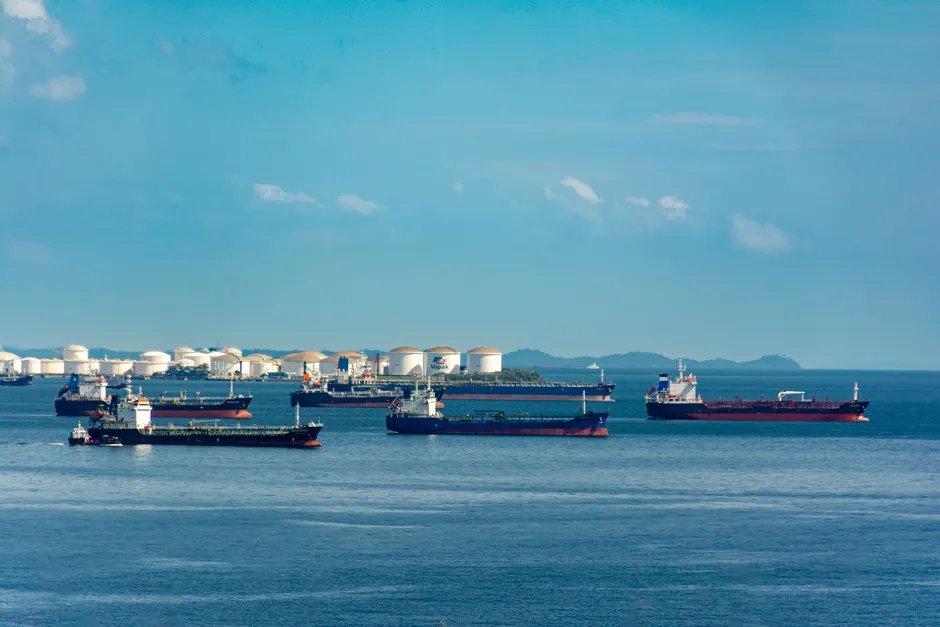
Iran has warned it will adopt a "fully offensive" military posture and keep the Strait of Hormuz closed indefinitely, following the expiration of a US-Iran diplomatic agreement on Monday. At the same time, Washington is preparing what it calls an unprecedented new round of sanctions — economic penalties designed to cut a country off from global trade and finance — against Tehran Al Jazeera.
US Treasury Secretary Scott Bessent said the new measures, expected as early as the week of the announcement, would include penalties "never been seen in the history of economic isolation on a country" Al Jazeera. On the preceding Friday, President Donald Trump echoed Bessent, stating Iran would be hit hard economically. The threatened package layers on top of an already extensive campaign: since February 2025, Washington has sanctioned more than 1,000 Iran-related persons, vessels, and aircraft, according to the Treasury's Office of Foreign Assets Control (OFAC) as stated in May Al Jazeera.
Iran's parliament speaker and chief negotiator Mohammad Bagher Ghalibaf told state media that the Strait of Hormuz would stay closed until the US meets the conditions of the now-expired agreement. Those conditions include lifting the blockade, releasing frozen assets, lifting oil sanctions, and ending threats and military operations on all fronts Al Jazeera. An Iranian official, cited by Reuters on August 17, said Iran will shift to a "fully offensive" military posture as peace talks with the US have stalled Reuters. Iranian authorities also said they are prepared to counter a potential ground invasion Al Jazeera.
The 2026 Iran war was initiated by the United States and Israel on February 28, 2026 Britannica. The diplomatic agreement whose expiration triggered the current escalation was the instrument underpinning the stalled negotiations. In July, Iranian judiciary official Gharibabadi stated that the US decision to revoke the waiver exempting Iran's oil sales from sanctions constitutes a violation of Article 10 IRNA. An Iranian official noted in May that the US has conducted military actions against Iran while intensifying sanctions instead of lifting them IRNA.
Since the beginning of 2026, OFAC has sanctioned over 100 vessels linked to Iran's shadow fleet — a covert logistics network used to move goods outside official channels US Treasury. On July 30, OFAC designated an IRGC-affiliated front company that has supported Iran's kinetic targeting during the ongoing conflict US Treasury. On August 7, the US Treasury sanctioned two major digital asset exchanges used by Tehran, along with the ringleader of a network of front companies operating across the region US Treasury. In June, concurrent with OFAC designations, the US Department of State imposed sanctions on two entities and two individuals based in Iran and Belarus US Treasury.
Iran has taken steps to sustain its economy under the blockade. Authorities delegated powers to border provinces to import essential goods and build up inventories before the war. Iran has rerouted imports of food, consumer goods, and industrial inputs through land borders with Pakistan and Turkiye, and through the Caspian Sea with Russia and Central Asia Al Jazeera.
Iran's negotiations are ongoing with Oman and other mediators over a potential temporary arrangement in the Strait of Hormuz Al Jazeera. An Iranian commander previously described the US Treasury Department as having turned into a room for economic war against Iran, with 300 people operating against the Islamic Republic IRNA.
The convergence of the agreement's expiration, the threatened sanctions escalation, and Iran's military posture shift creates a compressed diplomatic window. Oman's involvement as mediator suggests regional actors are seeking a circuit breaker before the threats on both sides translate into further operational consequences. Ghalibaf's conditions for reopening the Strait of Hormuz map directly onto the core grievances Iran has articulated throughout the conflict: the blockade, frozen assets, oil sanctions, and the cessation of military operations. The breadth of those demands makes a negotiated off-ramp difficult, because each condition touches a separate sanctions or military architecture that the US has been building and intensifying simultaneously.
The sanctions trajectory is also notable for its targeting logic. OFAC's designation of digital asset exchanges and front-company networks indicates an effort to close circumvention channels, not merely to add names to a sanctions list. If the promised new measures are as sweeping as Bessent's language suggests, Iran's rerouted supply lines through Pakistan, Turkiye, and the Caspian Sea corridor would face increased pressure, as secondary sanctions — penalties on third parties that do business with a sanctioned country — make intermediary jurisdictions and financial facilitators harder to sustain.
The Strait of Hormuz closure remains the most consequential chokepoint. Iran has tied its reopening to conditions the US is moving further from meeting, not closer. The talks with Oman represent the only active diplomatic track publicly acknowledged, and the scope of a "temporary arrangement" remains undefined. With both sides describing their positions in absolute terms, the mediation faces a narrow margin for a partial agreement that could stabilize shipping without resolving the underlying sanctions and security dispute.


